









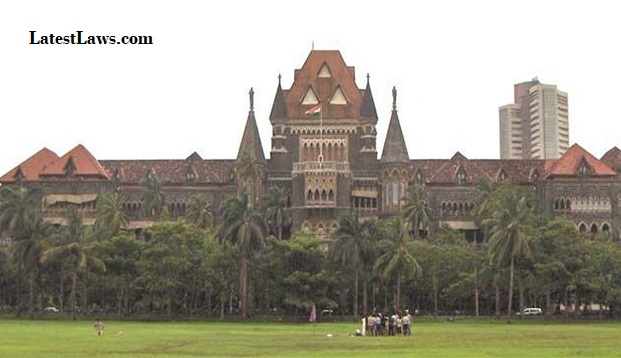
The Division Bench of the Bombay High Court consisting of Justices V.M. Deshpande and G. A. Sanap while hearing a criminal appeal opined that the motive for commission of a crime is relevant fact. If the motive is unlocked by the evidence, then it becomes important factor in support of the case of prosecution.
Facts
It is the case of prosecution that the appellant is the husband of the deceased. The deceased, three months prior to the incident, on account of dispute between her and the appellant started residing separately from the appellant at her sister’s (Vandana Khobragade) house. The accused, 15 days prior to the incident had gone to the house of the sister of the deceased to take back the deceased. However, she refused to cohabit with him. She started residing at the house of her sister since appellant would suspect her character. At the time of the incident, the informant (sister) had gone to forest for collecting Tendu leaves. The deceased was washing utensils in the courtyard. Son of Vandana Khobragade (Rahul) was present in the house. The accused came there and insisted the deceased to accompany him. The deceased refused to accompany him. The appellant was carrying a sharp pointed iron tocha and mercilessly inflicted the blows on the chest, forearm and abdomen of deceased. Rahul came to rescue deceased, but he could not prevent the appellant from assaulting the deceased. The helpless deceased started running to save her life on the road towards the house of one Shri Bandu Dhok. The accused chased her and repeatedly assaulted her. One Shalikram Gharat and Shri Bandu Dhok saw the incident, they came running and caught hold the appellant. The deceased fell near the house of Bandu Dhok. The villagers carried her in injured condition firstly to a Government Hospital. Then they shifted her to a General Hospital. However, on the way the deceased succumbed to the injuries. On receipt of the information of the incident Vandana came back. She went to the police station and lodged the report. Initially the crime was registered u/s 307 of the IPC. On receipt of the post-mortem report, the offence u/s 302 of the IPC was added in the crime.
Procedural History
The Investigating Officer conducted the investigation. After completion of the investigation, the charge-sheet was filed against the appellant. Learned Additional Sessions Judge framed the charge against the accused. The accused pleaded not guilty. The defence of the accused is that the deceased fell on the thorny compound and sustained multiple injuries. He has been falsely implicated in the case. Learned Additional Sessions Judge on analysis of the material found the accused guilty u/s 302 IPC and sentenced him to suffer life imprisonment and to pay fine of Rs.5,000/- and convicted u/s 323 IPC and sentenced him to suffer rigorous imprisonment for three months and to pay fine of Rs.1,000/-. On both counts, in default to payment of fine, the rigorous imprisonment for one year and simple imprisonment for 15 days respectively was awarded. Being aggrieved by the judgment, the appellant is before this Court in appeal.
Contentions Made
Appellant: It was submitted that case of the prosecution rests on the evidence of the interested witnesses. The evidence of eyewitnesses is not credible and as such cannot be accepted. The prosecution failed to establish the guilt of the accused beyond reasonable doubt. The reasons recorded by learned Additional Sessions Judge were not convincing to maintain the conviction and sentence. The Investigating Officer has concealed material facts in this case and therefore, on this ground as well the benefit is required to be given to the appellant. At the most, the case would be covered u/s 304 part (II) IPC. As a result of quarrel between the appellant and deceased the deceased gave provocation to the appellant and in grave and sudden provocation the accused committed the crime. The conviction and sentence were required to be altered and modified and the accused is required to be awarded lesser punishment u/s 304 (II) IPC.
Respondent: The incident as well as the brutality displayed by the appellant at the time of the crime has been proved based on evidence eyewitnesses, which was corroborated by the medical evidence. The prosecution has proved beyond doubt that the intention of the appellant was to commit murder of the deceased. The Additional Sessions Judge has recorded the sound reasons and based on the same, sentenced the appellant to life imprisonment.
Observations of the Court
The Bench observed that:
“The evidence is sufficient to prove that the deceased died a homicidal death. On minute analysis of the evidence of the eyewitnesses, we are convinced that defence of the appellant is highly improbable. Motive for commission of a crime is relevant fact. If the motive is unlocked by the evidence, then it becomes important factor in support of the case of prosecution. In this case, there is a motive for the accused to commit this brutal crime. The appellant made desperate efforts to take the deceased back and start his married life afresh. The manner of assault would clearly indicate that the appellant was convinced that deceased would not return and join his company. The appellant, therefore, had every reason to take the deceased back by hook or crook. When the deceased flatly refused to accompany him, the appellant having lost the hope of continuing his married life with the deceased, brutally attacked her. In this case, therefore, motive has also been proved.”
“We have minutely perused the evidence. In our view, in this case, the submission advanced by learned Advocate that in the totality of the evidence the offence made out would be culpable homicide does not amount to murder cannot be accepted. The prosecution has proved motive. Deceased abused him and therefore, on account of grave and sudden provocation given to him by the deceased the incident took place. The appellant has tried to explain this in his examination u/s 313 of CrPC. He has stated that when he went to the house of her sister to fetch her back, she refused to accompany him. The deceased told him that for her the appellant is dead. She broke her bangles. In our view even, if this statement is accepted as it is, it would not constitute a grave and sudden provocation. This is regular happening in the family life.”
Judgment
The Bench, not seeing any reason to interfere with the judgment, dismissed the appeal.
Case Name: Sunil Ramchandra Khobragade vs State of Maharashtra
Citation: CRIMINAL APPEAL NO.573 OF 2018
Bench: Justice V.M. Deshpande, Justice G. A. Sanap
Decided on:12th January 2022
Read Judgment @Latestlaws.com
Picture Source :



















