









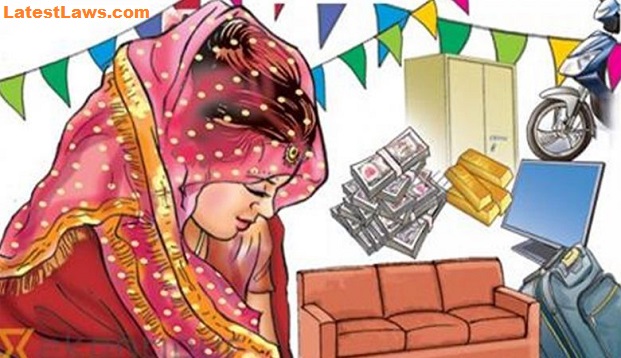
A single judge bench of the Madras High Court comprising of Justice R, Hemalatha while adjudicating upon a property dispute held that giving valuable articles as ‘sreedhana’ to the woman during her marriage does not mean that later she cannot claim her right in the ancestral properties. Sreedhana was held to be separate and it was distinguished from a ‘Release Deed’.
Brief Facts:
The 1st defendant was the brother of the plaintiff. The suit properties more fully described in the plaint belonged to their father Sambasivam by virtue of a partition deed. Ever since the date of partition, the said Sambasivam was in possession and enjoyment of the same. One Nageswari Ammal, the mother of the defendants 2 and 3, is also the sister of the plaintiff and the 1st defendant and she died leaving behind the defendants 2 and 3 as her legal heirs. Her husband also expired. Since the 1st defendant did not give the plaintiff her share in the income from the suit properties, the plaintiff issued a notice to him. The 1st defendant sent a reply, which according to the plaintiff contained false allegations. She, therefore, filed the suit.
Contentions of the Appellant:
The appellant contended that the trial court had analysed the oral and documentary evidence adduced on both sides in the right perspective and on the other hand, the first appellate court had misdirected itself by observing that since the daughters of late Sambasivam were given in marriage with sufficient sreedhana, they cannot claim any share in the suit properties. He therefore contended that the appeal is liable to be allowed.
Contentions of the Respondent:
The 1st respondent contended that since the plaintiff and late Nageshwari Ammal relinquished their right in the suit properties at the time of their marriage, they cannot claim any share in the suit properties. He also contended that they were given in marriage even in the year 1987 and as per Tamil Nadu Amendment Act 1989, they cannot claim any right over the suit properties. In order to substantiate the same, he relied on the decision in Leelavathi vs. Chellaswami 2023-1-L.W. 804.
Observations of the Court:
The court expounded that it pertinent to note that giving valuable articles as sreedhana is immaterial as women have equal rights in ancestral properties. It was not the case of the 1st defendant that some properties were settled in favor of the plaintiff and late Nageshwari Ammal.
Further, the court perused Exhibits B2 to B4 and observed that the loans were discharged between 1997 and 1999 by late Sambasivam. The 1st defendant admitted that his father died during the year 2001 and though it was contended by him that his father was admitted as an inpatient in Apollo Hospital, Chennai. The 1st defendant did not adduce any documentary evidence to prove the same. Thus, the court noted that the 1st defendant did not adduce any acceptable evidence to show that he alone discharged the loan obtained by his father.
The court rejected the contention of the appellant with regard to the decision in Leelavathi vs. Chellaswami 2023-1-L.W. 804 and observed that the ratio would not apply to the facts of the present case since in that case, a Release Deed was executed. Lastly, the bench observed that the first appellate court had erroneously held that since the daughters were given in marriage by giving sreedhana, they cannot claim any right over the suit properties. In fact, the said observation of the first appellate court was unknown to law. On the contrary, the trial court had analyzed the oral and documentary evidence adduced on both sides threadbare and had come to a definite conclusion that the plaintiff is entitled to 1/3 share in the suit properties. The finding of the trial court was thus upheld and in view of the same, the Second Appeal was allowed by the court.
Decision of the Court:
The second appeal was allowed and the decree and judgment passed on the file of the II Additional Sub Court, Cuddalore was set aside. Subsequently, the decree and judgment filed of the Principal District Munsif Court, Cuddalore was upheld.
Case Title: N. Rajeshwari Ammal vs C. Chinnaswami Naicker
Coram: Justice R, Hemalatha
Case No.: S.A.No.1009 of 2007 & M.P. No.1 of 2007
Advocate for the Appellant: Mr. K.A. Ravindran
Advocate for the Respondents: Mr. R. Karunagaran (For R1)
Read Judgment @LatestLaws.com
Picture Source :




















