









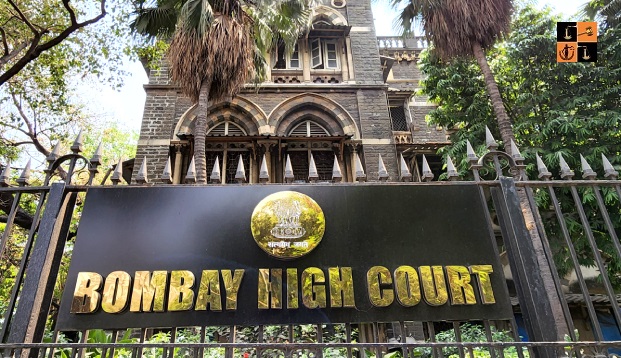
“It is very unfortunate that still a mentality prevails in the Police Department that everybody should give preference to the work directed by the police or to help the police.” With this passing reference, the Bombay High Court at Aurangabad delivered a compelling judgment that circumvents the boundaries of police authority and the obligations of government servants. This judgment addresses critical questions about the balance between civic duty and administrative feasibility, sparking curiosity about its implications for law enforcement practices and public servant responsibilities.
Brief Facts:
The case stemmed from the refusal of Balasaheb Gurushantappa Arawat, a 52-year-old Assistant Commissioner in the Social Welfare Department, to provide employees as panch witnesses for a police investigation. In response to a request from the Assistant Police Inspector for staff in a case involving serious IPC offences, Arawat cited staff shortages and disruption to office work due to a longstanding rotation system set by the Sub Divisional Magistrate. Despite this, an FIR was lodged against him under Sections 187 and 188 of the Indian Penal Code, 1860 (IPC). Resulting, Arawat approached the Bombay High Court at Aurangabad, seeking to quash the FIR on grounds of administrative constraints rather than willful disobedience.
Counsel for the Applicant:
The counsel for the appellant, Mr. Ajinkya Reddy, contended that the FIR was baseless and failed to disclose the essential ingredients of offences under Sections 187 and 188 of the IPC. The counsel submitted that Arawat had promptly responded to the police request, citing a genuine administrative constraint due to staff scarcity, and had explained that the longstanding duty roster had disrupted office functioning. The counsel emphasised that this was not a willful refusal but a practical limitation, further supported by a Government Resolution, which stated that using government servants as panch witnesses was only to be done “as far as possible.” He also pointed to the Sub Divisional Magistrate’s rotation policy, which Arawat was adhering to, along with his efforts to involve other departments. Relying on Yogesh Sahebrao Sonwane v. The State of Maharashtra and anr. and Swararaj @ Raj Shrikant Thackeray v. State of Maharashtra, the counsel argued that the FIR under Section 188 IPC was legally unsustainable as no written complaint from the concerned public servant or superior had been made, as mandated by law.
Counsel for the Respondents:
Mr. A.R. Kale, the Additional Public Prosecutor representing the State of Maharashtra and the Police Inspector, strongly opposed the application. He argued that Arawat, as a government servant, was duty-bound to comply with the Government Resolution of 12th May 2015, which aimed to address the issue of hostile panch witnesses by involving government employees. The counsel emphasised that the Sub Divisional Magistrate had fixed Tuesdays for Arawat’s department to provide panch witnesses, and his refusal to comply constituted a deliberate failure to assist the police. He contended that every citizen, particularly a government servant, must aid law enforcement to ensure authenticity in investigations, and Arawat’s non-compliance undermined this objective. The counsel asserted that the refusal violated Sections 187 and 188 of the IPC, as it obstructed a public servant’s duty and disobeyed an established administrative directive.
Observations of the Court:
The Division Bench, comprising Justice Vibha Kankanwadi and Justice Sanjay A. Deshmukh, quashed the First Information Report (FIR) against Balasaheb Gurushantappa Arawat, an Assistant Commissioner in the Social Welfare Department, for alleged offences under Sections 187 and 188 of the IPC.
The Court meticulously analysed the ingredients of Section 187 IPC, which penalises intentional omission to assist a public servant in the execution of their duty. The Court observed that the applicant's refusal to provide employees as panch witnesses was not a wilful neglect but stemmed from a genuine inability due to staff scarcity.
The Court noted, “Here, the letter which was given by the present applicant clearly demonstrates his inability for a genuine reason. It is not the case in the First Information Report that the reason that was given in the letter was found to be false or incorrect.” Consequently, the Court held that the essential elements of Section 187 IPC were not met, as the refusal was not intentional but based on legitimate constraints.
Regarding Section 188 IPC, which addresses disobedience to an order promulgated by a public servant, the Court relied on the precedent in Ram Monohar Lohia and others vs. State of Uttar Pradesh, outlining mandatory ingredients for the offence. The Court clarified that the letter from the Police Inspector, citing the Government Resolution of 12th May 2015, did not constitute a legally promulgated order.
The Court emphasised, “the letter which he has given, dated 26.03.2024, cannot be considered as an order promulgated under a law. Government Resolution is not a law.”
The Court further noted that the Government Resolution used the phrase “as far as possible,” indicating that providing government servants as panch witnesses was not mandatory but discretionary. The Court criticised the informant’s approach, stating, “Panchas are not to be procured by giving threats. It is a voluntary act.”
The Court also addressed broader systemic issues, expressing concern over the police’s expectation that citizens, including government employees, must prioritise their demands. It remarked, “It is very much unfortunate that still a mentality prevails in the Police Department that everybody should give preference to the work directed by the police or to help the police.”
The Bench underscored that while citizens should assist the police, this does not translate into a compulsion enforceable by criminal sanctions in all circumstances. The Court highlighted subsequent communications from the Commissioner, Social Welfare Department, and the District Magistrate, which acknowledged the practical difficulties faced by employees and directed police to refrain from lodging offences for non-compliance in providing panch witnesses.
The decision of the Court:
In the light of the foregoing discussion, the Court allowed the present application while concluding that prosecuting the applicant would be unjust, and stated that “It would be unjust to ask the applicant to face the trial and, therefore, this is a fit case where we should exercise our powers under Section 482 of the Code of Criminal Procedure.”
Case Title: Balasaheb Gurushantappa Arawat Vs. The State of Maharashtra
Case No: Criminal Application No.2109 Of 2024
Coram: Justice Vibha Kankanwadi and Justice Sanjay A. Deshmukh
Counsel for Appellant: Adv. Ajinkya Reddy
Counsel for Respondent: APP. A.R. Kale
Read Order @ Latestlaws.com
Picture Source :




















