









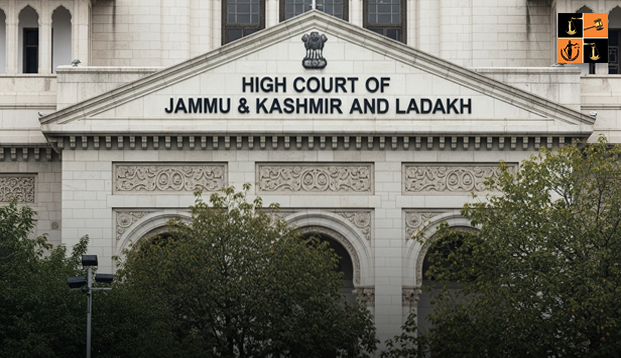
Recently, the Jammu & Kashmir and Ladakh High Court found itself at the centre of a sweeping challenge involving the University of Kashmir’s practice of annually replacing contractual lecturers with a fresh batch of temporary faculty. What initially appeared to be routine academic-session appointments soon revealed a deeper structural issue, with the University relying on repeated short-term contracts to manage teaching requirements, particularly within the Law Department, without making long-term staffing reforms. As numerous appeals came before the Division Bench, the Court took a closer look at whether this cycle amounted to permissible administrative flexibility or unconstitutional arbitrariness.
Brief Facts:
The case arose when a series of contractual and academic-arrangement lecturers, many of whom had been teaching for consecutive sessions, approached the Writ Court after the University issued new advertisements for the next academic year. Their services were set to be discontinued and replaced not by regular recruits but by another identical set of contractual hires. The Single Judge, noting the legal framework restraining such substitution, ruled in favour of the lecturers. The University appealed, maintaining that the appointments were explicitly session-based, governed by clear undertakings that no right of continuation or regularisation would arise. The University argued that allowing the same teachers to stay indefinitely would deny opportunities to younger candidates and potentially reduce academic competitiveness.
Contentions of the Appellant:
The counsel for the Appellants submitted that the lecturers were engaged only for a single academic session on a contractual/academic arrangement basis, with explicit undertakings that they would not claim continuation or regularisation. The counsel argued that once the term ended, no right to continue survived. The Appellant maintained that they must be free to induct fresh, meritorious candidates each year to maintain academic standards and relied on Supreme Court rulings to assert that contractual employees cannot demand extension beyond the agreed term.
Contentions of the Respondents:
The counsel for the Respondents argued that the University could not legally replace them with another batch of contractual employees, as the settled law prohibits substituting one ad hoc or contractual employee with another of the same category. They described the University’s practice as an arbitrary “hire-and-fire” cycle violating Articles 14 and 16 of the Constitution. They relied on Supreme Court precedents holding that temporary employees may be replaced only by regularly selected candidates, not by fresh contractual appointments.
Observation of the Court:
The Court observed that the Writ Court’s understanding of the legal position was consistent with precedent, but they also recognised that the factual setting of the present case introduced an additional nuance: many of these lecturers were not appointed against substantively sanctioned posts but were brought in to meet temporary academic needs.
The Bench emphasised the settled principle in unmistakable terms, observing that “an ad hoc, temporary, or contractual employee cannot be replaced by another ad hoc, temporary, or contractual employee, and that such replacement can only be made by a regularly selected candidate appointed in accordance with the relevant recruitment rules.”
At the same time, the Bench clarified the factual distinction applicable in this case through another direct remark from the judgment that “the respondents engaged on contractual/academic arrangement basis were not against any substantive vacant posts but were engaged to supplement the existing faculty owing to exigencies and the needs of a particular academic session.” The Court added that “the respondents having been engaged on academic arrangement basis may have a right not to be replaced by a similar arrangement but cannot claim their continuation till the posts are filled up or even till the posts for engagement of regular faculty are created.”
The Court also expressed concern that the University should not attempt to circumvent the law by modifying the job titles of its contractual hires. The Court states that “the appellants cannot be permitted to resort to any manipulation or machination to substitute the respondents by making similar arrangements under a different nomenclature.” On the issue of supplementary teaching arrangements, the Court drew a clear boundary that “part-time and visiting faculty cannot be a substitute either for core faculty or for whole-time contractual/academic arrangement faculty.”
Finally, turning to the persistent faculty shortage in the Department of Law, the Bench observed that determining the essential teaching requirements is a matter for the statutory regulator. “The Bar Council of India, being a regulatory authority, is under a statutory obligation to undertake inspections… and ensure that the minimum core faculty is in place for imparting quality legal education. This Court cannot enter into the domain of the Bar Council of India.”
The decision of the Court:
The Court modified the Single Judge’s order, holding that although the lecturers cannot be replaced by another set of contractual appointees, they also have no right to remain since they were not engaged against substantive posts. The University may make fresh academic arrangements, but must first offer them to the existing lecturers and cannot disguise similar posts under new labels. The appeals were disposed of with no order as to costs, meaning each party bears its own costs.
Case Title: University of Kashmir and others V. Saba Manzoor and others
Case No.: LPA 169/2025
Coram: Hon’ble Mr Justice Sanjeev Kumar and Hon’ble Mr Justice Sanjay Parihar
Counsel for the Appellant: Sr. Adv. Syed Faisal Qadri Adv. Asif Maqbool, Adv. Sikander Hayat Khan and Adv. Numan Zarga
Counsel for the Respondent: Sr. Adv. Jahangir Iqbal Ganai, Adv. Omais Kawoosa, Adv. Owais Shafi, Adv. Arif Sikander Mir, Adv.Sheikh Mushtaq,
Read Judgement @LatestLaws.com
Picture Source :




















