









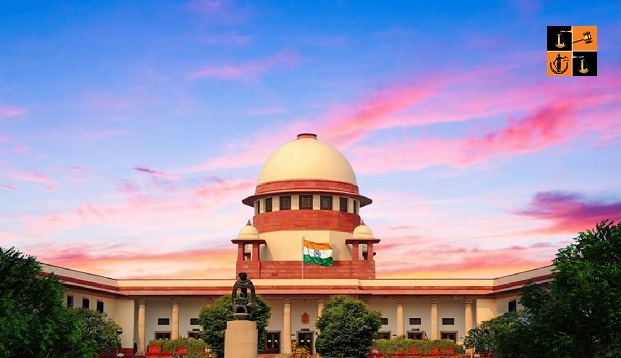
In a recent order, the Supreme Court granted the appeal, overturning the High Court’s appointment of a court receiver. The Court ruled that the High Court had not provided sufficient justification for the receiver, emphasising that such an appointment requires compelling circumstances, which were absent here. The decision clarifies the legal standards for appointing court receivers.
Brief Facts:
The case concerns a complex family and property dispute, where the appellant seeks recognition of his share in a property tied to his late father’s Hindu Undivided Family (HUF). The father, acting as the Karta, had entered into a development agreement to re-develop the property. The appellant, asserting his entitlement to a 1/4th share, filed a suit in 2016, which remains unresolved. Meanwhile, Respondent No. 1, involved in a separate agreement for alternative accommodation, sought legal intervention through a commercial suit in 2022, claiming rights over part of the property. The City Civil Court initially granted a partial injunction. When the matter reached the High Court, it sided with the appellant, recognising a strong prima facie case and appointing a Court Receiver to protect the disputed property until the case’s conclusion.
Contentions of the Petitioner:
Counsel for the appellant raised several arguments to challenge the appointment of a court receiver. He submitted that there is no legal or factual justification for such an appointment, emphasising that the order for the receiver is uncalled for, particularly in light of the status quo order passed on 10.12.2015. According to him, the continuation of the status quo order should have been sufficient to maintain the current situation without needing a court receiver. Furthermore, he contended that Respondent No. 1 is not the original tenant under the relevant agreement and, as such, does not possess any assigned rights or entitlements under the original development agreement.
Contentions of the Respondent:
The learned senior counsel appearing for the respondent(s) strongly supported the order passed by the Division Bench of the High Court, asserting that it protects and balances both parties' interests pending the final disposal of the suit. He argued that the appointment of a receiver was a necessary and appropriate measure to ensure that the rights of both parties were safeguarded during litigation. According to the respondent's counsel, the order was carefully crafted to prevent any party from gaining an unfair advantage or altering the status quo, thereby facilitating a fair and equitable dispute resolution.
Observation of the Court:
Having considered the matter, the Court observed that there are already interim orders in the suit filed by the appellant, as well as orders of injunction passed by the City Civil Court on 16.03.2022 in the present suit filed by Respondent No. 1. The Court noted, "The order of injunction sufficiently protects the respondent no. 1."
The Court further emphasised that "it is a well-settled principle that the court would not appoint a receiver until and unless there are certain compelling reasons." It pointed out that Respondent No. 1 had not demonstrated any special circumstances in the notice of motion justifying the appointment of a receiver. The City Civil Court had already rejected the prayer for a receiver, stating that an order of injunction is sufficient to protect the interests of the respondent no. 1.
The Court also highlighted the absence of reasoning by the High Court for extending the relief of appointing a court receiver, which the City Civil Court had specifically rejected. Referring to the High Court’s order, the Court noted, "a strong prima facie case has indeed been made out by the Appellant for appointment of Court Receiver," but found that merely stating ‘prima facie case’ and ‘conduct’ without further explanation did not justify the need for a receiver. The Court observed that "there is no indication whatsoever as to how the property would deteriorate without the intervention of the court receiver," emphasising that "mere recording of the expressions ‘prima facie case’ and ‘conduct’ by themselves are not sufficient."
Finally, it clarified that the prima facie case, as indicated by the City Civil Court, related only to the grant of an injunction, not the appointment of a receiver.
The decision of the Court:
The Court held that the order passed by the High Court appointing a court receiver was not justified under the facts and circumstances of the case. The appeal was allowed with ‘no order as to costs’, and any pending applications were ‘disposed of’.
Case Title: Hitesh Bhuralal Jain v. Rajpal Amarnath Yadav & Ors.
Citation: SLP (C) No. OF 2024 (Diary No. 51132/2023)
Coram: Hon'ble Mr. Justice P. S. Narasimha and Hon'ble Mr. Justice Manoj Misra
Advocate for Petitioner: AOR Mr. Shishir Deshpande, Adv. Mr. Chitra Parande, Adv. Mr. Nilakanta Nayak, Adv. Mr. Amit Yadav
Advocate for Respondent: Adv. Mr. Devashish Bharuka, Sr. Adv. Ms. Pooja Yadav, AOR Ms. Sarvshree, AOR Ms. Pallavi Barua
Read Order @LatestLaws.com
Picture Source :



















