









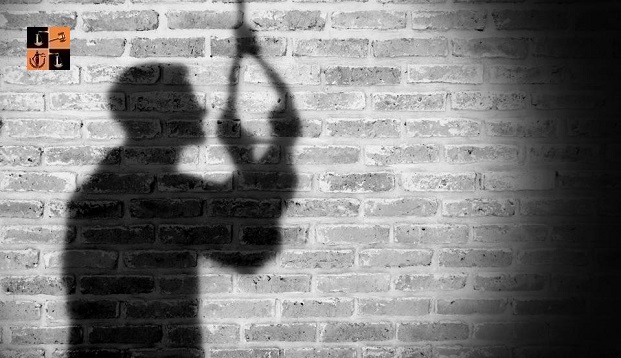
The High Court of Andhra Pradesh dismissed an appeal against the judgment where the sessions court found the appellant guilty of the alternative charge under Section 306 IPC and convicted him for 7 seven years. The court ruled that based on evidence of physical violence, injuries, and the circumstances surrounding the deceased's death, the accused was found guilty under Section 306 IPC for abetting the commission of suicide, and the prosecution successfully established the charge beyond a reasonable doubt.
Brief Facts:
The accused’s third wife died under suspicious circumstances and based on the report given by the parents of the deceased, a case for the offence under Section 304-B IPC was registered against the accused and his parents and was investigated. The accused and the deceased lived happily for some time after their marriage and had children but later the accused and his parents began harassing the deceased with cruelty both mentally and physically to get additional dowry. The father of the deceased adjusted some amount initially but disclosed his inability to meet the demands of the accused. The deceased got disgusted with her life and committed suicide by hanging herself. The police filed charges under Section 304-B read with 34 IPC, and the sessions court convicted the accused under Section 306 IPC. Thus, the accused filed the present appeal challenging the judgment.
Contentions of the Petitioner:
The learned counsel appearing on behalf of the Petitioner contended that the deceased died by hanging herself and there was no abetment of suicide of the deceased by accused No. 1 within the meaning of Section 36 IPC. It is further contended that there was no question of the accused and his parents making any demands on the deceased to get additional amounts for the reason that the father of the accused lent an amount to the father of the deceased at the time of the marriage of his second daughter. It is argued that the father of the deceased had no financial capacity to pay any amounts to the accused even at the time of marriage. It is further argued that the prosecution didn’t establish the essential ingredients of Section 306 IPC and there was no basis for the prosecution to allege that the accused caused any cruelty to drive the deceased to commit suicide.
Contentions of the Respondent:
The learned counsel appearing on behalf of the Respondent contended that the evidence on record is quietly sufficient to convict the accused under Section 306 IPC and it appears that when the conviction was recorded under Section 306 IPC, there was no need to record any conviction under Section 498-A IPC but there was no order at all exonerating accused under Section 498-A IPC. It is further contended that the conviction of the accused under Section 306 IPC is sufficient because it also contains the ingredients of Section 498-A IPC.
Observations of the court:
The court observed that in view of Section 498-A IPC, cruelty means any willful conduct of such a nature as is likely to drive a married woman to commit suicide or to cause grave injury or danger to life, limb, or health and it is clear from the report lodged by the father of the deceased that accused used to beat the deceased and subjected her to physical violence. By virtue of the evidence and the post-mortem report, the prosecution was able to establish that some days prior to the death of the deceased received three injuries and both the deceased and the accused were residing together and those injuries corresponded to the episodes as spoken by the father of the deceased. Thus, the prosecution was able to prove the factum of physical violence against the deceased before the court.
The court further observed that the evidence on record would prove that the deceased was subjected to physical violence in the company of the accused and she died within a period of 7 years in the house of the accused by hanging herself. So, it enables this Court to draw a presumption under Section 113-A of the Indian Evidence Act, 1872 that A-1 abetted the commission of suicide.
The court stated that the accused had no probable say in explaining the circumstances in which injuries were found on the person of the deceased, which is within the exclusive knowledge of the accused being the husband of the deceased to put forth a probable say or plausible cause as to how the deceased received such injuries. The court held that the prosecution proved the charge under Section 306 IPC against the accused beyond reasonable doubt.
The decision of the Court:
The court dismissed the petition.
Case Title: X vs. Y
Coram: Hon’ble Mr. Justice A.V. Ravindra Babu
Case No.: Criminal Appeal No.828 OF 2009
Advocate for the Petitioner: Mr. D. Balakrishnaiah
Advocate for the Respondent: Mr. N. Sravan Kumar
Read Judgment @LatestLaws.com
Picture Source :




















