









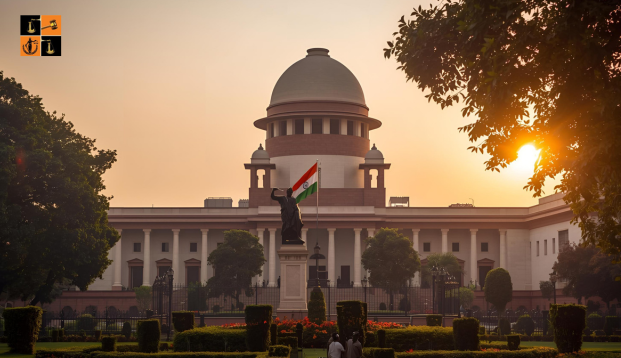
Recently, the Supreme Court held that banks are strictly bound by customer instructions and cannot unilaterally divert funds, while also affirming that a guarantee creates an independent and enforceable liability, in the case involving Canara Bank and Archean Industries Pvt. Ltd. The Court emphasised a crucial principle, financial institutions cannot override customer mandates under the guise of internal or regulatory considerations.
Brief Facts:
The case arose from a commercial arrangement involving unpaid repair charges of a vessel, where a settlement required payment of a specified amount to the service provider. In parallel, a charter party agreement provided that a portion of freight payable would be diverted towards discharging this liability, supported by a document styled as a “corporate guarantee.” Acting on this understanding, the concerned party instructed its banker to remit the agreed sum to the creditor; however, the bank mistakenly transferred the funds to a third party. The error remained unrectified despite repeated requests, leading to recovery proceedings. While the High Court held the bank liable to indemnify for the wrongful remittance, the matter reached the Apex Court through cross-appeals, raising issues concerning the bank’s duty to follow customer instructions and the enforceability of a guarantee under Sections 126 and 128 of the Indian Contract Act, 1872.
Contentions of the Appellant:
The Appellant argued that the so-called “corporate guarantee” did not constitute a legally enforceable guarantee under Section 126 of the Indian Contract Act, 1872, but was merely a payment arrangement flowing from the charter party agreement. It was submitted that Archean had fulfilled its obligation by issuing clear remittance instructions to the bank, and any liability arose solely due to the bank’s admitted error. Consequently, Archean contended that it could not be saddled with financial liability for the wrongful transfer.
Contentions of the Respondent:
Canara Bank, on the other hand, contended that it acted as an authorised foreign exchange dealer and could not remit funds to a third party without the necessary regulatory approvals. It sought to justify the transfer to the vessel owner by referring to the broader commercial understanding underlying the charter party arrangement. The bank further challenged the High Court’s direction requiring it to indemnify Archean, arguing that its actions were not in violation of any binding obligation.
Observation of the Court:
The Court, after analysing the scheme of Sections 126 to 128 of the Indian Contract Act, 1872, reiterated that a contract of guarantee is an independent and enforceable undertaking to discharge the liability of a third party upon default. The Court held that the contemporaneous documents disclosed a “clear and unequivocal” promise, observing that such an undertaking “was not merely a freight-sharing arrangement but an independent guarantee.”
The Court reaffirmed that “the liability of the surety is co-extensive with that of the principal debtor,” and that a creditor is entitled to proceed directly against the surety without exhausting remedies against the principal debtor. It further noted that once the defendant had acted upon the guarantee and issued remittance instructions, it was estopped from denying its liability.
The Court held that once explicit instructions were issued, the bank had no discretion to deviate, stating, “The Bank was required either to comply with those instructions or to seek clarification… The Bank could not have unilaterally remitted the amount.” The Court rejected the defence based on the absence of RBI approval, clarifying that regulatory uncertainty could not justify unilateral action. It categorically observed that “Even in the absence of any RBI approval, the Bank ought to have withheld the amount and awaited further instructions… The funds in question belonged to the customer.”
Further, the Court dismissed reliance on the underlying charter party agreement, noting that the bank, not being a party to it, could not override express customer mandates.
The decision of the Court:
The Court dismissed both appeals, affirming the High Court’s ruling that the defendant was liable under a valid contract of guarantee and entitled to indemnification from the bank for the wrongful remittance.
Case Title: Canara Bank Overseas Branch vs. Archean Industries Pvt Ltd
Case No.: Civil Appeal No. 13861 of 2024
Coram: Hon'ble Mr. Justice J.B. Pardiwala, Hon'ble Mr. Justice R. Mahadevan
Advocate for the Petitioner: Sr. Advs. Ramakrishnan Viraraghavan, Gopal Jain, AORs K. Krishna Kumar, Rajesh Kumar Gautam, Advs Dhananjay Kumar, Anant Gautam, Ajay Sharma, Deepanjal Chaudhary, Vibhu Sharma, Likivi Jakhalu, Azal Aekram
Advocate for the Respondent: Sr. Adv. Ramakrishnan Viraraghavan, Siddharth Yadav, AORs K. Krishna Kumar, Rajesh Kumar Gautam, Krishna Ballabh Thaku, Advs. Dhananjay Kumar, Anant Gautam, Ajay Sharma, Deepanjal Chaudhary, Vibhu Sharma, Likivi Jakhalu, Azal Aekram, Wasim Ashraf, Narender Lodiwal, Rashmi Kumari
Read Judgment @Latestlaws.com
Picture Source :




















