









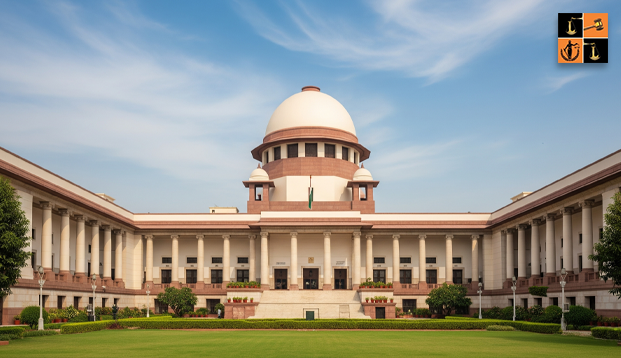
On Tuesday, the Supreme Court held that borrowers are not entitled to a personal oral hearing before their accounts are classified as “fraud” under RBI guidelines. The Court clarified that compliance with natural justice is satisfied through notice, disclosure of material, and a reasoned order, cautioning that procedural expansion cannot be allowed to derail timely fraud detection.
Brief facts:
The case arose from multiple civil appeals challenging High Court directions, which had mandated banks to grant borrowers a personal hearing before classifying their accounts as “fraud” under the RBI Master Directions of 2016 and 2024. In one set of proceedings, after an account was declared a Non-Performing Asset, a show cause notice was issued based on forensic audit findings, followed by replies from the borrower and a speaking order declaring the account as fraud. However, the High Court interfered on the ground that no personal hearing was granted, and the full forensic audit report was not furnished. Similar directions were issued in connected matters, leading banks to approach the Apex Court questioning whether such procedural requirements were legally mandated.
Contentions of the Appellant:
The Appellants contended that the RBI Master Directions, framed under Section 35A of the Banking Regulation Act, 1949, only require issuance of a show cause notice, consideration of the borrower’s reply, and passing of a reasoned order. The Counsel argued that the earlier ruling in State Bank of India and Others vs. Rajesh Agarwal and Others did not mandate a personal hearing but merely read principles of natural justice into the process. The banks emphasised that fraud classification is primarily based on documentary evidence and that insisting on oral hearings would delay action, burden banking systems, and risk dissipation of assets. The Counsel further submitted that such a requirement would convert an administrative process into a quasi-judicial trial, undermining the objective of swift fraud detection.
Contentions of the Respondents:
The borrowers argued that classification as “fraud” carries severe civil consequences, including reputational harm, debarment from financial systems, and potential criminal exposure. The Counsel contended that State Bank of India and Others vs. Rajesh Agarwal and Others implicitly required a personal hearing as part of a meaningful opportunity to respond. The Counsel further submitted that denial of oral hearing violates principles of natural justice and fairness, especially given the gravity of consequences. The borrowers also pressed for mandatory disclosure of the full forensic audit report, arguing that without complete material, any opportunity to respond would be illusory.
Observation of the Court:
The Division Bench of Justice J.B. Pardiwala and Justice K. V. Viswanathan observed that “the procedure of issuing a show cause notice, furnishing of the evidentiary material, eliciting a reply and the obligation to pass a reasoned order will meet the requirements of fairness and also thwart mis-carriage of justice.”
The Court observed that the principles of natural justice are not rigid or straitjacketed rules but are inherently flexible and must be tailored to the context in which they operate. It held that the application of audi alteram partem depends on the nature of the administrative action, the statutory framework, and the consequences flowing from such action. The Bench emphasised that while fairness must be ensured, the form it takes need not always include a personal hearing. It further clarified that procedural safeguards must be proportionate and should not unnecessarily burden regulatory processes designed for the public interest.
The Bench held that borrowers do not have a vested or absolute right to a personal oral hearing before their accounts are classified as “fraud.” It emphasised that the earlier ruling in Rajesh Agarwal did not mandate such a requirement and only ensured that borrowers are given an opportunity to respond. The Court clarified that an “opportunity of being heard” does not automatically translate into an oral hearing in all circumstances. It further noted that insisting on personal hearings in every case would transform an administrative exercise into a prolonged adjudicatory process, defeating its very purpose.
The Court observed that the procedure prescribed under the RBI Master Directions, issuance of the show cause notice, furnishing of material, consideration of reply, and passing of a reasoned order, adequately satisfies the requirements of fairness. It held that such a structured mechanism ensures that borrowers are informed of the allegations and are given a meaningful opportunity to respond. The Bench emphasised that the requirement of a reasoned order acts as a safeguard against arbitrariness. It further clarified that this process strikes a balance between individual rights and the need for swift regulatory action.
The Bench emphasised that mandating personal hearings in all fraud classification cases would have serious practical and systemic implications. It observed that banking frauds involve large volumes of cases, complex financial transactions, and multiple stakeholders, making oral hearings impracticable. The Bench noted that such a requirement would delay fraud detection, burden bank officials, and create opportunities for borrowers to dissipate assets or tamper with evidence. It further highlighted that regulatory efficiency and protection of public funds cannot be compromised by procedural expansions beyond necessity.
The Court held that furnishing the full forensic audit report to the borrower is essential for ensuring meaningful opportunity to respond. It emphasised that without access to the complete material forming the basis of the proposed action, the right to reply would be illusory. The Bench clarified that while limited redactions may be permissible to protect sensitive information, the core findings and conclusions must be disclosed. It further observed that transparency in this regard is a crucial component of fairness in administrative decision-making.
The decision of the Court:
The Apex Court partly allowed the appeals, setting aside the High Court directions mandating personal hearings while upholding the requirement to furnish the complete forensic audit report. It held that principles of natural justice in fraud classification proceedings are satisfied through notice, disclosure, written response, and a reasoned order, and do not extend to a compulsory right of oral hearing, thereby reaffirming that procedural fairness must be balanced with the need for swift and effective financial regulation.
Case Title: State Bank of India Vs. Amit Iron Private Limited & Ors
Case No.: SLP(C) Nos. 20618-20619 of 2025
Citation: 2026 Latest Caselaw 262 SC
Coram: Hon’ble Mr. Justice J.B. Pardiwala, Hon’ble Mr. Justice K. V. Viswanathan
Advocate for the Petitioner: Solicitor General Tushar Mehta, AOR Chandrashekhar A. Chakalabbi, AOR Sanjay Kapur, Adv. Jatin Kumar, Adv. Anshul Rai, Adv. S.k Pandey, Adv. G. Anusha, Adv. Varnik Kundaliya, Adv. Rahul Singh Latwal, Adv. Surya Prakash, Adv. Shubhra Kapur, Adv. Santha Smruthi, Adv. Aman Mehta, Adv. Anuraj Mishra
Advocate for the Respondent: AOR Misha Rohatgi, AOR Rajat Nair, AOR Purti Gupta, AOR Ramesh Babu M. R., Adv. Nakul Mohta, Adv. Ayush Kashyap, K. Parameshwara, Adv. Suryakash Manot, Adv. Randeep Sachadeva, Adv. Vishal Sinha, Adv. Dhruv Pande, Adv. Akshaja Singh, Adv. Shivang Gupta, Adv. Prashant Sodhi, Adv. Mukund Sharma, Adv. Alok Dubey, Adv. Veda Singh, Adv. Manisha Singh, Adv. Nisha Sharma, Adv. Jagriti Bharti, Adv. Rohan Srivastava, Adv. Tanya Chowdhary, Adv. Purti Gupta, Adv. Henna George
Read Judgment @Latestlaws.com
Picture Source :



















