









The Author, Manas Agrawal a final year Law student pursuing BBA.LLB (Hons.) from Amity Law School, Noida (Amity University).
Bar Council is a term of common parlance for the individuals related to and involved with the activities of Legal Fraternity. However, despite being a term of such a widespread usage it is rarely understood in its true sense and more exceptionally known for its historical context. Bar in layman’s language can be defined as a collective term for advocates or attorneys licensed to practice in all or specific courts of a sate. Taking a peek in history, we come to know that the word “bar” finds its roots in the Courts of England owing to usage of a bar as a partition so as to divide the pious Court hall into two parts with an aim to separate Officers of the Court as well as Barristers and Attorneys from suitors and the General Public.
Authoritarian sources such as Black's Law Dictionary defines “Bar” as “the railing that separates the front area where the judge, court personnel, lawyers and witness conduct court business, from the back area which provides seats for observers.”[1] The same dictionary has also defined the ‘Bar’ as “the whole body of lawyers qualified to practice in a given court or jurisdiction; the legal profession or an organized sub-set of it.”[2] In the modern context, the term “bar” has acquired distinctive importance owing to change in the dynamics of the legal profession and now collectively refers to the Advocates licensed by the proper authority to practice in all or particular courts within the territorial bounds of the State.[3]
Quite often, in a global context, the terms “bar councils” and “bar associations” are used synonymously to refer to a professional and quite often a statutory body regulating the legal profession in the particular country ensuring the bare minimum standards of conduct and ethics to be followed in courts of law and may often also control and regulate Legal Education along with Legal Profession. However, considering the Indian Context, “Bar Council” and “Bar Association” are two completely different organizations entrusted with different functions, having different powers and more importantly having different legal statuses and sanctity. The two bodies function within their own, clearly defined boundaries however with a common goal of strengthening and uplifting the legal profession and legal fraternity in India. Owing to the restrains of the research proposition, this article will focus in-depth only on “Bar Council”.
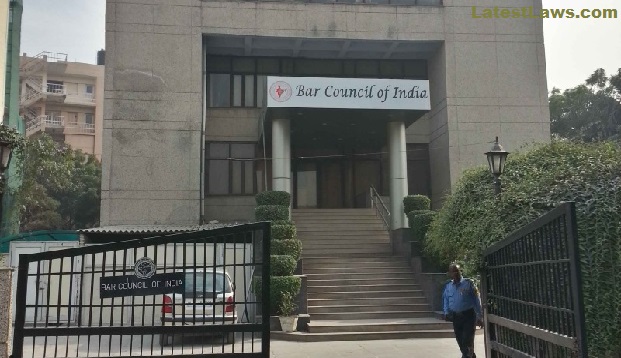
Section 5 of the Advocates Act, 1961[4] invariably provides for every Bar Council to be a “Body Corporate” having a common seal and perpetual succession. Rendering, a statutory body as that of the bar council of India, with the status of a ‘body corporate’ ensues several Legal consequences. This main objective sought to be achieved through this article is to analyze in detail, such consequences entailed purely from the lens of law. However, before delving into the peculiarities associated with the status of Bar Council as a Body Corporate, it is incumbent to briefly examine the history as well as the structure of Bar councils in India.
As India gained independence from British rule, the legal profession in India faced a severe crisis as the Indian Bar Councils Act, 1926 failed to establish a unified national Bar and completely left out pleaders and mukhtars out of its scope and ambit. Hence, soon after coming in force of the Indian Constitution on 26 January 1950, a resolution was passed by the Inter-University board invariably emphasizing the need for an All India Bar and the necessity of uniformity in setting high standards for legal education across different universities.
Under the presidency of Shri S. Varadachariar, the Madras Provincial Lawyers Conference in May 1950 resolved to constitute a committee to be appointed by the Indian Government so as to evolve a new scheme for All India Bar and to make all the necessary changes, amending and consolidating the Indian Bar Councils Act with an aim to bring it in conformity with the newly enforced Constitution. It is pertinent to note that a then member of parliament, Shri Syed Mohammed Ahmad Kazmi on April 12, 1951, introduced a bill seeking amendments in the India Bar Council Act.[5] The Indian government contemplating the dynamics of the time and needs of newly born India considered it necessary to support the bill. So as to evaluate the feasibility of a unified Bar in India, a committee of inquiry known as All India Bar Committee under the chairmanship of Justice S.R. Das was set up in August 1951. Apart from assessing the Feasibility of a unified national Bar, the committee was also to consider several other important aspects such as continuance or abolition of the dual system of counsel for different states, the viability of having a separate bar council for the Supreme Court, and most importantly revision, consolidation, and amendment of the existing legislation pertaining to the subject matter of legal profession in India.
The All India Bar Committee presented its report in 1953 recommending All India Bar and abolishing different classes of practitioners. The report gave several other recommendations so as to strengthen the legal profession in India. At this point, it is also pertinent to note that in 1958 the 14th Law Commission Report on Reforms in Judicial Administration[6] also asserted the immediate need for a unified national level bar and supported the recommendations as suggested by the All India Bar Committee.
It was only in 1961, when the Indian Lawmakers actually set the wheel of law in motion by enacting the Advocate Act, 1961 so as to bring Reforms in Judicial Administration. The new enactment was largely based upon the recommendations as provided by the All India Bar Committee and the 14th Law Commission Report (1958)[7] however with a few necessary modifications. The new legislation consolidated and amended the law related to Legal Practitioners and repealed the then-existing All India Bar Council Act, 1926 as well as Legal Practitioners 1879.[8] One of the most important as well as appreciated features of this enactment was that it provided for the establishment and constitution of Bar councils for every state alongside the establishment of All India Bar Council. This Basically provided for Bar Council at both National as well as state level.
Under the Act of 1961, “Bar Council” has been defined as “a Bar Council Constituted under the Act”. Furthermore, the definition of the “State Bar Council” is contained in Section 2(1)(m) which “means a Bar Council constituted under Section 3[9]”. The act defines “Bar Council of India” in Section 2(1)(e) as the “Bar Council constituted under Section 4[10] for the territories to which this act extends”.
The main objective of the Bar Councils as established under this legislation is to act as a regulatory body so as to ensure certain standards of professional conduct by controlling, regulating, and prescribing bare minimum standards in respect of the same.[11] It also aims to ensure adequate etiquettes and most importantly exercises disciplinary jurisdiction over the bar.[12] It also sets standards for legal education and grants recognition to Universities whose degree in law serves as a qualification for students to enrol themselves as advocates upon graduation.[13]
Additionally, it also performs certain functions in a representative capacity by protecting the rights, privileges, and interests of the advocates and through the creation of funds for providing financial assistance to organize welfare schemes for them.[14]
References:
[1] ‘Bar’ Definition, Garner, Bryan A and Henry Campbell Black, Black’s Law Dictionary. (9th ed. 2009), St. Paul, MN: West, 2009 available at Westlaw.
[2] Ibid.
[3] John Hamilton Baker, An Introduction to British Legal History, Butterworths, London, Third Edition, 1990, p. 179.
[4] Section 5 of the Advocates Act, 1961 (Act 25 of 1961) - Every Bar Council shall be a body corporate having perpetual succession and a common seal, with power to acquire and hold property, both movable and immovable, and to contract, and may be the name by which it is known sue and be sued.
[5] M. P. Jain, Outlines of Indian Legal & Constitutional History, LexisNexis Butterworths Wadhwa Nagpur, Gurgaon, 2012, p. 669.
[6] The Law Commission in its Fourteenth Report observed: “A well-organized system of judicial administration postulate a properly equipped and efficient Bar”, 1958, p. 556.
[7] Law Commission of India, “14th Report on Reforms in Judicial Administration” (September, 1958).
[8] Veeraraghavan, Legal Profession and the Advocates Act, 1961, (1972) 14 JILI., 228,230.
[9] Advocate Act, 1961 (Act 25 of 1961), Section 3. State Bar Councils – Clause (1) of the section names out different State Bar Council for States and Union Territories. Further Clause (2) to Clause (6) of the section provide for Constitution of State Bar Councils.
[10] Advocate Act, 1961 (Act 25 of 1961), Section 4. Bar Council of India.—(1) There shall be a Bar Council for the territories to which this Act extends to be known as the Bar Council of India which shall consist of the following members, namely:— (a) the Attorney-General of India, ex officio; (b) the Solicitor-General of India, ex officio; 1[***] (c) one member elected by each State Bar Council from amongst its members. The other Clauses of the section provide for the composition of the BCI.
[11] Advocate Act, 1961 (Act 25 of 1961), Section 7 – Functions of Bar Council of India.
[12] Advocate Act, 1961 (Act 25 of 1961), Section 6 – Functions of State Bar Councils.
[13] Supra Note 11.
[14] Supra Note 12.
Picture Source :



















