









The Author, Shreeya Sucharita is a 2nd Year, BBA.LLB student at ICFAI Law School, Dehradun. She is currently interning with LatestLaws.com.
INTRODUCTION
Wildlife means the native wild fauna and flora of a region. As per Section 2 of the Wild Life (Protection) Act, 1972, “wildlife” includes, any animal, bees, butterflies, crustacean, fish and moths; and aquatic or land vegetation which forms part of any habitat. The definition embraces all life forms that are wild. India has nearly 6.5% of the world's known wildlife species, and is one of the mega diverse countries of the world.
Protection of forest and wildlife bears greater significance in the present scenario because of growing pressure on forest and the monetary value involved in the wildlife trade. India is an importer, exporter and a conduit for wildlife that enters the $ 25 billion annual global trade. India was one of the initial members of the Convention on International Trade in Endangered Species of Wild Fauna and Flora (CITES), thereby pledging international support to an ideal cause, both in its domestic and international policy on wildlife. The global value of wildlife trade as given by international enforcement agencies is second only to narcotics in the illegal scene. There are various agencies entrusted with the duty of anti- poaching and some of them are Customs, Wildlife Protection Department, Railway Protection Force, Directorate of Revenue Intelligence, etc. The laws targeting wildlife protection include, The Wildlife (Protection) Act, 1972 (Last amended in 2006), The Indian Forest Act (1927) and Forest Acts of State Governments, etc.
WHAT IS WILDLIFE CRIME?
Wildlife crime can be defined as taking, possession, trade or movement, processing, consumption of wild animals and plants or their derivatives in contravention of any international, regional, or national legislations. Though wildlife crimes share many of the characteristics of other transnational crime types, they are yet to be viewed, and as ‘mainstream’ crimes like drug-trafficking, murder, rape or burglaries.
Wildlife offenders can be divided into two groups –
A. The poachers or hunters who kill or capture wild animals or collect wild plants
B. Persons trading, buying hunted and/or captured animals or its body parts or derivatives or collected plants or its parts or derivatives, for own consumption or for sale.
ILLEGAL WILDLIFE TRADE
Wildlife trade is any sale or exchange of wild animal and plant resources by people. It can be in live animals or their parts, products and derivatives, including plant extracts and parts of animals used in medicines, tourist curios, skin, timber, fish or other food products. In fact, live animals form only a small part of the trade. Wildlife trade can be at the local village level, regional retail and wholesale levels or international import and export levels. Wildlife trade is a serious conservation problem because it has a negative effect on the viability of many wildlife populations and is one of the major threats to the survival of vertebrate species. Today, wildlife crimes are one of the most profitable illicit trades in the world. The traders of wildlife materials constitute the most influential group of wildlife offenders and they operate in highly organised manner. Networks of such organized wildlife criminals have global presence and they make maximum commercial gain from these crimes.
Reasons for upsurge of Illegal Wildlife Trade in India
- Illegal wildlife trade is driven mainly by the huge profits earned by the traders.
- Low risk and low penalties make the trade highly lucrative.
- Unlike other conventional crimes, no stigma is attached to the offenders who commit wildlife crimes.
- Wealthy markets in Asia, Europe, USA and the Middle East are the force driving the illegal trade of wildlife.
- Craze for ornaments made of animal body parts (ivory, tiger teeth/bones), use of animal body parts or plants in traditional medicines, keeping the skins or horns or antlers as status symbols, cultural beliefs or even superstitious beliefs are other factors driving the illegal trade in wildlife and their parts & products.
WHY IS ILLEGAL WILDLIFE TRADE A PROBLEM?
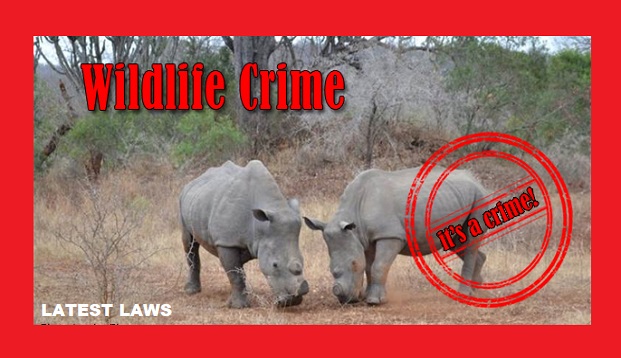
In many cases, illegal wildlife trade has led to over-exploitation of the targeted species, to the point where the very survival of these species is becoming difficult. This aspect has been well publicised in the case of Tigers, rhinos, elephants, Star Tortoises and others. Over harvesting for trade has also affected populations of many freshwater and marine species such as otters, freshwater and marine turtles, corals, sharks, tuna and other sea fish. Furthermore, illegal wildlife trade indirectly threatens the livelihoods of a large part of our human population who are dependent on wildlife products from forest and coastal biomes to sustain them. These inhabitants not only depend on the resources from the wild for food but also for their livelihood and healthcare. It is therefore crucial that these wildlife resources are managed sustainably and conserved according to the law.
REPERCUSSIONS OF WILDLIFE CRIME
· Besides generating significant losses in assets and revenues for many developing countries, the theft of and illegal trade in natural resources potentially threatens the livelihood of rural communities, impacts upon food security and risks, damaging whole ecosystems.
· The cross-border smuggling of live animals and plants carries with it risks to human health through the spread of disease, some of which (such as the Ebola virus) are literally life-threatening. Diseases, such as bird flu, can also be spread to food chains, leading to mass euthanasia of livestock herds.
· The introduction of alien species to habitats can ruin the natural biodiversity of countries or regions.
· The ease with which some wildlife contraband is smuggled across borders, often in significant quantities, demonstrates very real threats to national security and the bio-security of States.
LEGAL FRAMEWORK FOR WILDLIFE CONSERVATION IN INDIA
India has some of the most stringent legislations to protect wildlife and habitats. The Government of India has introduced various legislations as well joined hands with various international agencies so as to curb the increased rates of wild life crime as well as to protect the deteriorating wildlife.
1. The Wildlife (Protection) Act, 1972: The Wildlife Protection Act, 1972, provides for protection to listed species of flora and fauna and establishes a network of ecologically-important protected areas. The Act consists of 60 Sections and VI Schedules- divided into Eight Chapters. The major features of the act are-
· Establishment of protected areas- The Wildlife Protection Act, 1972 empowers the central and state governments to declare any area a wildlife sanctuary, national park or closed area.
· Protection and management of wildlife habitats- There is a blanket ban on carrying out any industrial activity inside these protected areas.
· Regulation and control of trade - It provides for authorities to administer and implement the Act and regulate the hunting of wild animals; protect specified plants, sanctuaries, national parks and closed areas. It also restricts trade or commerce in wild animals or animal articles and miscellaneous matters.
· Prohibition of hunting- The Act prohibits hunting of animals except with permission of authorized officer when an animal has become dangerous to human life or property or as disabled or diseased as to be beyond recovery. The act has had some major amendments in the previous years, a few of them are-
® In 1982, an amendment introduced provisions permitting the capture and transportation of wild animals for the scientific management of animal population.
® The near-total prohibition on hunting was made more effective by the Amendment Act of 1991.This also recognized the needs of tribal and forest dwellers and changes were introduced to advance their welfare.
® Widespread changes have been made by the Wildlife (Protection) Amendment Act, 2002 and a new chapter has been incorporated to deal with the forfeiture of property derived from illegal hunting and trade. Further, this amendment Act also introduced the concept of cooperative management through conservation reserve management committee and community reserve committees.
® The Government of India constituted a statutory body, the Wildlife Crime Control Bureau on 6th June 2007 by amending the Wildlife (Protection) Act, 1972. This bureau complements the efforts of the state governments, primary enforcers13, and other enforcement agencies of the country.
2. The Forest Conservation Act (1980): In order to check rapid deforestation due to forestlands being released by state governments for agriculture, industry and other development projects (allowed under the Indian Forest Act) the federal government enacted the Forest Conservation Act in 1980 with an amendment in 1988. The Act made the prior approval of the federal government necessary for de-reservation of reserved forests, logging and for use of forestland for non- forest purposes. The Supreme Court of India has currently imposed a complete ban on the release of forestland for non-forestry activities without the prior approval of the federal government.
3. The Environment (Protection) Act (1986): The Environment Protection Act is an important legislation that provides for coordination of activities of the various regulatory agencies, creation of authorities with adequate powers for environmental protection, regulation of the discharge of environmental pollutants, handling of hazardous substances, etc. The Act provided an opportunity to extend legal protection to non-forest habitats (‘Ecologically Sensitive Areas’) such as grasslands, wetlands and coastal zones.
4. The Biological Diversity Act (2002): India is a party to the United Nations Convention on Biological Diversity. The provisions of the Biological Diversity Act are in addition to and not in derogation of the provisions in any other law relating to forests or wildlife.
5. CITES: CITES and Wildlife Protection in India is a member of the CITES (Convention on International Trade in Endangered Species of Wild Fauna and Flora) since 1976. It aims to ban trade in endangered species and to regulate trade of other commercially exploited species. CITES is an international agreement between governments that aims to ensure that the international trade in specimens of wild animals and plants does not threaten their survival.
6. TRAFFIC: In 1976, the year after the entry into force of the CITES, the Species Survival Commission of IUCN established the Trade Records Analysis of Flora and Fauna in Commerce (TRAFFIC) to monitor wildlife trade and the implementation of the treaty. TRAFFIC actively monitors and investigates wildlife trade, and provides its information to a diverse audience world-wide, as a basis for effective conservation policies and programmes. This non-governmental organisation undertakes its activities in close collaboration with governments and others.
TRAFFIC's programme is built to deliver change in the behaviour (policy and practice) of specific target groups (individuals and institutions) who are in a position to ensure that wildlife trade is not a threat to the conservation of nature. The first layer defines what types of response TRAFFIC should try to prompt through its work. In simple terms, the responses fall under the following headings: Effective regulation, Positive economic incentives, Sustainable consumptive behaviour, and Mobilised knowledge.
The second critical level of strategy defines what type of interventions or actions TRAFFIC will implement in order to prompt such responses. This includes undertaking research and investigation through market surveys; assessment of trade mechanisms, routes, economics and motivations; analysis of official trade statistics; collation of observations and findings of other researchers; and specific investigations of illegal trade activities.
As part of its authority, TRAFFIC India is actively engaged on wildlife trade related affairs across the country and the South Asian region. It is covering a number of activities presenting policy inputs, supporting and strengthening field level implementation and enhancing capacity across various levels and institutions to address wildlife trade related matters.
7. The Third Wildlife Action Plan For 2017-2031: India unveiled the third National Wildlife Action Plan for 2017-2031 on 1st October. The third National Wildlife Action Plan is unique in nature as the plan lays out the strategies and actions to address the challenges emerging out of climate change effect on wildlife and emphasises on integrating steps that need to be taken for its mitigation and adaptation into wildlife management planning processes.
CONCLUSION
Though wild animals and plants are the victims of any wildlife offences at first place, it has got a pouring down effect on the ecosystem of particular region. It is clear from the constitutional instructions that wildlife is our national treasure. Man-animal dispute situations require urgent improvement to avoid these becoming a source of reciprocating action against the animals in question by the affected people, and later centre of illegal trade in animal parts and products.
In India, like many other countries, the problem is not of the laws but that these may be poorly communicated and poorly executed and applied. Often, positive efforts to address wildlife trade concerns are compromised by lack of political drive and governance failures. Without political backing, disincentives for over-exploitation and illegal trade, such as penalties for legal enforcements, are all too often weak.
According to WWF-India, there is an urgent requirement for knowledge and action to bring the legal wildlife trade within sustainable levels and stop all illegal trade that has endangered and even pushed many species towards extinction.
Picture Source :




















