









The Author, Gaurav Thote is an Advocate practising in the Bombay High Court.
“It’s not who you are underneath: It’s what you do that defines you.”
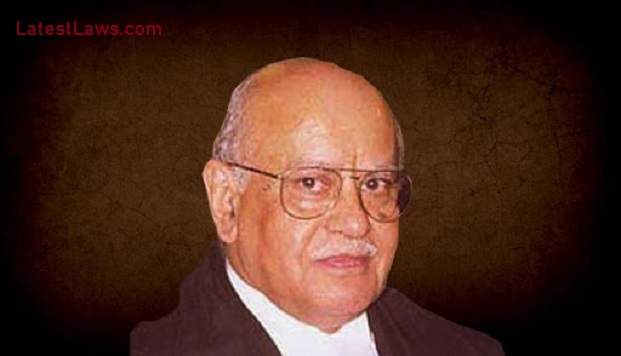
Dedicated to the 29th and former Chief Justice of India, Dr. Justice Adarsh Sein Anand, who passed away on December 1, 2017, this article commemorates his 84th birth anniversary. The responsibility of being a Supreme Court Judge was vested in his hands in 1991, and he successfully served as CJI for a notable tenure of 1117 days (from October 10, 1998 to October 31, 2001).
To quote India’s former Finance Minister Mr. Arun Jaitley-
“Justice Adarsh Sein Anand was a visionary constitution expert & known for making inexpensive justice accessible to people.”
Ever since the initiation of his tenure as a judge of the Apex Court, Justice AS Anand’s contributions to the legal field were highly noteworthy. Alongwith delivering a catena of precedents and constitutional decisions on divergent legal issues, Justice AS Anand has also penned down two compelling books namely The Constitution of Jammu and Kashmir: Its Development & Comments and Justice for Women: Concerns and Expressions.
While serving his tenure as CJI, a Petition was filed on February 14, 2001 disputing Justice Anand’s age as his date of birth was averred to be November 1, 1934. A full bench of the Supreme Court not only dismissed such contentions at the very threshold for want of proof, but also issued a show cause notice to the Petitioner seeking an explanation as to why action was not to be initiated under Section 293 of IPC for making such false statements. (Refer – Madras High Court Advocate Association v. Dr. AS Anand & Ors.)
Revisiting few Landmark Judgments
- Union of India v. Harnam Singh[i]
On February 9, 1993 a bench headed by Justice AS Anand held that a Govt Servant has the right to continue till the age of retirement as fixed by the State Govt, unless his services are dispensed with as per the procedure laid down and although the date of birth entered in the service records of a civil servant is of utmost importance, he cannot claim as a matter of right to correct it, after the expiry of limitation even if he has good evidence to establish that the recorded date of birth was erroneously recorded. The bench set aside the order of the Tribunal whereby a direction to correct the Respondent – Govt Servant’s date of birth after the limitation was issued.
- Subramanium v. State of Kerala[ii]
On February 24, 1993, a division bench comprising of Justice AS Anand observed that out of 6 accused persons charged with murder by forming an unlawful assembly, 2 were acquitted by the High Court and hence the charge of ‘unlawful assembly’ could not be sustained as the definition of ‘unlawful assembly’ warranted five or more persons. In view thereof, it was held that the accused would have to be held liable separately.
- Smt. Nilabati Behera v. State of Orissa (Full Bench)[iii]
On March 24, 1993 a full bench was constituted to decide if the Court was empowered to exercise its Writ Jurisdiction under Article 32 of the Constitution of India to grant relief/compensation in a case where a person was alleged to have died as a consequence of the injuries inflicted on him whilst in Police Custody. Adverting to various decisions, the bench answered the reference in the affirmative and directed the State to pay a compensation of Rs. 1,50,000/- to the Petitioner.
Justice AS Anand delivered a separate judgment concurring with the ratio delivered by Justice JS Verma observing that the Supreme Court and High Courts, being the protectors of the civil liberties of the citizen, not only had the power and jurisdiction but also an obligation to grant relief in exercise of its jurisdiction under Articles 32 and 226 of the Constitution to the victim or the heir of the victim whose fundamental rights under Article 21 of the Constitution of India are established to have been flagrantly infringed by calling upon the State to repair the damage done by its officers to the fundamental rights of the citizen, notwithstanding the right of the citizen to the remedy by way of a civil suit or criminal proceedings.
- K Krishna Iyer v. State of Kerala[iv]
On March 30, 1993 a bench of Justice AS Anand observed that although the Appellant/Accused was charged and convicted under Section 16(1A) of the Prevention of Food Adulteration Act, 1954 under the pretext of selling ice-sticks containing adulterated substances, the case of the prosecution did not satisfy the essential ingredient engrafted in Section 16(1A) of the Act - ‘injurious to health’. Pursuant to the same, the conviction of the Appellant was altered to an offence committed under Section 16(1) of the Act which was not as grave as an offence under Section 16(1A) of the Act.
- Bheru Singh v. State of Rajasthan[v]
On February 4, 1994 a bench presided by Justice AS Anand upheld the death penalty of the Appellant charged for murdering his wife and children by slaughtering them, on the ground that the confession recorded of the Appellant, though retracted at the time of trial, corroborated the testimony given by eye-witnesses and that the matter fell in the category of ‘rarest of rare cases’. In the said case, the First Informant narrated the incident, a part of which amounted to a confession. Resultantly, the Informant was cited as Accused and the bench held that only that part of the statement which did not amount to a confession was admissible in evidence, and remaining part of the statement was hit by Section 25 of the Evidence Act.
- Joginder Kumar v. State of UP (Full Bench)[vi]
On April 25, 1994 a three-judge-bench comprising of Justice AS Anand took a serious note of the conduct of Police Officers abusing their powers to arrest and elucidated that the power of an officer to arrest was to be exercised only if there was justification for the same ; and that a person was not liable to be arrested merely on suspicion. Furthermore, for effective implementation of fundamental rights, the following requirements were issued-
(i) An arrested person being held in custody was entitled, if he so requested, to have one friend, relative or other person who is known to him or likely to take an interest in his welfare, be told as far as is practicable that he has been arrested and the place of his detention.
(ii) The police officer was duty bound to inform the arrested person when he is brought to the police station of this right.
(iii) An entry was to be made in the diary as to who was informed of the arrest. These protections from power were held to flow from Articles 21 and 22(1) and enforced strictly.
The bench held that it was the duty of the Magistrate, before whom the arrested person was produced, to satisfy himself that the above-mentioned requirements had been complied with.
- Hitendra Thakur v. State of Maharashtra[vii]
On July 12, 1994 a bench headed by Justice AS Anand laid down the law in matters pertaining to ‘default bail’ under the Terrorist And Disruptive Activities (Prevention) Act holding that failure to complete investigation within the prescribed period rendered an ‘indefeasible right’ of bail in favour of the accused. It was observed that although the Special Court for TADA was empowered to extend the period of detention of accused beyond the period prescribed under Section 167(2) of the CrPC, the same could not be extended by virtue of an improper exercise of treating the Investigating Officer’s report as the Prosecutor’s Report.
- Ali Mustafa Abdul Rahman Moosa v. State of Kerala[viii]
On September 28, 1994 a bench presided by Justice AS Anand overturned the conviction of the accused charged under provisions of NDPS Act observing that Section 50 of the Act was violated as the accused was not informed of his right to be searched in presence of a Gazetted Officer/Magistrate which made the entire search illegal. It was held that conviction under the NDPS Act could not be based on an illegal or invalid search.
- State of Maharashtra v. Sharadchandra Vinayak Dongre (Full Bench)[ix]
On October 7, 1994 a three-judge-bench (Per: Dr.AS Anand, J) set aside the order of the Bombay High Court quashing the prosecution against the accused under provisions of the Bombay Prohibition Act, 1949 observing that the prosecution could not be quashed merely on the grounds that
- the Trial Court allowed the prosecution’s application for condonation of delay in filing the charge-sheet ex-parte and without recording any reasons; and
- the Trial Court could not have taken cognizance of the “incomplete charge-sheet” when the Application for condonation was pending.
Observing that it was jurisdiction of the Magistrate and Magistrate alone to decide whether the material placed by the prosecution with the report (charge-sheet) was sufficient to take cognizance or not, the Supreme Court remitted the matter back to the Magistrate to hear both parties on the issue of condonation of delay.
- Kanchan Devi v. Pramod Mittal[x]
On April 3, 1996 a bench headed by Justice AS Anand invoked its powers under Article 142 of the Constitution of India for the purpose of dissolving the marriage between the parties and granted a decree of divorce observing that there was no possibility of the parties reconciling.
- JK Industries Ltd v. Chief Inspector[xi]
On September 25, 1996 a bench presided by Justice AS Anand held that in case of a company owning a factory, proviso (ii) of Section 2(n) of the Factories Act, 1948 envisaged that the occupier of the factory would necessarily have to be one of its directors, and that such occupier could be any other employee of the company or the factory, however, where no such director was identified for the purpose of prosecution and punishment, proceedings could be initiated against any one of the directors as deemed occupier. It was held that the third party procedure – which enabled the occupier or the manager of the factory, to extricate himself from punishment by establishing that the actual offender is someone else and giving satisfactory proof of facts (as an exception to strict liability rule) was not violative of Articles 14, 19(1)(g) and 21 of the Constitution.
- DK Basu v. State of West Bengal[xii]
Pursuant to a letter addressed to the CJI regarding the increasing number of deaths occurring in Police lock-ups and custody by the Executive Chairman, Legal Aid Services, West Bengal, a non-political organisation registered under the Societies Registration Act, on December 19, 1996, a bench headed by Justice AS Anand took cognizance of the matter and issued mandatory guidelines to be strictly followed by the Police Officers effecting arrest of persons. It was clarified that non-compliance of such guidelines would render the concerned officials liable for departmental action and Contempt of Court.
- Supreme Court Bar Association v. Union of India (Constitution Bench)[xiii]
On April 17, 1998 a Constitution Bench (Per: Dr.AS Anand, J) observed that the Supreme Court could not invoke its powers under Article 142 to take over the role of ‘Statutory Bodies’ or other organs of the State and perform their functions while holding that the Court could not have suspended/debarred an Advocate from practising law in exercise of its original jurisdiction on the ground that he was held guilty of Contempt, as the power to suspend/debar Advocates from practising lied exclusively with the Bar Council.
- TM Jacob v. C Poulose (Constitution Bench)[xiv]
A five-judge-bench on April 15, 1999 (Per: Dr.AS Anand, J) while dealing with an issue pertaining to compliance of Sections 81(3) read with 83(1)(c) of the Representation of People Act, 1951 elucidated the term “copies” contemplated in Section 81(3) of the Act, observing that the term “copy” was a matter of substance and not form. While dismissing the Appellant’s contention of non-compliance of Section 81(3) of the Act for not providing an ‘identical copy’ of the Petition, it was held that the provision envisaged a copy which was substantially similar the original Petition and did not contain any material or substantial variation of a vital nature as could possibly mislead a reasonable person to understand and meet the charges/allegations made against him in the election petition.
- State of Punjab v. Baldev Singh (Constitution Bench)[xv]
On July 21, 1999, a five-judge-bench delivered its verdict (Per: A.S. Anand, CJI) with reference to Section 50 of the Narcotic Drug and Psychotropic Substances Act 1985 (NDPS Act), holding that an accused under the NDPS Act was entitled to be informed of his/her right to be searched in presence of a Gazetted Officer or Magistrate while conducting his/her personal search and failure to comply with this requisite would render the search illegal. It was also stated that all offences under the NDPS Act are non-bailable which was reiterated by the Bombay High Court in the Sushant Singh Rajput Case.
- Sunil Fulchand Shah v. Union of India (Constitution Bench)[xvi]
On February 16, 2000 a five-judge-bench headed by Justice AS Anand delivered its verdict pursuant to the reference made by a division bench in matters of preventive detention under the Conservation of Foreign Exchange and Prevention of Smuggling Activities Act, 1974 (COFEPOSA). While observing the bar of judicial intervention u/s. Section 12(6) of the COFEPOSA (which barred temporary release) to not affect the jurisdiction of the High Courts under Article 226 of the Constitution or Supreme Court under Articles 32, 136 or 142 of the Constitution, the five-judge-bench held:
- That grant of parole by the Courts would not interrupt the period of detention and, thus, that period was to be counted towards the total period of detention; and
- That it was open for the Appellate Court to decide whether the period during which the detenu was released on the basis of an erroneous order was to be excluded while computing the total period of detention as indicated in the order of detention though normally the period during which the detenu was free on the basis of such an erroneous order may not be given as a 'set off against the total period of detention.
However, the bench clarified that the actual period of incarceration could not be permitted to exceed the maximum period of detention, as fixed in the order, as per the statute.
Justice Anand’s perspective and insight highlight his passion and endeavour in upholding human rights. Post his retirement from service, he was appointed as the Chairperson of the National Human Rights Commission and subsequently was appointed as chairman of a five-member committee set up for examining the safety aspects of Mullaperiyar Dam in Kerala.
In 2007, Justice Anand was given the ‘National Law Day’ award by the President of India for his outstanding contribution to fair and efficient Administration of Justice. He was honoured with Padma Vibhushan, the second highest civilian award by the Government of India in the year 2008, an honour fit for a visionary like himself!
Although Justice Anand is not with us anymore, his views and opinions will always beacon for the Indian legal system and judiciary; a guiding light, leading the path towards a more refined and lawful society.
Views are personal only.
References:
[i] 1993 SCR (1) 862
[ii] 1993 SCR (2) 84
[iii] 1993 SCR (2) 581
[iv] 1993 SCR (2) 707
[v] 1994 SCC (2) 467
[vi] 1994 SCC (4) 260
[vii] 1994 SCC (4) 602
[viii] 1994 SCC (6) 569
[ix] 1995 SCC (1) 42
[x] JT 1996 (5) 655
[xi] 1996 SCC (6) 665
[xii] 1997 SCC (1) 426
[xiii] 1998 SCC (4) 409
[xiv] 1999 SCC (4) 274
[xv] 1999 SCC (6) 172
[xvi] 2000 SCC (3) 409
Picture Source :




















