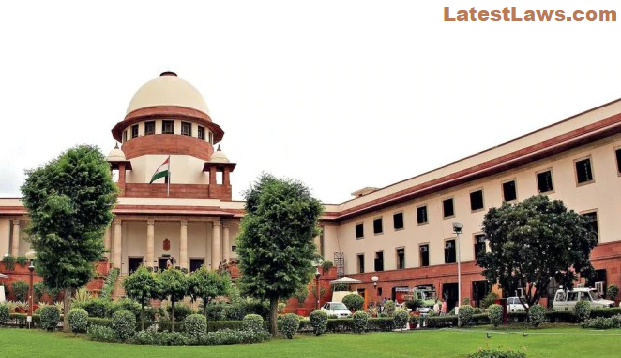
On 25th September 2020 a three bench judge of the Supreme Court consisting of Justice Ashok Bhushan, Justice R. Subhash Reddy, and Justice M.R. Shah in the case of Dr. Jitendra Gupta. v. Dr. C. Chandramouli, granted the appellant to make a fresh representation to the Secretary, Department of Personnel and Training, Government of India within two weeks from the date of order in regards to his contention that he should be transferred to the State of Haryana.
Factual Background
The appellant, is an IAS Officer, Bihar Cadre. While posted as Sub-Divisional Officer in Bihar, an FIR was lodged against the appellant. Disciplinary proceedings were also initiated by the State against the Officer. The appellant alleging victimization and persecution by the State filed a writ petition in the Patna High Court. The High Court quashed the criminal proceedings vide judgment which order was also upheld by this Court later on. The appellant applied for Cadre transfer from Bihar by his representation. A writ petition was filed in this Court which petition was disposed of by this Court directing the Central Government to look into the grievance of the appellant and take appropriate action within three months. After the order by this Court, the Central Government considered the case of the appellant and sought consent from the Government of Haryana by letter. The State of Haryana communicated its consent for Cadre transfer of the appellant. The Central Government Order declined to approve the appellant’s Cadre transfer from Bihar to Haryana. Challenging the order, the appellant filed a case in the Central Administrative Tribunal which application was allowed by the Central Administrative Tribunal vide its judgment. The Tribunal set aside the order and directed the Union of India through its Secretary, Department of Personnel & Training to consider the case of the appellant for inter-State Cadre transfer for the State of Haryana under Rule 5(2) of IAS (Cadre) Rules, 1954 or for Central Government deputation under Rule 6 of the said Rules. The State of Bihar was directed not to withhold its consent for the inter-State deputation/Central deputation. The State of Bihar aggrieved by the aforesaid order, filed the writ petition in the Delhi High Court being Writ Petition. Before the High Court counsel for the Union of India made a statement that the Union of India does not propose to challenge the judgment of the Tribunal. The writ petition came to be dismissed by the Division Bench of the Delhi High Court vide its judgment. The appellant aggrieved by the letter filed Contempt Case in the Delhi High Court. The High Court was of the view that no prima facie case of wilful disobedience of the direction given by the Division Bench of the High Court is found, hence the contempt petition was rejected. Aggrieved by the said judgment has been filed before this court.
Submissions on behalf of the Appellant
The counsel on behalf of the appellant submits that the order of the Delhi High Court has not been complied by the respondent. He submits that the respondents were required to issue an order in regard to the inter-cadre transfer of the appellant as the State of Haryana has given consent for transfer. It was not open for the respondent to ask for the consent of the appellant with regard to the State of Nagaland, Manipur, and Andhra Pradesh for inter-cadre transfer of the appellant. He submits that the reasons cited in the letter are not relevant to the issue. He submits that inter-cadre transfer in the case of the appellant is on account of the extreme hardship to the appellant. By considering the case of extreme hardship a large number of officers, IAS officer, Central Government has always accommodated at their choice. He submits that letter was contemptuous and the Delhi High Court ought to have initiated a contempt petition which erred in rejecting the same.
Submissions on behalf of the respondent
The counsel appearing for the respondent submits that no contempt was committed by the respondent. He submits that under the order of the Delhi High Court, it was the Central Government who was to take decisions regarding the inter-cadre transfer of the appellant as per law. Shri Mehta referred to Rule 5(2) of IAS (Cadre) Rules, 1954 as well as O.M. dated 08.11.2004. He has relied on Clause 2(viii) of the O.M. dated 08.11.2004. He submits that if a request on the ground of threat is made the Central Government may initially send the officer on a three years deputation of State of its choice. He submits that the choice is of the Central Government where the officer is to be sent from one cadre to another cadre. He submits that no contempt was committed by the respondent in issuing the letter. He further submits that the appellant cannot be sent to a state of his choice, it is the prerogative of the Central Government to take a decision in which inter-cadre transfer is to be affected.
Court Analysis
Learned counsel for the appellant has submitted that observation made by the Delhi High Court judgment that the State of Haryana is the home State of the appellant was incorrect and the home State of the appellant is U.P. which cannot be disputed. In the facts of the present case, we are of the view that present was not a case of any willful disobedience of the direction of the High Court and the High Court rightly refused to initiate contempt proceedings. The court noticed that this Court in the SLP giving rise to this appeal as well as the contempt petition filed by the appellant in this Court passed two orders on 26.06.2020 as well as on 11.08.2020 with the hope that the matter may be amicably settled, and the issue between the appellant and the Central Government be settled amicably but learned Solicitor General submits that no amicable settlement could be arrived at as hoped by this Court. Under the order passed by the Delhi High Court, the appellant’s inter-cadre transfer under Rules 1954 is to be affected by the Central Government. The proceedings of inter-cadre transfer are awaiting finalization for the last more than two years. The appellant is ready to render his services in any other State, which State needs to utilize his services for the welfare of the people. There is no doubt that it is the Central Government which is the authority competent to transfer the appellant from one cadre to another. The court was also of the view that the appellant cannot insist that he should be transferred to the State of Haryana. However, they were inclined to grant liberty to the appellant to make a fresh representation to the Secretary, Department of Personnel and Training, Government of India in reference to the letter within two weeks from today with regard to his inter-cadre transfer in light of the judgment of Delhi High Court.
Judgment
It shall be open for the appellant to give his willingness/consent with regard to any other State. The representation may be considered by the competent authority sympathetically and appropriate decision is communicated at an early date preferably within two months from the date of receipt of the representation. The civil appeal was disposed of accordingly. The Contempt of Court Petition was rejected.
Read Judgment @Latestlaws.com