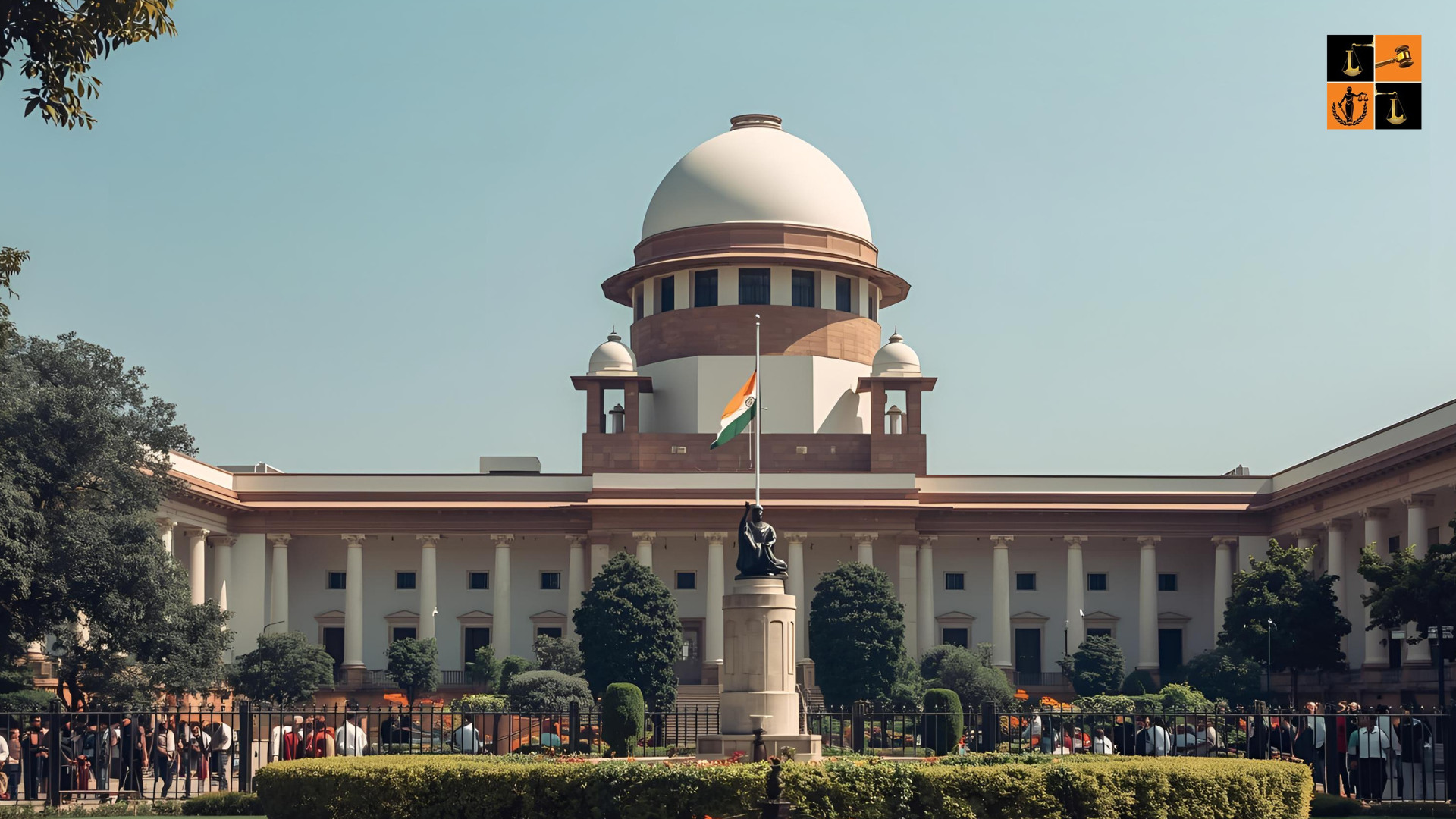
Recently, the Supreme Court held that the Rights of Persons with Disabilities Act, 2016 prescribes only a minimum threshold for reservation eligibility and does not permit the State to impose an upper limit excluding persons with higher degrees of disability. Setting aside the High Court’s ruling, the Court directed the appointment of a 90% locomotor-disabled candidate as Assistant District Attorney, emphatically observing that eligibility must turn on functional ability, not the percentage of disability alone.
Brief Facts:
The dispute arose from a 2018 recruitment conducted by the Himachal Pradesh Public Service Commission for 24 posts of Assistant District Attorney, including two reserved for persons with disabilities. The advertisement restricted eligibility to candidates with disability between 40% and 60%. The appellant, a practising advocate with 90% permanent locomotor disability, applied under the reserved category, successfully cleared the written examination, and emerged as the top candidate among disabled applicants.
Despite being recommended for appointment after the interview, the State denied him appointment solely on the ground that his disability exceeded the prescribed 60% ceiling. Aggrieved, he approached the High Court, which upheld the State’s action, prompting him to challenge the decision before the Supreme Court.
Contentions of the Appellant:
Counsel for the appellant contended that the prescription of a 60% upper limit was contrary to the statutory framework of the RPwD Act, which only defines a minimum benchmark of 40% disability. It was argued that once the appellant satisfied the eligibility criteria and demonstrated merit in the selection process, denial of appointment solely based on a higher disability percentage was arbitrary and violative of Articles 14 and 16 of the Constitution. Reliance was placed on evolving jurisprudence recognising the principle of reasonable accommodation and the shift from a medical to a functional understanding of disability.
Contentions of the Respondent:
Counsel for the State defended the recruitment criteria, arguing that the prescription of an upper limit was within administrative discretion to ensure efficiency in public service. It was submitted that reliance on the precedent in V. Surendra Mohan v. State of Tamil Nadu justified such limitations. The State maintained that the nature of duties required a certain level of physical capability, and the restriction was a reasonable classification to maintain functional standards in public employment.
Observations of the Court:
The Court undertook a detailed examination of the statutory scheme of the RPwD Act and firmly rejected the State’s approach. It held that the law only sets a minimum threshold for identifying “persons with benchmark disabilities” and does not authorise exclusion through artificial upper limits. In a significant observation, the Court stated, “The RPwD Act, 2016 defines the ‘floor’ for reservation eligibility but does not empower the State to create an arbitrary ‘ceiling’ that excludes those with higher degrees of disability.”
The bench found that by imposing a 60% cap, the State had effectively “rewritten the statutory definition”, undermining the very purpose of the legislation. Emphasising the centrality of reasonable accommodation, the Court clarified that suitability must be assessed based on the functional requirements of the role rather than a rigid percentage criterion. It further noted that the duties of an Assistant District Attorney primarily require intellectual and analytical skills, observing that “the percentage of disability, by itself, cannot be determinative of suitability.”
Importantly, the Court distinguished earlier precedent relied upon by the State, noting that it stood overruled by subsequent jurisprudence recognising broader rights of persons with disabilities. It concluded that the impugned restriction lacked any rational nexus with the job profile and amounted to manifest arbitrariness, violating constitutional guarantees of equality and equal opportunity.
The decision of the Court:
Allowing the appeal, the Supreme Court set aside the High Court’s judgment and directed the State to appoint the appellant as Assistant District Attorney within two weeks, with notional benefits from the date his appointment was originally due, and further ordered payment of costs. The Court crystallised the legal position that while the RPwD Act sets a minimum benchmark for eligibility, the State cannot impose an upper ceiling to exclude qualified candidates, and assessment must be based on functional capability supported by reasonable accommodation.
Case Title: Prabhu Kumar v. State of Himachal Pradesh
Case No.: Civil Appeal No(s). 868 of 2024
Coram: Justice Vikram Nath, Justice Sandeep Mehta
Advocate for Petitioner: Adv. P.V. Dinesh (Sr. Adv.), Subhash Chandran K R, Biju P Raman (AOR), Krishna L R, Anna Oommen, Anirudh K P, John Thomas Arakal
Advocate for Respondent: Adv. Arman Roop Sharma, Shimpy Arman Sharma, Shivangi Goel, Priyanka Dubey, Saumya Mishra, Dr. Vinod Kumar Tewari (AOR), Samir Ali Khan (AOR)
Read Judgment @Latestlaws.com