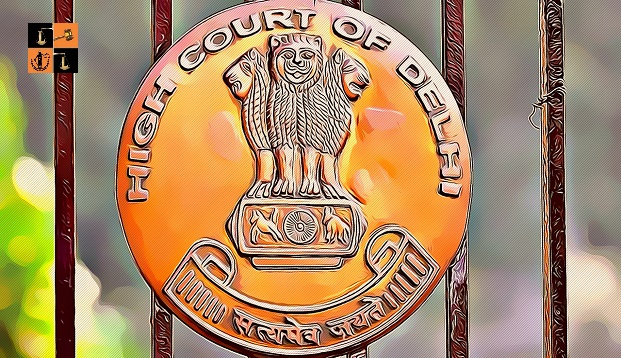
Recently, the Delhi High Court dismissed a petition seeking interim protection under the Arbitration and Conciliation Act, holding that courts cannot compel parties into arbitration unless the statutory requirements for a valid arbitration agreement are strictly satisfied. The Court observed that the mere use of the word “arbitration” does not, by itself, create a binding arbitral regime.
Brief Facts:
The case arose from a dispute within a closely held company following the demise of its founder, which triggered disagreements among family members who were also part of the company’s management. The petitioner and one of the respondents were managing directors, while the remaining respondents were directors associated with the board. A board resolution was passed authorising a third party to deal with legal matters relating to the estate of the deceased founder. The petitioner objected to this resolution, alleging that it violated the company’s Articles of Association. Relying on Article 30A of the Articles of Association, which made a reference to “arbitration,” the petitioner approached the High Court under Section 9 of the Arbitration and Conciliation Act, 1996, seeking an interim stay on the operation of the board resolution pending arbitration.
Contentions of the Petitioner:
The Petitioner argued that the board resolution was illegal and contrary to the Articles of Association. The Counsel contended that Article 30A expressly referred disputes to arbitration and therefore any disagreement between directors, shareholders, and the company was mandatorily arbitrable. The Petitioner further submitted that although the clause referred to “joint arbitration of the auditors and lawyers of the company,” the mechanism could be suitably modified by the Court through appointment of an independent arbitrator, leaving issues of jurisdiction and arbitrability to be decided by the arbitral tribunal itself.
Contentions of the Respondents:
The Respondents submitted that no arbitration agreement existed in law, as the Petitioner was neither a signatory to the Articles of Association nor a party to any arbitration agreement within the meaning of the Arbitration Act. The Counsel argued that the Articles bind only the company and its shareholders, and a director who is not a shareholder cannot invoke an arbitration clause contained therein. The Respondents further contended that Article 30A did not reflect any intention to submit disputes to binding arbitration but merely provided for an internal, non-adjudicatory dispute resolution mechanism.
Observation of the Court:
The Court noted that Section 7 of the Arbitration and Conciliation Act, 1996 mandates that an arbitration agreement must be in writing and, where contained in a document, must be “signed by the parties.” The Court found that the Articles of Association, on which the petitioner relied, were admittedly not signed by her, thereby failing the statutory threshold.
The Court further clarified that while directors are governed by the Articles, this governance does not convert them into contractual parties capable of enforcing arbitration clauses. The Court reiterated that “the Articles of Association do not constitute a contract between the company and third persons,” and that a director simpliciter cannot invoke arbitration merely because the Articles contain a clause using that expression.
The Court held that it did not evince any intent to arbitrate under the Arbitration Act. Relying on the case K.K. Modi v. K.N. Modi, the Court stressed that a valid arbitration agreement must contemplate a binding adjudicatory process. It found that the phrase “in the first instance” and the reference to auditors and lawyers of the company pointed decisively towards an in-house dispute resolution mechanism rather than arbitration. The Court observed that the “mere mention of the word ‘arbitration’ is not conclusive of the parties’ intention.”
The decision of the Court:
In light of the foregoing discussion, the Court dismissed the petition, holding that no arbitration agreement existed within the meaning of Section 7 of the Arbitration and Conciliation Act, and consequently, no interim relief could be granted under Section 9.
Case Title: Natasha Oberoi v. Rajaraman Shankar & Ors.
Case No.: O.M.P. (I) (COMM.) 373/2025
Coram: Hon’ble Mr. Justice Purushaindra Kumar Kaurav
Advocate for the Petitioner: Sr. Adv. Dayan Krishnan, Advs. Amita Gupta Katragadda, Surabhi Khattar, Ambika Mathur, Niharika Chhabra, Shivansh Vishwakarma
Advocate for the Respondents: Sr. Advs. Saurabh Kirpal, Abhishek Manu Singhvi, Akhil Sibal, Rajiv Nayar, Rajshekhar Rao, Advs. Ankur Sood, Dhaman Trivedi, Prajwal Suman, Romila Mandal and others
Read Judgment @ Latestlaws.com