The Authors, Sakshi Agarwal and Aniket Sachan are 3rd Year students of Dr. Ram Manohar Lohiya National Law University, Lucknow.
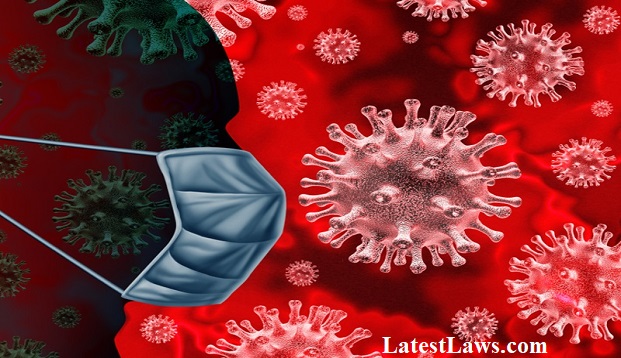
Without effective human intervention, epidemics and pandemics typically end only when the virus or bacteria has infected every available host and all have either died or become immune to the disease. World Health Organization has declared COVID-19 as a pandemic.[1] Today while facing this global pandemic the importance of health has been felt. The Coronavirus has brought life to a standstill. Thereby, preventive initiatives have been directed towards protecting the frontiers against invasion.[2] As per Tedros Adhanom, Director-General of WHO, Strong health and disease surveillance system obstructs and prevents pandemics which claims lives, deplete economies and cast a global emergency threat. Having no cure and vaccine, the best possible prevention is social distancing and isolation of infected persons. The governments are often in dilemma whether to respond or not to a safety threat.
As per Steve Taylor, professor at the University of British Columbia, “government when response fast and the epidemic is not that serious then the policymakers are blamed for overreacting. Whereas when they adopt waiting strategy and advance too gradually, they are blamed for slow approach.”[3] Therefore, most of the governments of the world are resorting to legislation’s specifically dealing with the spread of communicable disease and are incorporating measures such as lockdown, curfews and health emergencies thereby banning international passengers, movement of people at public place etc.
Therefore, we hereby discuss the provisions of the legislations enacted by different countries to strengthen themselves to fight the novel coronavirus.
INDIA
To tackle Coronavirus the Union Government fell back on colonial legislation, Epidemic Diseases Act, 1897, which specifically dealt with preventing transmission of hazardous epidemic diseases by conferring wide powers on Central[4] and State Governments[5] and penalising the offenders[6]. The Act authorizes States to ban general meetings, restrict assembly, shut down schools and colleges and ask offices to pursue work from home. Further, the Central Government has delegated the power of home ministry to the health ministry under Section 10(2)(i) and 10(2)(l)[7] of Disaster Management Act, 2005. As per this act, the Ministry of -Health and Family Welfare regulated the sale of surgical masks, hand sanitizers and gloves and have added them as Essential goods under the Essential Commodity Act, 1955 to prevent hoarding and black marketing.[8]
Government is also taking recourse to Aircraft (Public Health) Rules, 1954 that, warrants a Health Officer to check citizens arriving from abroad at the airport entrance.[9] In furtherance of the guidelines issued by Health ministry, airport authorities screened travellers who had travel journey in affected nations.
The administration can also take recourse to Sections 269, 270, 271 of Indian Penal Code to ensure effective enforcement of the public healthcare rules. For successive enforcement and effective regulation, we require the amalgamation of public safety laws to efficiently track the execution of reaction to an outbreak.[10]
SWITZERLAND
The condition in Switzerland is unique in terms of the Epidemics Act, owing to the dissemination of COVID-19. The Federal Council banned activities affecting more than 1,000 participants and it may undertake further actions to restrict the spread of COVID-19 based on how the situation progresses in Switzerland.[11] Restrictions have been imposed on the entry of people, people are required to stay at home, schools and colleges have been closed and other instructions have been provided for public safety. Violators are to be punished with three years’ imprisonment or fine.
The Communicable Diseases Legislation – Epidemics Act, 2010 often referred as EpidA, provides for three-part model to meet normal, particular and extraordinary situations.[12] The following measure ensures effective work-sharing and coordination between Confederation and Cantons at national as well as international levels. Confederation provides strategies while canton implements the program to prevent the sporadic spread of particular communicable disease. Information exchange acts as a link between the two and provides for strong coordination. The recent act also has provision for prevention of communicable diseases. The act has also scheduled certain preventative measures in the form of lifestyle and working conditions.
IRELAND
The Health Act of Ireland has a particular Chapter IV specifically dealing with Infectious Disease and Infestation. Section 30[13] of Health Act, 1947 has been meticulously drafted casting a duty on an infected person to prevent the spread of infectious disease. The act clearly provides for the regulations, which can be laid down to control the spread of disease.[14] The Irish law even punishes the person who conceal infected persons and offers them residence.[15] Section 38[16] confers powers on CMO to order detention of the infected. It allows health officials to isolate and detain all who behave defiantly. Not only this section authorizes medical officer to detain but also is carefully drafted imbibing in itself check and balances under Section 38 (c) (i, ii)[17]. Further, clause 4 of the said section punishes whoever resists from being detained, misbehaves, attempts to escapes and do not submit himself peacefully.[18]
Recently, Irish Government presented Health (Preservation and Protection and other Emergency Measures in the Public Interest) Act, 2020 to deal with the rapid rise of Coronavirus patients. It was initiated to make exceptional provision for the public safety, to tackle the grave threat that human life is succumbed to in vake of global pandemic, Corona.[19] The government decided to amend its previous Health Act, 1947. It allows the Health Ministry to make laws for public safety and amend the scope of Social Welfare Acts to meet the illness benefit provided to patients and job allowances to jobseekers.
UNITED KINGDOM
The Corona Virus Act, 2020[20] has been passed in the United Kingdom, which provides emergency powers to the UK authorities to cope with the ongoing coronavirus pandemic. This power needs to be renewed every six months by parliament[21]. Airports can be made non-operational[22] to avoid entry of people form host nations. Especially contentious is that the legislation gives the law enforcement authorities unlimited authority to arrest individuals and, if possible, place them within suitable isolation centres[23] to secure vital resources that could be threatened during the epidemic. [24] As per the Health Secretary, such powers are in absolute proportion to the threat, which the entire globe is facing. As per the act, ports can be shut; tenants are garnered protection form eviction.[25] However, this act fails to address the issues pertaining to the disabled and elderly people. The act also envisages that recently retired workers will return to work without detrimental impacts on their privileges. For staff caring for patients outside their regular duty, special medical cover may also be provided.
ITALY
Italy has been the worst victim of the novel Corona Virus. Such has been the situation that army trucks are deployed to carry out dead bodies. The number of death in Italy far exceeded China. The situation there has led to complete lockdown and other nations of the world followed the same. Government authorities have not only quarantined the northern Lombardy area but also other areas owing to surprise outbreak. Authorities also released instructions to shut schools and libraries, postpone sporting activities, big gatherings, halt transportation and freight with the exception of certain pharmacy and grocery stores.[26] The Government declared the state of emergency on January 31, 2020.[27] Lack of emergency provisions in the Constitution of Italy posed another challenge for the parliamentarians. The President of the Council of Ministers (PCM) took the control over the crisis and issued certain decrees to contain the spread of the virus. The Decree dated March 8, 2020, was enforced to extend the imposition of restrictive measures to red areas. These restrictive measures were extended to whole national territory. By the March 11 decree, Government suspended all commercial activities excluding public services.[28] It is to noted that such decrees lacked severity.
UNITED STATES OF AMERICA
Law of quarantine in the U.S.A. has its origin since the 1700s. These regulations have restrictions and can authorize the government to deliberately isolate infectious individuals and a threat to society.[29] The Commerce Clause of the U.S. Constitution legalizes and provides authority to the federal government to impose measures like isolation and quarantine. Pursuant to Article 361 of the American Public Health Service Act, The Secretary of Health and Human Services is authorized to prevent entry and spread of transmissible diseases from abroad. The Centre for Disease Control and Prevention (CDC) has been given the authority to conduct such duties.[30] Because of sluggish initial reaction from the Trump administration to this global crisis, the United States experienced shortages in research supplies and medical beds. Secretary Azar declared a public health emergency for the US on January 31, 2020.[31] Therefore, Donald Trump, President of the United States of America, invoked the Defence Production Act to allow military hospital ships to be more readily accessible in regions heavily impacted by coronavirus. A legislation was enacted that explicitly allowed the federal government to request American manufacturers to make critical equipment’s like fans, ventilators, gears and safety equipment for health care personnel and to desperately produce required medical supplies.[32] To address COVID-19 outbreak, US Senate passed a legislation for relief measures and economic relief of the masses.[33]
SINGAPORE
The Infectious Diseases Act, 1976 is the legislation dealing with infectious disease prevention and management in Singapore. The act jointly allows The Ministry of Health and the National Environment Authority (NEA) to implement the regulation laid down. The act specifies that all contagious disorders will be notified. This empowers the Director of Medical Services to make medical assessment[34] and care of any patient suspected of being a carrier of communicable disease. He is also empowered to conduct a post-mortem review[35] of someone who is believed to be an infectious disease vector. Suspected person can be detained and isolated.[36] Directors can also order for Treatment of premises[37], vessels, closure of ports, restaurant’s to tackle transmission of an infectious disease. Meetings, gatherings that are likely to increase the proliferation of contagious diseases, can also be banned[38]. As per IDA, the minister can designate a region (within or outside Singapore) to be an infected area[39] to deter infectious disease from reaching Singapore and causing widespread harm and panic.
CONCLUSION
Coronavirus is a global health catastrophe whose far-reaching implications are yet to be uncovered. The priority of the nations is to contain the virus and stop its spread. During the pandemic crisis, the well-equipped healthcare systems across the globe are unable to deliver their services to all their citizens. Specific provisions have been laid to tackle such crisis and health emergencies. For e.g.- the Federal Office of Public Health (FOPH) in Switzerland is the focal point for the WHO for such public health issues, in particular cases that may be an international disaster in the area of public health. The current crisis requires harmonious construction between special measures and essential safeguards. Such extraordinary measures are legitimate during the time of crisis. At the time when COVID-19 is spreading its tentacles across the globe, Ireland’s Health Act is well suited to curb its outbreak. Global leaders have respected Taiwan's preparation for such a pandemic. Successful leadership and expertise, inclusive and mutual industry and government response to medical devices, methods used to monitor contaminated citizens may be linked to its success.
When contagious disorders arise, the legislative mechanisms must be reinforced within the strong structure of public safety laws in fields such as isolation, quarantine, limitations on mobility or transport, prohibition on community gatherings, closing of schools, compulsory vaccination and other modes of protection. The legislation can incorporate provisions similar to Ireland casting a duty upon the infected person to take precautionary measures to restrict the spread of the disease. By the adoption of the Switzerland model of work-sharing between confederation and cantons, the Indian federalism could be strengthened. The Government needs to work on ground realities. Gaps and loopholes in the monitoring of the infectious disease needs to be resolved. India needs to evaluate and upgrade its health policy and legal framework to expand the disease prevention system and monitor epidemic and pandemic crisis.[40]
References:
[1] World Health Organization, Coronavirus disease (COVID-19) Pandemic, (March 15, 2020, 16:36 PM), https://www.who.int/emergencies/diseases/novel-coronavirus-2019.
[2] Johan Giesecke, International Health Regulations and Epidemic Control, World Health Organization, (March 12, 2020, 13:54 PM), https://www.who.int/trade/distance_learning/gpgh/gpgh8/en/.
[3] Emma Graham Harrison, Coronavirus: how Asian countries acted while the west dithered, (March 22, 2020, 22:32 PM), https://www.theguardian.com/world/2020/mar/21/coronavirus-asia-acted-west-dithered-hong-kong-taiwan-europe.
[4] The Epidemic Act, 1897, §. 2A.
[5] The Epidemic Act, 1897, §. 2.
[6] The Epidemic Act, 1897, §. 3.
[7] The Disaster Management Act, 2005, §. 10(2)(i), 10(2)(l).
[8] Press Information Bureau, Government invoke Disaster Management Act to ensure prices regulation and availability of Surgical and protective mask, Hand sanitizer and Gloves, (March 19, 2020, 14:23 PM), https://pib.gov.in/newsite/PrintRelease.aspx?relid=200240.
[9] Aircraft (Public Health) Rules, 1954, R. 2(8).
[10] Aniket Sachan & Sakshi Agarwal, India Fights COVID-19: Where We Stand?, (Apr. 4, 2020, 10:23 AM), https://countercurrents.org/2020/03/india-fights-covid-19-where-we-stand.
[11] Prof. Joachin G Frick, Coronavirus Outbreak: Global Guide to Force Majeure and International Commercial Contracts -- the Swiss Perspective, (March 24, 2020, 20:15 PM), https://www.bakermckenzie.com/en/insight/publications/2020/03/coronavirus-force-majeure-swiss-perspective.
[12] Federal Office of Public Health, Communicable Diseases Legislation – Epidemics Act, (EpidA), (Apr. 2, 2020, 16:15 PM), https://www.bag.admin.ch/bag/en/home/gesetze-und-bewilligungen/gesetzgebung/gesetzgebung-mensch-gesundheit/epidemiengesetz.html.
[13] The Health Act, 1947, §. 30.
[14] The Health Act, 1947, §. 31.
[15] The Health Act, 1947, §. 33-37.
[16] The Health Act, 1947, §. 38.
[17] The Health Act, 1947, §. 38(c)(i,ii).
[18] The Health Act, 1947, §. 38(4).
[19] Dáil Éireann, Health (Preservation and Protection and other Emergency Measures in the Public Interest) Bill, 2020, (Bill 3 of 2020), (March 24, 2020, 21:35 PM), https://www.oireachtas.ie/en/bills/bill/2020/3/.
[20]United Kingdom, Corona Virus Act. 2020, (Apr 04, 2020, 11:35 AM), http://www.legislation.gov.uk/ukpga/2020/7/pdfs/ukpga_20200007_en.pdf.
[21] Corona Virus Act, 2020, §. 20.
[22] Corona Virus Act, 2020, §. 25(B).
[23] Corona Virus Act, 2020, §. 25(G).
[24] BBC News, Coronavirus: Emergency legislation set out, (Apr 04, 2020, 12:15 PM), https://www.bbc.com/news/uk-politics-51964163.
[25] Corona Virus Act, 2020, Schedule 29.
[26] Megan Molteni, The World Health Organization has urged other nations to learn from China's handling of the Covid-19 epidemic. But would an aggressive quarantine work here? (March 18, 2020, 11:12 AM), https://www.wired.com/story/could-the-us-contain-a-coronavirus-outbreak/.
[27] France 24, Italy declares state of emergency over coronavirus, (Apr. 9, 2020, 4:36 PM) https://www.france24.com/en/20200131-italy-declares-state-of-emergency-over-coronavirus
[28] Roberto Podda & Ottavia Colnago, COVID-19: Tools for Italian Employers in Facing the Emergency, (Apr. 9, 2020, 4:36 PM), https://www.natlawreview.com/article/covid-19-tools-italian-employers-facing-emergency.
[29] Megan Molteni, Could the US contain Corona virus Outbreak? (March 18, 2020, 12:10 PM), https://www.wired.com/story/could-the-us-contain-a-coronavirus-outbreak/.
[30] CDC, Legal Authorities for Isolation and Quarantine, (Apr. 01, 2020, 12:48 PM), https://www.cdc.gov/quarantine/aboutlawsregulationsquarantineisolation.html.
[31] HHS. Gov, Secretary Azar Declares Public Health Emergency for United States for 2019 Novel Coronavirus, (April 08, 2020, 16:45 PM), https://www.hhs.gov/about/news/2020/01/31/secretary-azar-declares-public-health-emergency-us-2019-novel-coronavirus.html.
[32] The New York Times, Trump invokes the Defence Production Act to increase supplies of vital equipment, (March 19, 2020, 18:29 PM), https://www.nytimes.com/2020/03/18/world/coronavirus-news.html.
[33] The Economic Times, Trump signs emergency coronavirus relief bill into law, (April 9, 2020, 5:01 PM)
https://economictimes.indiatimes.com/news/international/world-news/trump-signs-emergency-coronavirus-relief-bill-into-law/articleshow/74703543.cms?from=mdr
[34] The Infectious Disease Act, 1976, §. 8.
[35] The Infectious Disease Act, 1976, §. 9.
[36] The Infectious Disease Act, 1976, §. 15.
[37] The Infectious Disease Act, 1976, §. 12.
[38] The Infectious Disease Act, 1976, §. 20.
[39] The Infectious Disease Act, 1976, §. 26.
[40] T.J. John, L. Dandona, V.P. Sharma, Continuing challenge of infectious diseases in India, (March 20, 2020, 15:41 PM), https://www.ncbi.nlm.nih.gov/pubmed/21227500.
Tags :