Friday, 17, Apr, 2026


Expand O P Jindal Global University
 
Recent News

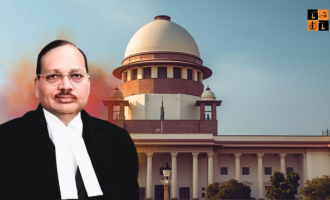
'When even Judges give different answers, Law Students can’t be expected to Know Better': SC while granting relief in Law Officer Exam


supreme court.jpg
18 Mar 2026
Categories: Latest News

In a significant intervention addressing fairness in competitive examinations, the Supreme Court stepped in to examine a contentious recruitment dispute involving a single disputed MCQ in a Law Officer exam conducted by the Municipal Corporation, Chandigarh, where a candidate’s selection, and another’s ouster, turned entirely on one constitutional law question. The Court scrutinised whether penalising a candidate for choosing an answer that even judges disagreed upon could withstand judicial scrutiny, hinting at a deeper concern over fairness in evaluation standards.

The controversy began when the Municipal Corporation, Chandigarh conducted a written examination for the post of Law Officer, where selection hinged solely on objective-type questions with negative marking. A dispute arose over Question 73 relating to the immunity of the Ninth Schedule from judicial review. While the recruiting body treated Option ‘B’ (Ninth Schedule) as correct, another candidate marked Option ‘D’ (None of the above), arguing that no Schedule is absolutely immune in light of evolving constitutional jurisprudence.

Counsel for the affected candidate argued that the answer key ignored landmark rulings such as I.R. Coelho, thereby unjustly deducting marks and altering merit rankings. The High Court’s Division Bench sided with this view, holding the candidate’s answer to be legally sound and directing reconsideration, which in turn threatened the already selected candidate’s position.

The Supreme Court, however, took a balanced and pragmatic view of the situation, emphasising the inherent complexity of the legal issue involved. In a striking observation, the Court noted, “When the Judges of the High Court are at variance in their opinion… it is least expected from mere law graduates… to reach to a correct conclusion.” Recognising that both answers carried legal justification, one based on the literal reading of Article 31B and the other on evolved constitutional interpretation, the Court held that penalising either candidate would be unjust.

It further observed that while Option ‘B’ “appears to be more appropriate,” a deeper constitutional analysis also validates Option ‘D’. Consequently, the Court avoided displacing the selected candidate and instead directed the authorities to accommodate both candidates by creating a supernumerary post, ensuring fairness without unsettling existing appointments.

Disclaimer: This news/ article includes information received via a syndicated news feed. The original rights remain with the respective publisher.


Download the LatestLaws.com Mobile App
 
 
Latestlaws Newsletter
 

Publish Your Article


Campus Ambassador


Media Partner


Campus Buzz


LatestLaws Guest Court Correspondent

LatestLaws Guest Court Correspondent Apply Now!

 

LatestLaws.com presents: Lexidem Offline Internship Program, 2026


LatestLaws.com presents 'Lexidem Online Internship, 2026', Apply Now!


LatestLaws Partner Event : IDRC


Latestlaws Newsletter