Highlighting the serving nature of the medical profession, the Supreme Court has opposed the dragging of this community persons into criminal cases unless negligence of a high order is shown.
The important verdict came out in a case titled as Anjana Agnihotri vs. the State of Haryana.
In this case, a doctor was accused of Medical Negligence for allegedly not attending a woman after performing a cesarean operation, which resulted in her death. She was discharged by the Trial Court by allowing her application. But ultimately, the Appellate Court reversed this order of the Trial Court.
When the matter appeared before the Supreme Court, it referred to the judgement delivered in Jacob Mathew vs. State of Punjab & Anr. (2005) 6 SCC 1 and accordingly observed that to prosecute the medical professionals for negligence under criminal law, something more than mere negligence had to be proved.
It remarked:
"In Jacob Mathew's case, this Court clearly held that in criminal law medical professionals are placed on a pedestal different from ordinary mortals. It was further held that to prosecute the medical professionals for negligence under criminal law, something more than mere negligence had to be proved. Medical professionals deal with patients and they are expected to make the best decisions in the circumstances of the case. Sometimes, the decision may not be correct, and that would not mean that the medical professional is guilty of criminal negligence. Such a medical professional may be liable to pay damages but unless negligence of a high order is shown the medical professionals should not be dragged into criminal proceedings. That is why in Jacob Mathew's case (supra)this Court held that in case of criminal negligence against a medical professional it must be shown that the accused did something or failed to do something in the given facts and circumstances of the case which no medical professional in his ordinary senses and prudence would have done or failed to do."
The bench thus allowed the appeal and observed that in such cases an independent opinion of a medical professional should be obtained.
In this regard, it observed:
"In the present case, the appellants failed to obtain any opinion of an independent doctor. The postmortem report does not show that the death of Santosh Rani had occurred due to the transfusion of blood. The only negligence that could be attributed to the accused is that they carried out the blood transfusion in violation of some instructions issued by the Chief Medical Officer that blood should be obtained from a licensed blood bank and that no direct blood transfusion from the donor to the patient should be done. In our opinion even if this is true the negligence is not such as to fall within the ambit of Jacob Mathew's case."
What was the major point in Jacob Mathew vs. State of Punjab & Anr?
The Supreme Court, in the said case, had laid down guidelines to govern the prosecution of doctors for offences of which criminal rashness or criminal negligence is an ingredient. It had said:
A private complaint may not be entertained unless the complainant has produced prima facie evidence before the Court in the form of a credible opinion given by another competent doctor to support the charge of rashness or negligence on the part of the accused doctor. The investigating officer should, before proceeding against the doctor accused of rash or negligent act or omission, obtain an independent and competent medical opinion preferably from a doctor in government service qualified in that branch of medical practice who can normally be expected to give an impartial and unbiased opinion applying Bolam's test to the facts collected in the investigation. A doctor accused of rashness or negligence, may not be arrested in a routine manner (simply because a charge has been leveled against him). Unless his arrest is necessary for furthering the investigation or for collecting evidence or unless the investigation officer feels satisfied that the doctor proceeded against would not make himself available to face the prosecution unless arrested, the arrest may be withheld.
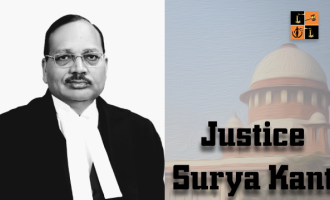
The judgement has been passed by Justice Deepak Gupta and Justice Hemant Gupta on 06-02-2020.
Read Order Here: