Thursday, 23, Apr, 2026


Expand O P Jindal Global University
 
Recent News

Mere wrong Hoisting of Flag Not an Offence unless done intentionally, Rules HC


National Flag and National Anthem
26 Feb 2026
Categories: Latest News

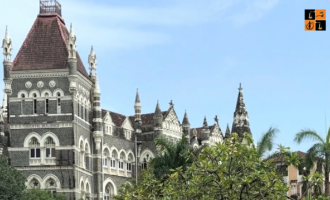
In a sharp rebuke to mechanical prosecution under the Prevention of Insults to National Honour Act, the Bombay High Court stepped in to protect an 89 year old Mumbai resident from facing trial over an allegedly inverted National Flag hoisted on Republic Day 2017. The Court scrutinised whether mere presence at a flag-hoisting ceremony, without proof of intent, could attract criminal liability under Section 2(4)(l) of the 1971 Act, and whether a Magistrate could issue process without recording even basic reasons.

The controversy began when members of Shri Rajani Society in Tilak Nagar gathered on January 26, 2017, for a routine flag-hoisting ceremony. Hours later, police claimed the flag was found inverted. An FIR followed against several society members, including the elderly applicant. The prosecution leaned heavily on the statement of the society’s watchman, alleging the offence of “intentionally displaying the Indian National Flag with the saffron downwards.”

Counsel for the applicant argued that there was no material showing he hoisted the flag, instructed anyone to do so, or acted with intent to insult the National Flag, a mandatory ingredient of the offence. He also placed on record an unconditional apology, stressing his advanced age and ill health.

The High Court found the prosecution’s case fundamentally flawed. It underscored that to attract Section 2(4)(l), the act must be intentional, mere presence is not enough. “The Applicant’s mere presence at the place of hoisting of the Flag… would not amount to an offence,” the Court held, noting there was no evidence of intent or direct involvement. In a stinging observation, the Bench described the Magistrate’s 2017 order taking cognisance as a “rubber-stamped cognisance,” pointing out that it was a non-speaking order devoid of reasons.

Citing the Apex Court’s ruling in Lalankumar Singh v. State of Maharashtra, the Court reminded that issuance of process is “not an empty formality” and requires judicial application of mind. Concluding that the case fell squarely within the abuse of process principles laid down in State of Haryana v. Bhajan Lal, the Court quashed the FIR, charge sheet, and the cognisance order.

Case Title: V. K. Narayanan Vs. The State of Maharashtra,

Case No.: Criminal Application No. 7 Of 2026

Coram: Hon’ble Justice. Ashwin D. Bhobe,

Advocate for the Petitioner: Adv. Rajendra Sorankar, 

Advocate for the Respondent: APP. Pallavi Dabholkar,

Read Judgment @Latestlaws.com


Download the LatestLaws.com Mobile App
 
 
Latestlaws Newsletter
 

Publish Your Article


Campus Ambassador


Media Partner


Campus Buzz


LatestLaws Guest Court Correspondent

LatestLaws Guest Court Correspondent Apply Now!
 

LatestLaws.com presents: Lexidem Offline Internship Program, 2026


LatestLaws.com presents 'Lexidem Online Internship, 2026', Apply Now!


LatestLaws Partner Event : IDRC


LatestLaws Partner Event : IJJ


Latestlaws Newsletter