Friday, 17, Apr, 2026


Expand O P Jindal Global University
 
Recent News

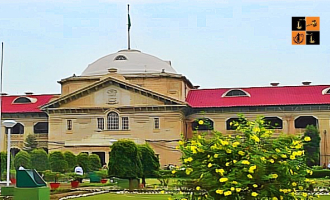
Personal Liberty under the Constitution is not a licence to violate Matrimonial Law: HC refuses protection to Married Couple living together Outside Wedlock


allahabad high court .jpg
29 Mar 2026
Categories: Latest News

In a significant ruling that tests the outer limits of personal liberty against the enduring legal weight of an undissolved marriage, the Allahabad High Court has taken up a petition by two individuals, both already married to other spouses, who sought state protection to live together freely, claiming a threat to their lives from a private respondent. The case forces a direct confrontation between the constitutional guarantee of personal liberty under Article 226 and the statutory architecture of matrimonial law, and the Court's scrutiny of whether a writ of mandamus can ever shield a relationship that the law itself may characterise as a criminal offence promises a finding with far-reaching implications for live-in relationship jurisprudence in Uttar Pradesh.

The controversy began when the two petitioners, both of whom admittedly remain legally married to their respective spouses with no divorce decree obtained from any competent court, approached the High Court seeking a direction restraining respondent no. 4 from threatening or interfering with their shared domestic life. Counsel for the petitioners argued simply that two adults were living together in fear and deserved protection. The State pushed back sharply, its Standing Counsel Sri Suresh Babu contending that the petitioners' relationship, conducted in the shadow of subsisting marriages, squarely attracted the offence of bigamy under Sections 494 and 495 of the IPC, and that the present petition was conclusively governed by a line of Division Bench precedents including Asha Devi (2020), Bhagwati Pathwar (2024), and Smt. Sonam (2025), all of which had declined protection in near-identical circumstances. Compounding the petitioners' difficulties, they produced no documentary evidence, no joint bank account, no shared property, no financial records, to establish that they were living as spouses in any legally cognisable sense.

The Court's reasoning was both philosophically grounded and forensically precise. Acknowledging that gotra, caste, and religion have no place in adjudicating personal relationships, the bench nonetheless drew a firm constitutional boundary, "The freedom of one person extincts where the statutory right of another person starts." A spouse, the Court held, carries a statutory entitlement to their partner's companionship, and that right cannot be extinguished in the name of personal liberty by a third party entering the picture without a valid divorce.

Crucially, the bench found that granting the protection sought would amount to judicially sanctioning conduct that attracts criminal liability under the bigamy provisions of the IPC, something a writ of mandamus cannot be deployed to achieve.

With no legally subsisting and judicially enforceable right established by the petitioners, the Court declined to exercise its Article 226 jurisdiction, disposing of the writ petition while leaving open a narrow avenue, directing the petitioners that if subjected to actual violence, they may approach the Senior Superintendent of Police by written representation, with an expectation that the concerned authority will act in accordance with law.


Case Title: Smt. Anju and Anr Vs. State Of U.P. and Ors.

Case No.: WRIT - C No. - 10593 of 2026

Coram: Hon'ble Mr. Justice Vivek Kumar Singh

Advocate for the Petitioner: Adv. Pankaj Kumar Tripathi

Advocate for the Respondent: C.S.C.

Read Judgment @Latestlaws.com


Download the LatestLaws.com Mobile App
 
 
Latestlaws Newsletter
 

Publish Your Article


Campus Ambassador


Media Partner


Campus Buzz


LatestLaws Guest Court Correspondent

LatestLaws Guest Court Correspondent Apply Now!
 

LatestLaws.com presents: Lexidem Offline Internship Program, 2026


LatestLaws.com presents 'Lexidem Online Internship, 2026', Apply Now!


LatestLaws Partner Event : IDRC


Latestlaws Newsletter