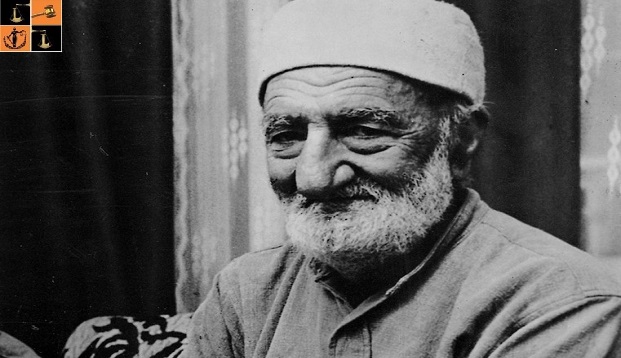
Mashal Khan, the great-grandson of Khan Abdul Ghaffar Khan, who was also known as the Frontier Gandhi, a Pakistani national and a freedom fighter, has petitioned the Bombay high court (HC) seeking relief to be appointed as the guardian of Zarin Ghani-Walsh, his grand-aunt, a resident of Breach Candy in Mumbai.
He sought her guardianship, as she is mentally and physically unfit – she has been suffering from Alzheimer’s disease since 2013 -- to take necessary and appropriate decisions in her own interests.
The court observed that though the health reports sufficed that Ghani-Walsh was in dire need of guardianship, yet it could not decide on the matter until the Centre would take a call on the issue.
The petition, filed by advocate Vaishali Dholakia, has said that Mashal (40) is a resident of Charsadda in Pakistan’s Khyber Pakhtunkhwa (KPK) province.
Ghani-Walsh is the grand-daughter of Frontier Gandhi.
The petition stated that Ghani-Walsh had married a Canadian citizen, Stanley Arnold Walsh, in 1975 and had become a Canadian national.
However, in 1983 she and her husband moved back to India to take care of her uncle PA Narielwalla and continued to live here since.
Her husband had died intestate – without leaving behind a Will – in 2013.
Her only surviving relatives are her brothers’ three sons, including her grand-nephew Mashal.
The petition also stated that she has been suffering from Alzheimer’s disease since 2013, her medical report showed.
The petition has stated that after the demise of her husband, Ghani-Walsh appointed Mashal as the executor of her Will in 2013, and as per medical reports, she was not able to sign in a consistent pattern, and as a result, he should be appointed as guardian of her person and property.
On Monday, Mashal’s counsel Mayur Khandeparkar informed the two-member HC division bench, comprising Justices SC Gupte and Abhay Ahuja, that though there is a statutory provision for the care of a mentally disabled person, there is no legal provision under the Guardians and Wards Act, 1890, or Mental Healthcare Act, 2017, for the appointment of a guardian for a person, who is completely dependent, physically, and mentally unfit to make decisions.
Khandeparkar sought directions that the court declares and accepts Mashal as the guardian of Ghani-Walsh, as he had been regularly coming to India since 2013, and helping her with her property and bank work.
The petition has stated that after the demise of her husband, Ghani-Walsh appointed Mashal as the executor of her Will in 2013, and as per medical reports, she was not able to sign in a consistent pattern, and as a result, he should be appointed as guardian of her person and property.
Khandeparkar also prayed that the court might issue necessary permissions for him to operate and execute documents on Ghani-Walsh’s behalf and also to take her back to Pakistan with him in a bid to allow her to spend her last days there and also be laid to rest near her loved ones.
Public prosecutor, Poornima Kantharia, submitted that the state did not dispute her medical reports.
However, she drew the court’s attention to the National Trust Act, 1999, as it provided for a local committee to decide on the guardianship issue.
The bench heard the submissions and observed that it could not decide on the petition without hearing the Centre’s response and adjourned the matter for its next hearing on August 18.
Source Link