February 27, 2019:
Air Force’s Wing Commander in Pakistani custody will be governed under the Geneva Convention of 1929.
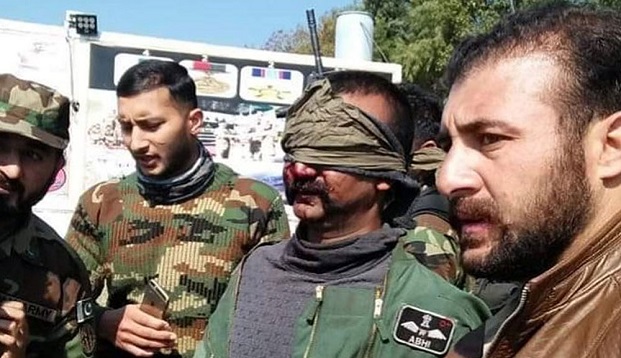
In its demarche, India noted: “India also strongly objected to Pakistan’s vulgar display of an injured personnel of the Indian Air Force in violation of all norms of International Humanitarian Law & the Geneva Convention. It was made clear that Pakistan would be well advised to ensure that no harm comes to the Indian defence personnel in its custody. India also expects his immediate & safe return.”
On Wednesday, India rightly pointed that Pakistan breached norms of International Humanitarian Law &the Geneva Convention by its ‘vulgar display of an injured personnel’.
It must be noted that the custody of the Air Force’s Wing Commander in Pakistani custody will be governed under the Geneva Convention of 1929.
Pakistan however, with its alacrity to prove some sort of futile point to the international community released shockingly graphic videos of the Air Force officer.
Videos released by the Pakistani Army purportedly show captured IAF Wing Commander bloodied & blindfolded but answering questions in a composed & stoic manner.
The wing commander, whose MiG 21 Bison aircraft was shot down by the Pakistan Air Force while engaged in hot pursuit to repel enemy attack on Wednesday, ejected safely but landed across the Line of Control & was taken into custody by the Pakistan Army.
Other video clips showed him being beaten by locals. Later, the Pakistani authorities released another graphic clip.
The video was withdrawn within minutes – perhaps when Pakistan realised they were breaching the Geneva Convention dictating that a prisoner of war should not be shown publicly in a humiliating manner.
Of course, it was too little too late, & the grief caused to his family members & other Indians couldn’t be rolled back as the videos spread like wild fire on social media.
First Geneva Convention, 1949
Third Geneva Convention, 1949
Fourth Geneva Convention, 1949
What is the Geneva Convention?
They are rules that apply only in times of armed conflict & seek to protect people who are not or are no longer taking part in hostilities; these include the sick & wounded of armed forces on the field, wounded, sick, & shipwrecked members of armed forces at sea, prisoners of war, & civilians.
The rules protecting prisoners of war (POWs) are specific. They were first detailed in the 1929 Geneva Convention & later amended in the third 1949 Geneva Convention following the lessons of World War II.
According to the rules, the status of POW only applies in international armed conflict.
"POWs are usually members of the armed forces of one of the parties to a conflict who fall into the hands of the adverse party," the Convention states.
It says POWs cannot be prosecuted for taking a direct part in hostilities.
"Their detention is not a form of punishment, but only aims to prevent further participation in the conflict. They must be released and repatriated without delay after the end of hostilities. The detaining power may prosecute them for possible war crimes, but not for acts of violence that are lawful under International Humantarian Law," it says.
The rules specify that POWs must be treated humanely in all circumstances.
"They are protected against any act of violence, as well as against intimidation, insults, & public curiosity," the Geneva Convention states
Source Link