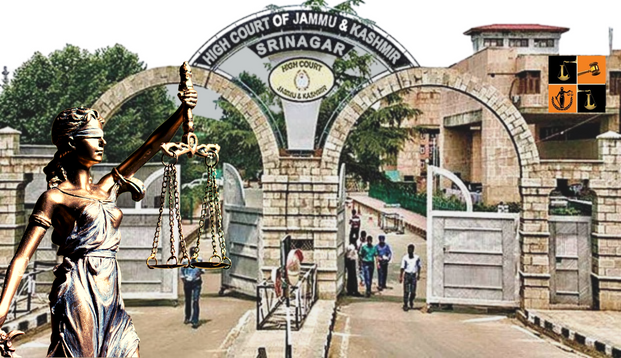
Recently, the High Court of Jammu and Kashmir and Ladakh dismissed petitions challenging the Central University of Jammu’s decision to issue fresh promotion notifications under the Cadre Recruitment Rules of 2022 (CRR 2022) for the post of Assistant Registrar. The Court held that since the earlier 2019 process under CRR 2016 had not culminated in a select list, the petitioner had no vested right to promotion under the old rules. Upholding the University's authority to adopt new criteria, the Court emphasized that promotions must be governed by the rules in force at the time of actual consideration.
Brief Facts:
The case stemmed from a dispute involving Sanjeev Gupta, a Private Secretary at the Central University of Jammu, who challenged the University's notifications for filling the post of Assistant Registrar through departmental promotion. Appointed on 03.06.2014, Gupta applied under a 12.07.2019 notification issued under the Cadre Recruitment Rules of 2016 (CRR 2016), which required five years of service, a written test, a skill test, and seniority. While Gupta took the written test, the skill test was not conducted, and no seniority list was issued despite his repeated requests. The 2019 promotion process was stalled due to the COVID-19 pandemic, the expiry of the Vice-Chancellor’s term, and administrative delays. Subsequently, the University adopted the Cadre Recruitment Rules of 2022 (CRR 2022), shifting to a merit-based system. New notifications were issued under CRR 2022. Gupta challenged these, arguing that the 2019 vacancy should be governed by CRR 2016, leading to the present case before the High Court.
Contentions of the Petitioner:
The petitioner argued that since the Assistant Registrar post became vacant in 2019 when CRR 2016 was in force, the promotion should be governed by those rules, which prioritized inter se seniority along with qualifying written and skill tests, rather than the merit-based criteria under CRR 2022. He contended that the University could not abandon the 2019 process, in which he had participated, and reinitiate it under new rules, as this violated his legitimate expectation. Relying on Arjun Singh Rathore v. B.N. Chaturvedi [(2007), he maintained that vacancies must be filled under the rules applicable when they arose. He also cited a DoPT Office Memorandum dated 17.11.1986, emphasizing that DPCs should convene annually and follow the rules in force at the time of vacancy.
Contentions of the Respondent
The respondent argued that the 2019 promotion process could not be finalized due to the COVID-19 pandemic, lockdown restrictions, the expiration of the Vice-Chancellor’s tenure, and the lack of delegated powers for appointments. The Counsel submitted that the adoption of CRR of 2022, based on new University Grants Commission guidelines, necessitated issuing fresh notifications for the Assistant Registrar post, superseding earlier notifications. The Counsel further contended that the petitioner had no vested right to demand completion of the 2019 process, as no select list was finalized, and he had the opportunity to participate in the fresh process but did not avail it.
Observation of the Court:
In the present case, Justice Sanjay Dhar meticulously examined whether the petitioner had a vested right to promotion based on the Cadre Recruitment Rules of 2016 (CRR of 2016) and whether the respondent-University’s issuance of fresh notifications under the amended Cadre Recruitment Rules of 2022 (CRR of 2022) was legally permissible.
The Court emphasized that “when the process of recruitment/promotion has not been finalized and culminated into a select list, a candidate does not have any right to appointment/promotion. The employer has a right to stop the process at any time before a candidate is appointed/promoted. A candidate does not have any vested right to get the process completed.”
Relying on precedents such as State of Madhya Pradesh v. Raghubir Singh (1994) and Deepak Aggarwal v. State of UP (2011), the Court held that “a candidate who appears and qualifies in a written examination only has a legitimate expectation to be considered according to the rules in vogue” and that “the employer has a right to stop the process at any time before a candidate is appointed/promoted.” The Court further clarified that the employer’s decision to halt the process must be justified under Article 14 of the Constitution, which prohibits arbitrary action.
Dismissing the petitioner’s reliance on Y.V. Rangaiah v. J. Sreenivasa Rao (1983), the Court noted that this principle was overruled by a three-judge bench in State of Himachal Pradesh v. Raj Kumar and quoted the latter judgment, stating, “The statement in Y.V. Rangaiah v. J. Sreenivasa Rao that, ‘the vacancies which occurred prior to the amended rules would be governed by the old rules and not by the amended rules’, does not reflect the correct proposition of law governing services under the Union and the States under part XIV of the Constitution. It is hereby overruled.”
Consequently, the Court held that “promotion to the post of Assistant Registrar is to be made in accordance with the Rules of 2022, which are in vogue at the time of consideration for promotion.” The Court also dismissed the petitioner’s reliance on the Office Memorandum, issued by the Department of Personnel and Training, Government of India, noting that it lacked statutory force and was inconsistent with the legal position established in Raj Kumar.
The Court observed that the respondent adequately justified the non-finalization of the 2019 promotion process due to the COVID-19 pandemic, the expiration of the Vice-Chancellor’s tenure, and the absence of delegated powers, rendering the action neither arbitrary nor mala fide. Thus, the Court upheld the validity of the fresh notification issued under CRR of 2022, affirming that “the rights and obligations of persons serving the Union and the States are to be sourced from the rules governing the services” at the time of consideration.
The decision of the Court:
Under the light of the foregoing discussion, the High Court of Jammu and Kashmir and Ladakh dismissed both writ petitions. The Court held that the promotion to the post of Assistant Registrar must be governed by the Cadre Recruitment Rules of 2022, in force at the time of consideration, as per the Supreme Court’s ruling in State of Himachal Pradesh v. Raj Kumar. The petitioner’s claim of a vested right to promotion under CRR of 2016 was rejected, and interim directions were vacated.
Case Title: Sanjeev Gupta Vs. Central University of Jammu
Case No: WP(C) No. 3057/2024
Coram: Justice Sanjay Dhar
Counsel for Appellant: Adv. Raghu Mehta
Counsel for Respondent: Sr. Advocate D.C. Raina and Adv. Govind Raina
Read Judgment @ Latestlaws.com