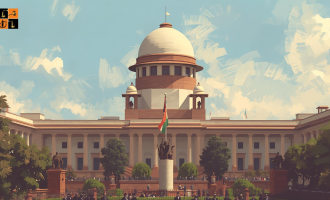
"The circumstances from which the conclusion of guilt is to be drawn should be fully established." With this fundamental principle in mind, the Supreme Court examined the case of an appellant convicted under Section 302 of the Indian Penal Code (IPC) for the murder of Dharminder. The prosecution’s case was built entirely on circumstantial evidence, relying heavily on the "last seen together" theory and the appellant’s alleged evasive replies. However, discrepancies in witness testimonies, omissions, and contradictions raised serious doubts about the reliability of the evidence.
The appellant was convicted under Section 302 IPC for murdering Dharminder and sentenced to life imprisonment. His conviction was upheld by the Delhi High Court.
On 12th July 1995, the appellant took Dharminder from his house, assuring his mother (PW-3) they would return soon. When he did not return, his parents inquired, but the appellant gave inconsistent answers. On 13th July, his father (PW-1) filed a missing report. The next day, Dharminder’s body was found on a terrace with hands tied and a rope around his neck. The appellant and his father had absconded, and an FIR was registered under Section 302 IPC.
Contentions of the Petitioner:
The appellant's counsel argued that the testimony of PW-3 (mother of the deceased) was inconsistent, contradictory, and unreliable due to omissions and improvements. PW-3 was declared hostile, weakening the prosecution's case. The claim that PW-1 and PW-3 repeatedly visited the appellant’s house was also an omission. The key circumstantial evidence of the "last seen together" doctrine was not proved beyond a reasonable doubt, and the appellant's alleged evasive replies were not established. Therefore, the conviction should not be sustained.
Contentions of the Respondent:
The respondent's counsel contended that PW-1 and PW-3’s testimony should be viewed in light of their emotional state after losing their son. The "last seen together" evidence remained unshaken in cross-examination, and the appellant’s evasive replies were sufficiently proven. The appellant’s absconding after the FIR and the recovery of bloodstained clothes at his instance further established his guilt. Thus, no interference with the conviction was warranted.
Observation of the Court:
The Court noted that the prosecution’s case relied on circumstantial evidence, but two out of the five key circumstances were not proved beyond a reasonable doubt. It stated, "two out of five circumstances held as established were not established beyond a reasonable doubt."
The testimony of PW-3 was found unreliable due to significant omissions and contradictions. The Court observed, "there are significant improvements and omissions in the evidence of PW-3. The omissions are so relevant that they become contradictions in view of the Explanation to Section 162 of the Code of Criminal Procedure, 1973." Additionally, PW-1 was not a witness to the last-seen theory, further weakening the prosecution's case.
Emphasizing the need for a complete chain of evidence, the Court held, "when the prosecution case is based on circumstantial evidence, the circumstances from which the conclusion of guilt is to be drawn should be fully established." Since crucial circumstances were not conclusively proved, the Court found the chain of evidence incomplete.
The Court also criticized the Trial Court’s incorrect practice of recording witness contradictions, stating, "the portion of the prior statement shown to the witness for contradicting the witness must be proved through the investigating officer."
The decision of the Court:
The Court set aside the conviction and sentence of the appellant, finding that the prosecution failed to establish a complete chain of circumstantial evidence. It quashed the impugned judgments and acquitted the appellant of all charges. Consequently, the appeal was allowed, and the bail bonds furnished by the appellant were canceled.
Case Title: Vinod Kumar v. State (Govt. of NCT of Delhi)
Case no: CRIMINAL APPEAL NO. 2482 OF 2014
Citation: 2025 Latest Caselaw 148 SC
Coram: Hon'ble Mr. Justice Abhay S. Oka and Hon'ble Mr. Justice Ujjal Bhuyan
Advocate for Petitioner: Adv. Mukesh K. Giri
Advocate for Respondent: Adv. B. V. Balaram Das (Dead / Retired / Elevated) [For Respondent-1] and Adv. Mukesh Kumar Maroria [For Respondent-1]
Read judgment @latestlaws.com, click here