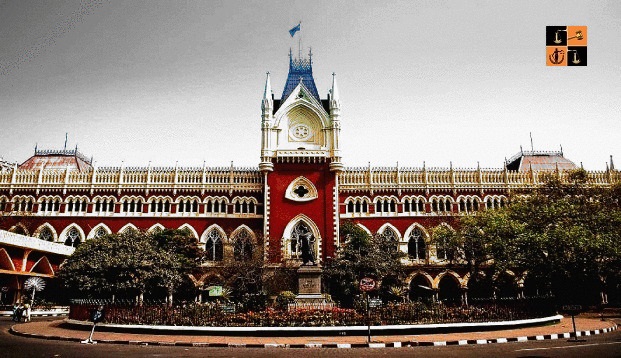
The High Court of Calcutta, while disposing of a petition filed under Article 227 of the Constitution of India, vide which the Learned Court below allowed defendant’s application for impounding insufficiently stamped agreement for sale dated 19.07.2009 and sent the authenticated copy of the said agreement for assessing deficit stamp duty payable on such instrument, held that while adjudicating a prayer for an injunction the court below only ought to have considered as to whether the plaintiff succeeded in proving three cardinal principles for granting injunction or not.
Brief Facts:
The Petitioners, as plaintiffs, filed an application seeking specific performance of the agreement between the parties. At the defendant's request, the period for execution of the deed of conveyance for three garage spaces was extended to 15.01.2012, but the defendants failed and neglected to execute and register the deed of sale and instead threatened the plaintiff to create third-party interest by selling the spaces. Hence, the plaintiff filed a suit. The plaintiff/petitioner moved an application for an injunction, which was granted. The defendants applied impounding the aforesaid insufficiently stamped original agreement for sale, which was granted. Hence, the present petition.
Contentions of the Petitioner:
The learned counsel appearing on behalf of the Petitioner submitted that the Trial Court has erred in insisting on an insufficiently stamped agreement to be impounded at the interlocutory stage of hearing the injunction application instead of considering the application for an injunction on merit. He argued that while granting or refusing temporary injunction, the court should only consider whether a prima facie case has been made out by the plaintiffs, which needs adjudication at the trial, and prima facie case must not be confused with prima facie title, which requires elaboration during the trial stage.
Contentions of the Respondent:
The learned counsel appearing on behalf of the Respondent submitted that an injunction proceeding is an integral part of the main suit, and as such, it is facile to argue that two contrary sets of yardsticks must be allowed, one for the injunction application and the other for hearing the main suit.
Observations of the Court:
The court noted that while praying for an injunction, the burden is on the plaintiff to show that there exists a prima facie case in his favour, which needs adjudication at the trial, but the prima facie case is not to be confused with prima facie title, which has to be established on evidence at the time of trial.
The Court observed that while adjudicating a prayer for an injunction, the court below only ought to have considered whether the plaintiff succeeded in proving three cardinal principles for granting an injunction or not. The Court said that it cannot be a ground that since the copy of the agreement upon which the plaintiff is relying his case is not duly stamped, prayer for injunction cannot be disposed of. Further, the mere production of a copy of the document along with an application of temporary injunction without an attempt to prove it or tender it in evidence does not amount to ‘production of the document’ under the provision of section 33 (1) of the Stamp Act.
The decision of the Court:
The Calcutta High Court, disposing of the petition, held that both the orders passed by the court below are hereby set aside.
Case Title: Sri Chandan Saha vs. Sri Amalendu Dey & Ors.
Coram: Hon’ble Justice Ajoy Kumar Mukherjee
Case No.: C.O. 4083 of 2019
Advocate for the Petitioner: Mr. Sanjay Mukherjee
Advocate for the Respondent: Mr. Supratim Laha
Read Judgment @LatestLaws.com