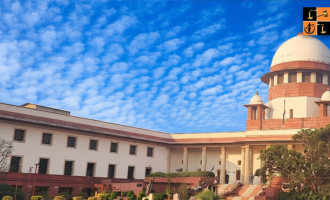
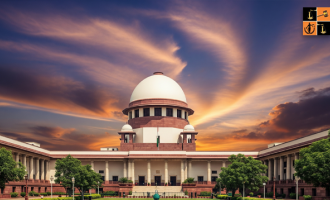
Recently, the Supreme Court upheld the findings of medical negligence against a hospital and its doctor but modified the quantum of compensation awarded by the National Consumer Disputes Redressal Commission (NCDRC). The Court was dealing with a matter arising out of the unfortunate death of a 27-year-old B.Tech graduate and observed that while negligence was evident, a reduced compensation of ₹10 lakhs with interest would suffice in the interest of justice.
Brief Facts:
The case arose from the demise of a young man who was admitted to a hospital for treatment but later died, allegedly due to medical negligence. The complainant, the deceased's father, filed a case before the Andhra Pradesh State Consumer Disputes Redressal Commission (APSCDRC), which found both the hospital and the treating doctor negligent. The finding was upheld by the NCDRC, which awarded ₹15 lakhs against the hospital and ₹5 lakhs against the doctor. Aggrieved, the hospital approached the Supreme Court, challenging both findings and the compensation.
Contentions of the Appellant:
The counsel for the appellant (hospital) contended that it, along with its doctors, had exercised due care and caution in accordance with accepted medical standards. It was argued that there was no expert opinion or medical literature presented by the complainant to substantiate the findings of negligence. The hospital further submitted that the treatment was carried out with due permissions from the family and in accordance with established protocols. It also assailed the compensation awarded by the NCDRC as excessive and lacking any documentary basis.
Contentions of the Respondent:
The counsel for the respondent supported the findings of both consumer forums, stating that the death of a young man at the threshold of his career due to a lack of proper medical care warranted adequate compensation. It was highlighted that the deceased was working in a soap factory and supporting his family financially. Thus, the compensation awarded by the NCDRC was reasonable and required no interference.
Observations of the Court:
The Apex Court, after examining the material on record, upheld the concurrent findings of medical negligence. It noted, “There is ample evidence as well as records to indicate that there was indeed medical negligence at the end of the Appellant and Respondent No.2. The findings thus returned by the APSCDRC and NCDRC in this regard cannot be invalidated and are affirmed.”
However, the Court focused on the quantum of compensation. Observing that the deceased was a young, qualified individual with potential for future earnings, the Court agreed in principle with the NCDRC’s reasoning but held that ₹10 lakhs with accrued interest, already deposited by the hospital during the proceedings, would suffice as compensation. The Court also noted that the doctor had already accepted and deposited the ₹5 lakhs ordered against him.
The decision of the Court:
The Top Court affirmed the finding of medical negligence against the hospital and the doctor but modified the compensation payable by the hospital to ₹10 lakhs with accrued interest, instead of ₹15 lakhs. The deposited amount was directed to be released to the complainant upon application.
Case Title: The Managing Director, Kamineni Hospitals vs. Peddi Narayana Swami & Anr.
Case No: SLP (C) Nos. 2948-2949 of 2023
Coram: Justice B.R. Gavai, Justice Augustine George Masih
Advocate for Petitioner: Adv. Aruna Gupta (AOR), Ramesh Allanki, Syed Ahmad Naqvi
Advocate for Respondent: Adv. K. Radha, K. Maruthi Rao, Anjani Aiyagari (AOR), Ekta Choudhary (AOR), Ayush Kumar, Anand Krishna