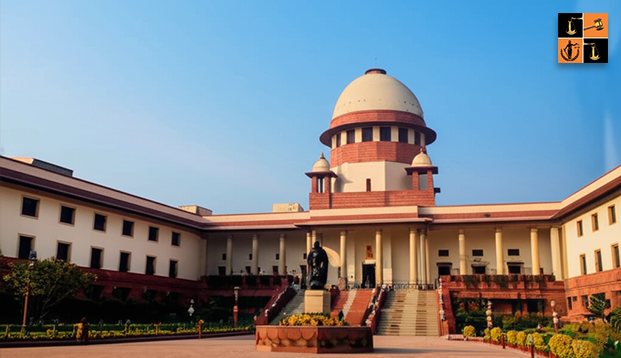
On Wednesday, the Supreme Court expressed concern over how the case has been unfolding, from witnesses turning hostile to allegations of political influence and calls to cancel bail. The Court’s focus shifted to one key issue that whether the trial was still fair and free from outside pressure. Read on to understand how the Court examined these concerns and approached the dispute over bail and fairness.
Brief facts:
The case stemmed from a murder prosecution in which the accused, along with several co-accused, was charged with conspiring to eliminate a political rival who was shot dead in the presence of an eyewitness. After investigation, the matter proceeded to trial, where the complainant initially supported the prosecution's version but later retracted during cross-examination without being declared hostile. Midway through the proceedings, the State administration directed withdrawal of the prosecution, resulting in an abrupt acquittal by the trial court. This withdrawal order was immediately challenged before the High Court, leading to its annulment and restoration of the prosecution.
Subsequent litigation ensued over the complainant’s attempt to withdraw his challenge, culminating in the victim’s brother being permitted to continue the proceedings and later seeking transfer of the trial out of apprehension of unfairness. The Supreme Court ordered the trial to be shifted to a different court, appointed a Special Public Prosecutor, directed protection for key witnesses, and mandated expeditious, supervised proceedings. Meanwhile, the accused remained in custody and repeatedly sought bail before various forums, all of which rejected his requests until the Apex Court eventually granted bail with strict conditions, including confinement to Kolkata and daily attendance at a police station. Dissatisfied with this restriction, he sought its modification, while the victim’s brother simultaneously pursued cancellation of bail on the ground that a fair trial would be jeopardised if he remained free. Both applications ultimately brought the matter before the present court.
Contentions:
Afjal contended that the Appellant enjoys strong political backing, and the State has consistently attempted to secure his acquittal. He argued that several witnesses turned hostile even during custody, and after bail, intimidation intensified, with only the second investigating officer maintaining his stance. He highlighted photographs showing the Appellant with a political leader and referred to critical judicial remarks to demonstrate the extent of influence. He also pointed out that the district police provided Appellant with personal security without any fresh threat assessment, indicating undue favour. On these grounds, he sought cancellation of bail to ensure a fair trial.
On the other hand, the Appellant argued that he is being unfairly targeted despite no material linking him to the murder conspiracy. The movement restriction has disrupted his family life, preventing him from staying in his home district or attending to close relatives during illness and death. Since the trial is almost complete and only official witnesses remain, he argued there is no risk of interference, making the confinement condition unnecessary.
Whereas, the State informed the Court that no fresh threat-assessment order exists to justify the police protection given to the Appellant after his release on bail.
Observation of the Court:
The Court emphasised significant concerns regarding the conduct of the prosecution and the integrity of the trial process. The Court observed that the developments in the case, including the de-facto complainant's resiling from his stand, multiple police witnesses turning hostile, and the State's attempt to withdraw prosecution, "do leave a very bitter taste in the mouth." It highlighted the principle of fair prosecution, noting that it must balance the rights of the accused under Article 21 of the Constitution with the rights of victims and public confidence in the criminal justice system.
Quoting from a prior High Court order, the Court recalled that "Manner in which the prosecution is sought to be jettisoned gives rise to grave doubt with regard to the bona fides of the State in effectively prosecuting the petitioner and the other accused persons." The Court also referenced its own order, on the transfer petition, stating, " the State of West Bengal has taken a complete u-turn with a view to help the main accused, namely, Respondent No. 2 and it went to the extent of resorting to its powers under Section 321 of CrPC to withdraw the prosecution itself."
The Court addressed constitutional issues, particularly the right to liberty under Article 21 of the Constitution, while rejecting the modification of the bail condition confining the appellant to Kolkata. It stressed the principle of finality of judicial verdicts under Article 141 of the Constitution, observing that "the pronouncement of a verdict by a bench on a particular issue of law (arising out of the facts involved) should settle the controversy, being final, and has to be followed by all courts as law declared by the Supreme Court." The Court cautioned against reopening settled matters, noting that allowing a verdict to be revisited would undermine this Court’s authority and the value of its pronouncements.
Regarding the cancellation of bail, the Court found no proven breach of conditions, observing that while witnesses turned hostile, direct responsibility on the appellant was not established. It noted the trial's advanced stage, with only a few witnesses remaining, and rejected cancellation, emphasising that "having regard to the stage the trial has progressed, we do not consider any useful purpose being served by cancelling the bail."
In a postscript, the Court criticised the Sessions Court's remarks against the Special Public Prosecutor, deeming them wholly uncalled for, thoroughly unwarranted and absolutely unnecessary. It interpreted the Sessions Court's anxiety to conclude the trial as overlooking antecedent facts, and set aside the reference to the Legal Remembrancer, while encouraging the Special Public Prosecutor to continue with fairness, integrity and diligence. The Court reiterated the need for a fair trial, directing the Sessions Court to handle applications on the merits without undue concern for prior timelines, and clarified that its order does not restrict legitimate objections during trial.
The decision of the Court:
In light of the foregoing discussion, the Court rejected the application for cancellation of bail filed by Afjal Ali Sha and the application for modification of bail condition filed by SK. Md. Anisur Rahaman dismissed both accordingly. The Court also set aside the reference made by the Sessions Court to the Legal Remembrancer regarding the Special Public Prosecutor, while directing the Sessions Court to conclude the trial in accordance with the law without undue concern for previous timelines.
Case Title: S.K MD. Anisur Rahaman Vs. The State Of West Bengal & Anr.
Case No: Criminal Appeal No.43/2025
Coram: Hon’ble Justice Dipankar Datta, And Hon’ble Justice Augustine George Masih
Advocate for Appellant: Sr. Adv. Vikas Singh, AOR Amarjit Singh Bedi, Advs. Varun Chandiok, Mukesh Kumar SinghRiya Seth, Deepeika Kalia, Vashuda Singh, Sudeep Chandra, Kushi
Advocate for Respondent: Sr. Advs. Shadan Farasat, P. S. Patwalia, AOR Kunal Mimani, Advs. Shraddha Chirania, Soumya Nag
Read Judgment @Latestlaws.com
Read Judgment @Latestlaws.com