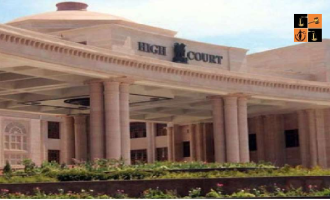
Recently, the Karnataka High Court acquitted two rape-accused who had been serving a 25-year sentence, holding that the trial court had grossly overstepped its constitutional role by misusing its discretionary power under Section 165 of the Indian Evidence Act, 1872 to construct the prosecution's case rather than merely clarify the truth. The single-judge bench of Justice G. Basavaraja set aside the conviction after finding that the trial court's leading questions had prompted affirmative answers from the prosecutrix on the very ingredients of the offence she had otherwise failed to depose to, delivering a firm warning that "a Judge cannot suggest answers, introduce material facts not already spoken to by the witness, or supply essential ingredients of the offence such as penetration, if the witness herself has not deposed to them."
Brief Facts:
In June 2021, two accused persons allegedly trespassed into the home of a woman aged between 50 and 60 years, bolted her doors, and committed forcible sexual intercourse under the influence of alcohol, also allegedly attempting to strangulate and kill her. Charged under Section 376D IPC for gang rape and Section 307 IPC for attempt to murder, the trial court convicted them under Section 376D and sentenced them to 25 years, while exonerating them on the attempt to murder charge. Aggrieved, the accused approached the Karnataka High Court, raising a challenge that went far beyond their individual guilt, questioning whether the trial itself had been conducted with the impartiality the law demands, particularly given the manner in which the presiding judge had intervened during evidence recording.
Contentions of Appellants:
For the Appellants, it was argued that the trial court had abandoned its neutral role by putting leading questions under Section 165 of the Evidence Act that effectively suggested the essential ingredients of rape, including penetration, which the prosecutrix had not herself deposed to. It was further contended that the prosecutrix's testimony was riddled with contradictions, during cross-examination, she admitted she had not seen the accused before the incident and that their faces were not visible to her during the alleged crime, directly contradicting her Section 164 CrPC statement and her chief examination deposition, fatally undermining identification of the accused.
Contentions of Respondent:
For the Respondent/State, the prosecution relied on the well-settled principle that the sole testimony of a prosecutrix, if credible, is sufficient for conviction without corroboration. The State defended the trial court's use of Section 165 as a legitimate exercise of judicial power to discover truth and obtain proper proof of relevant facts, urging the High Court not to interfere with the conviction in a serious case of gang rape against a vulnerable elderly woman.
Observations of the Court:
Justice G. Basavaraja drew a firm and principled line between permissible judicial intervention and impermissible prosecutorial substitution. While acknowledging the wide scope of Section 165, which allows a judge to put questions in any form at any stage, the Court held that this power is strictly a tool for clarification, not a rescue mechanism for a prosecution that has failed to establish its own case. The Court was emphatic that a judge may not "neutralize contradictions brought out in cross-examination or repair weaknesses in the prosecution case" through leading questions.
What made the Court's findings particularly striking was a glaring internal contradiction it uncovered: when the trial court put leading questions to the prosecutrix about the direct commission of rape, she answered affirmatively, but when similar questions were put, she stated the accused had only attempted rape. This oscillation, the Court found, was not the product of her own testimony but of impermissible judicial prompting. The Court further noted that her cross-examination admissions, that she had not seen the accused before and could not see their faces during the incident, directly contradicted both her Section 164 CrPC statement and her chief examination, striking at the very foundation of identification.
While reiterating that the sole testimony of a prosecutrix can sustain a conviction, the Court held that such testimony must be "impeccable", a standard this evidence plainly failed to meet. Trial courts, the Court cautioned, must maintain a careful balance between sensitivity towards the prosecutrix and judicial neutrality, and must never "abandon their impartial positions or assume the position of a prosecuting agency."
The decision of the Court:
The Karnataka High Court allowed the appeal and acquitted both accused, setting aside their 25-year conviction under Section 376D IPC. The ruling crystallises a vital principle: Section 165 of the Indian Evidence Act is an instrument of truth-finding, not a tool to fill evidentiary gaps or rehabilitate a failing prosecution; and where the prosecutrix's sole testimony is internally contradictory, particularly on identification, and has been materially shaped by impermissible leading questions from the bench, it cannot safely ground a conviction, however grave the offence alleged.
Case Title: Mohan Naik and Anr Vs. The State Of Karnataka and Anr
Case No.: Crl.A.No.824 of 2023
Coram: Hon’ble Mr. Justice G Basavaraja
Advocate for the Petitioner: Adv. K.A. Chandrashekara
Advocate for the Respondent: HCGP. B. Lakshman
Read Judgment @Latestlaws.com