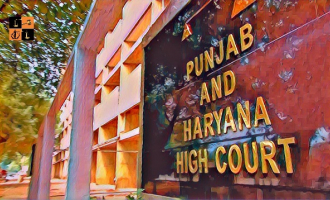
“Rules of Game must not be changed once the game has begun,” observed the Punjab & Haryana Court while examining the legality of cancelling a petitioner’s admission to the MBBS course at Government Medical College, Amritsar, under the Freedom Fighters category.
The petitioner’s seat, secured through State Quota counselling conducted by Baba Farid University of Health Sciences (hereinafter referred to as “BFUHS”), was revoked based on a 1995 letter disallowing reservation benefits to adopted children if the freedom fighter had biological descendants. This raised a significant legal question about the applicability of the 1995 letter, especially when the prospectus for the 2024 session provided a 1% reservation for “children/grandchildren of freedom fighters” without differentiating between adopted and biological descendants.
Brief Facts:
The petitioner filed a writ petition seeking the quashing of the order dated 11.12.2024, whereby respondent No.4 cancelled the petitioner’s admission to the MBBS course for the Session 2024 onwards at the Government Medical College, Amritsar, under the Freedom Fighters category. The petitioner secured the seat through the State Quota via the counselling process conducted by Baba Farid University of Health Sciences (BFUHS). Despite obtaining a final admission certificate and directions from BFUHS to join the course, the admission was cancelled on the grounds of ineligibility under the Freedom Fighters category, citing a 1995 letter which disallows reservation benefits to adopted children if the freedom fighter has biological children.
Contentions of the Petitioner:
The petitioner argued that all required documents, including the certificate confirming his status as the grandson of a freedom fighter, were submitted and verified during the counselling process conducted by Baba Farid University of Health Sciences (BFUHS). Based on this, the petitioner received provisional admission, followed by a final admission certificate. It was contended that respondent No.4 lacked the authority to cancel the admission once it was finalized.
The petitioner challenged the reliance on a 1995 letter, arguing that it was prospective and did not apply in his case, as his father was recognized as a freedom fighter’s son in 1991. Additionally, the petitioner cited a 2023 notification granting 1% reservation to all children and grandchildren of freedom fighters, irrespective of adoption status, claiming that any distinction is arbitrary and illegal. The petitioner asserted that the cancellation was contrary to BFUHS’s directions and caused irreparable harm as the NEET-2024 counselling period had ended.
Contentions of the Respondent:
The respondents contended that the admission was cancelled following a complaint that questioned the petitioner’s eligibility under the Freedom Fighters category, revealing that his father was adopted despite the freedom fighter having biological children. They relied on a 1995 letter, which disallowed reservation benefits to adopted children if the freedom fighter has biological offspring.
It was argued that the petitioner is ineligible for the reservation since he was born after the issuance of this policy. The respondents asserted that the cancellation followed due process, including consultations with the Department of Freedom Fighters. However, BFUHS (Respondent No.2) clarified that the admission was granted as per rules and documents submitted by the petitioner, and it had no objection to his admission being continued.
Observation of the Court:
The Court examined whether the cancellation of the petitioner’s admission based on the 1995 letter was justified. It noted that the petitioner applied under the prospectus dated 09.08.2024, which provided a 1% reservation for “children/grandchildren of freedom fighters” without distinguishing between adopted and biological descendants. The Court emphasized that the prospectus “has the force of law and has to be strictly complied with” as held in the Full Bench judgment of Rahul Prabhakar v. Punjab Technical University. It further observed that “the 1995 letter is to be considered otiose for ascertaining the reservation criteria” since Clause 24 of the prospectus superseded all prior notifications. The Court stated that “Rules of Game must not be changed once the game has begun,” stressing that altering admission criteria post-counselling would violate Article 14 of the Constitution. It concluded that the State’s reliance on the 1995 letter was “misfounded” and that the petitioner was entitled to reservation benefits as per the prospectus.
Referring to Section 12 of the Hindu Adoption and Maintenance Act, 1956 (HAMA 1956), the Court highlighted that “An adopted child shall be deemed to be the child of his or her adoptive father or mother for all purposes... and all the ties of the child in the family of his or her birth shall be deemed to be severed and replaced by those created by the adoption.” Citing Sitabai and another v. Ramchandra, 1970 AIR SC 343, the Court noted that an adopted child “ceases to have any ties with the family of his birth ‘for all purposes’” under Section 12 of HAMA 1956. It ruled that the distinction made by the State of Punjab between an adopted child and a biological child was “fallacious,” rendering the cancellation of the petitioner’s admission “sans merit” and invalid.
The Court also relied on the Supreme Court’s judgments in Aarogyam Association v. Desai Sujan Jayrambhai and S. Krishan Sradha v. State of Andhra Pradesh (2020) 17 SCC 465, observing that a meritorious candidate “illegally denied admission for no fault of his” could be granted admission in the same academic year if justified. This was in line with the “Principle of Restitutive Relief,” ensuring justice for the petitioner.
The Court criticized the State’s conduct, emphasizing that as a Welfare State, it must “exercise due diligence in distinguishing between a baseless and a legitimate claim” and act “in the best interest of its citizens.” It noted that the State pursued litigation in a “mechanical and indifferent” manner, reflecting an “apathetic approach” that undermines responsible governance.
To discourage frivolous litigation, the Court emphasized the need for “exemplary costs” to curb unwarranted cases that burden the judicial system.
The decision of the Court:
The Court quashed the impugned order dated 11.12.2024, reinstated the petitioner’s admission, and allowed certain relaxations regarding attendance. The Court ordered the State of Punjab to pay Rs. 50,000/- to the petitioner and imposed exemplary costs of Rs. 1,00,000/- on respondents Nos. 3 and 4, to be deposited in the Poor Patient’s Welfare Fund at PGIMER, Chandigarh. The State was allowed to recover the costs from the erring officials, reinforcing accountability and responsible governance.
Case Title: Samarveer Singh v. State of Punjab and others
Case no: CWP-34334 -2024 (O&M)
Coram: Hon’ble Chief Justice Mr. Justice Sheel Nagu and Hon’ble Mr. Justice Sumeet Goel
Advocate for Petitioner: Sr. Adv. Mr. D.S. Patwalia, with Adv. Mr. A.S. Chadha
Advocate for Respondent: Additional Advocate General Punjab Mr. Anurag Chopra, Adv. Mr. Nitin Kaushal, (through V.C.) with Adv. Mr. Sahil