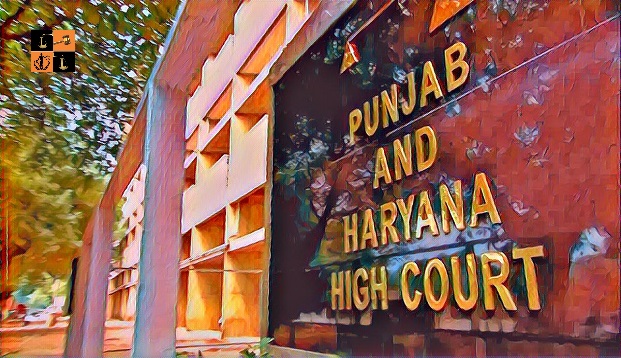
Recently, the Punjab and Haryana High Court dealt with a revision petition arising from a long-standing road accident case that had travelled through trial and appeal. The matter placed before the Court raised deeper questions about sentencing, intent, and how the law distinguishes human error from true criminality. With both sides presenting their stand on the circumstances surrounding the incident, the case invited the Court to revisit core principles of modern criminal justice.
Brief Facts:
The case concerns a 2014 road accident near the PSPCL office at Ludhiana where a motorcycle carrying a woman and her son was hit from behind by a speeding car, causing injuries that later resulted in the woman’s death. The son gave a statement identifying the car involved, following which an FIR was registered, the site plan prepared, medical records collected, and charges under Sections 279, 337, and later 304-A IPC added. After trial, the accused was convicted, and the conviction was upheld in appeal, leading to the present revision petition.
Contentions of the Petitioner:
The counsel for the Petitioner did not challenge the conviction on the merits and sought relief only on sentencing. The Counsel argued that the incident was purely accidental, that the Petitioner was barely 21 years old at the time, had no criminal history, and had undergone the stress of eleven years of proceedings. It was emphasised that he helped take the injured to the hospital, the matter stood amicably settled with the deceased’s family, and he was the sole provider for his dependents. It was submitted that compensation had already been paid through MACT, and leniency through probation was justified.
Contentions of the States:
The State opposed any reduction, arguing that both courts had properly evaluated the evidence and the revisional court could not reappreciate facts. The State contended that no illegality or perversity existed in the conviction or sentence. The Petitioner’s side, however, indicated that the dispute had been amicably resolved and raised no objection to leniency in sentencing.
Observation of the Court:
The Court observed that the material on record did not reveal any criminal inclination or dangerous conduct. Instead, the circumstances showed an accidental occurrence rather than an intentional act. The Court highlighted that sentencing must consider whether an offender acted with mens rea or whether the conduct arose from human error. As the judgment records, “there is nothing on record to reflect that the petitioner possesses a criminal bent of mind or that his conduct poses any threat to society.” This absence of a criminal mindset formed the foundation for adopting a reform-focused approach.
The Court reiterated that the purpose of punishment is not merely retribution. It emphasised the need to balance deterrence, proportionality, and rehabilitation, especially when the offender is not inherently criminal. In the Court’s words, “the imposition of punishment is a refined judicial function that demands a careful harmonization of its underlying purposes namely, retribution, deterrence, and reformation.” The Court noted that this balance shifts depending on societal context, the nature of the act, and the potential for reform.
It was also stressed that one accidental act cannot be used to label someone a criminal. The Court referred to the need to distinguish between criminality and mere involvement in an offence. As the judgment puts it, “a mere involvement of a person in crime may not necessarily mark a person as a ‘criminal’.” The accused’s young age, clean past conduct, cooperation, and even the step of taking the injured to the hospital supported this differentiation.
In conclusion, considering the lapse of eleven years, the amicable settlement, no prior criminal conduct, and the principles laid down in precedents like Jugal Kishore Prasad v. State of Bihar and Chellammal and Another v. State, the Court held that a reformative approach was appropriate. The judgment summarised this by observing that “interest of justice would warrant a reformative approach in precedence to a punitive or retributive approach.”
The decision of the Court:
The Court upheld the conviction but modified the sentence by granting the petitioner probation for two years, subject to good behaviour and supervision. He was directed to plant 50 indigenous trees and ensure their maintenance for five years. Any violation of these conditions would require him to undergo the remaining sentence originally imposed.
Case Title: Lakshay Jain vs. State of Punjab and another
Case No.: CRR-2697-2025
Coram: Hon’ble Mr Justice Vinod S. Bhardwaj
Counsel for the Petitioner: Adv. Amit Khari
Counsel for the Respondent: Addl. A.G. Saurav Verma, Adv. Ketan Chopra,
Read Judgement @LatestLaws.com
Tags :