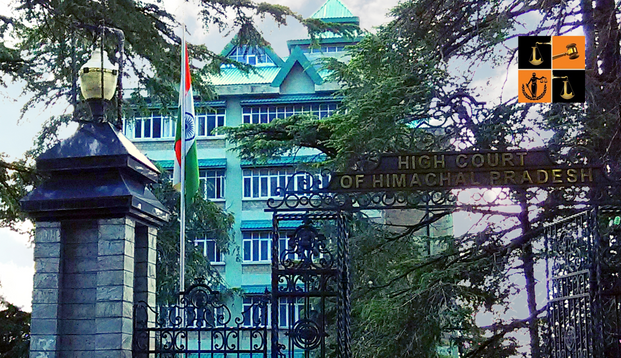
Recently, in a matter concerning the assessment of fair market value in compulsory acquisition, the Himachal Pradesh High Court held that sale deeds executed after the issuance of an acquisition notification cannot be relied upon to enhance compensation. Justice Romesh Verma observed that such transactions often reflect inflated prices and cannot form the basis of a legitimate valuation exercise.
Brief facts:
The case arose from the acquisition of land in District Hamirpur for a water supply scheme. A notification under the land acquisition law was issued in 1999, followed by an award in 2002 determining compensation. Dissatisfied, the landowners approached the Reference Court under Section 18 of the Land Acquisition Act 1894, seeking enhancement of market value, which was allowed. The State later challenged the enhancement before the High Court, asserting that the reference petition itself was barred by limitation, having been filed several years after the award. The landowners submitted that they became aware of the acquisition only in December 2005 and filed the reference shortly thereafter.
Contentions:
The State contended that the reference petition was filed nearly nine years after the award and was therefore time barred. It argued that the Reference Court erred in entertaining the petition and in relying on sale deeds which did not reflect the correct market position.
On the other hand, the landowners countered that the limitation begins from the date the affected party becomes aware of the essential contents of the award, not its date of pronouncement. The Respondent maintained that they promptly initiated proceedings upon acquiring knowledge and that the enhanced valuation was legally sustainable.
Observation of the Court:
The Court scrutinised the nature and timing of the sale deeds relied upon for enhancing compensation. Justice Romesh Verma drew attention to the fact that the transactions placed on record were executed well after the land acquisition process had been initiated. Highlighting the potential for artificial inflation of land prices in such circumstances, the Court categorically stated,“The documents and exhibited sale deeds, on which the learned counsel for the respondents has placed reliance for enhancement of the award, are subsequent to the issuance of notification as issued by the LAC on 1.2.1999 and as a result whereof, the possibility of these sale-deeds being for the purpose of inflating the price cannot be ruled out.”
The Bench held that only pre-notification transactions could legitimately reflect prevailing market value at the time of acquisition. Consequently, post-notification deeds could not be treated as dependable indicators for determining fair compensation.
The Court observed, “No evidence of any sort has been led by the State to establish that the respondents were having actual or constructive knowledge about the award passed in the matter. No oral as well as documentary evidence has been placed on record to establish that the award was communicated to the respondents or their predecessor-in-interest. No record in this regard has been placed to prove the contention of the State that the said reference petition as preferred was time barred. Thus, the plea being raised by learned State Counsel does not hold good and is liable to be rejected.”
Clarifying the governing principle for determining limitation under Section 18 of the Land Acquisition Act 1894, the Court reiterated that the statutory period does not begin from the date of the award itself, but from the date on which the affected party becomes aware of its essential contents. As no material had been produced to demonstrate earlier knowledge, the Court held that the reference petition was within time. The Bench, therefore, declined to interfere with the enhanced valuation granted by the Reference Court and found no ground to disturb its findings.
The decision of the Court:
In light of the foregoing discussion, the Court upheld the Reference Court’s determination of compensation and dismissed both the State’s appeal and the landowners’ cross-objections, leaving the enhanced market value undisturbed.
Case Title: Secretary (IPH) & ors. Vs. Mangal Devi (died and deleted) & ors.
Case No: RFA No. 233/2017 and C.O. No. 24/2022
Coram: Hon'ble Justice Romesh Verma
Advocate for Appellant: Dy.A.G. J. S. Guleria
Advocate for Respondent: Sr. Adv. Bhuvnesh Sharma, Advs. Shekhar Badola, and Parv Sharma
Read Judgment @Latestlaws.com