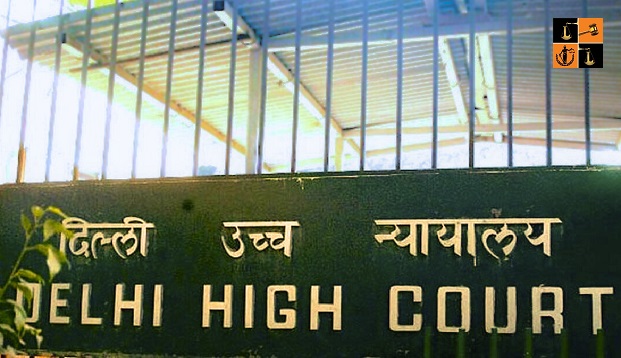
In a significant judgment concerning the powers and procedures under the Pre-Conception & Pre-Natal Diagnostic Techniques (Prohibition of Sex Selection) Act, 1994, (PC&PNDT Act), the Delhi High Court was called upon to resolve whether a police FIR, filed following an inspection by a district authority, was legally sustainable in the absence of a formal complaint by the Appropriate Authority. The case centered around a jurisdictional tussle between district authorities, alleged procedural lapses, and the complex interplay between criminal procedure and regulatory compliance. Read on to explore how the Court addressed these questions and clarified the legal framework governing enforcement under the PC&PNDT Act.
Brief facts:
The case arose from an inspection by the District Appropriate Authority (DAA), West District, at Dr. Randhawa Ultrasonography Imaging and Research Institute, a registered ultrasound clinic. The petitioners challenged the inspection, claiming the DAA, West, lacked jurisdiction since authority had shifted to the South-West District in 2016. The inspection found alleged violations of the Pre-Conception & Pre Natal Diagnostic Technique (Prohibition of Sex Selection) Act, 1994 (PC&PNDT Act), such as unauthorized ultrasound use, inadequate notice boards, missing reports, and an unapproved training center. As a result, the clinic’s machines were sealed, its registration was suspended, and an FIR was filed under Sections 25/26/27 of the PC&PNDT Act. The petitioners sought to quash the FIR, arguing it was procedurally invalid due to lack of jurisdiction. Earlier challenges to the suspension and jurisdiction were dismissed, prompting this writ petition before the Delhi High Court to determine the FIR's validity and legality of the inspection.
Contentions of the Petitioner:
The petitioners contended that the DAA, West, lacked jurisdiction for the inspection, as authority had shifted to the DAA, South-West, in 2016, which had also conducted inspections in 2017. They argued that the FIR was illegal under Section 28 of the PC&PNDT Act, as it was based on a police report rather than a complaint by the Appropriate Authority. The FIR relied on the PC&PNDT (Six Months Training) Rules, 2014, which were declared ultra vires in 2016, rendering the allegations unfounded. They asserted that no evidence indicated sex determination, and the alleged violations were civil and documentary in nature. They also claimed that running a training institute was not prohibited, and the workshops conducted complied with MCI regulations, without issuing ultrasonography certificates.
Contentions of the Respondent:
The respondents submitted that the DAA, West, was the competent authority, as the institute fell within its jurisdiction per revenue records, and the file transfer to South-West was an error later rectified. They argued that Section 28 of the PC&PNDT Act does not bar FIR registration or police investigation, only limiting court cognizance to complaints by the Appropriate Authority. The FIR was based on a valid complaint by DAA, West, with investigations confirming violations and a charge-sheet filed accordingly. The inspection uncovered serious breaches, including unauthorized ultrasound use by unregistered doctors, missing records, and an unapproved training center. They also asserted that the petitioner’s defenses require trial scrutiny, and the registration cancellation was dealt with through separate legal remedies.
Observations of the Court:
The Court while addressing the jurisdictional and procedural challenges raised in the petition, noted, on the issue of whether DAA, West, was the competent authority, that “the Records of Petitioner Institute were also inadvertently transferred along with the other transferred files, even though the Centre was situated in Prem Nagar, Janakpuri which falls under the Tihar Revenue Village, which comes within the jurisdiction of District West, which had not been transferred vide aforesaid Notification.”
The Court upheld the authority of the DAA, West, clarifying that no formal notification had transferred the petitioner’s area to the South-West District, and the inadvertent file transfer did not affect its jurisdictional competence.
Regarding the FIR’s validity, the Court emphasized, “Section 28, therefore, makes it abundantly evident that a Complaint before the Court of learned Metropolitan Magistrate, can be initiated either by Appropriate Authority or Central Government or State Government, which may authorise an Officer other than the Appropriate Authority to file a Complaint on which cognizance can be taken by the concerned Court.”
The Court further clarified that the PC & PNDT Act’s cognizable and non-bailable nature under Section 27 of the PC&PNDT Act, combined with Section 154 of the Criminal Procedure Code, mandates FIR registration for cognizable offenses. The Court relied on precedents like Manoj Krishan Ahuja and Hardeep Singh, affirming that while cognizance requires a complaint, police investigations and FIRs are permissible.
The Court also noted that “cognizance has been taken neither on the FIR nor on the Charge-Sheet, but on the Complaint filed separately by District Appropriate Authority,” ensuring compliance with Section 28.
The decision of the Court:
In the light of the foregoing discussion, the Court declined to intervene, stating that such contentions are trial matters, and the registration cancellation shall be addressed through separate remedies.
Case Title: Dr. Randhawa Ultrasonography Imaging and Research Institute And Ors. Vs. State Of Nct, Delhi And Anr.
Case No.: W.P.(CRL) 1583/2021 & CRL.M.A. 13312/2021
Coram: Justice Neena Bansal Krishna
Counsel for Petitioner: Sr. Adv. Percival Billimoria, Advocates Khowaja Siddiqui, Tushar Bathija, Jay Singh, Shilpa Ohri, Aswini Kumar, Rachita Sood and Arbaz Khan
Counsel for Respondent: Additional Standing Counsel Yasir Rauf Ansari, Advocates Alok Sharma and Amit Sahni, with SI Mukesh Yadav
Read Judgment @ LatestLaws.com