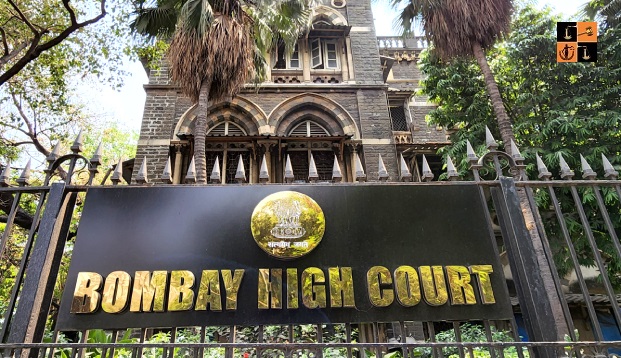
In a significant judgment arising from the clash between urban development and heritage conservation, the Bombay High Court weighed in on the legal responsibilities of metro developers when tunnelling through historically sensitive zones. The case brought into sharp focus whether the Mumbai Metro Rail Corporation Limited (MMRCL) had taken sufficient precautions while executing Metro Line III construction near the iconic Grade II-A J.N. Petit Institute building on Mumbai’s D.N. Road. The Court’s ruling probes the boundaries between infrastructural progress and the constitutional duty to preserve cultural heritage. Read on to discover how the Court balanced these competing public interests.
Brief facts:
The case arose from concerns of the Trustees of the Jamsetjee Nusserwanjee Petit Institute, which manages the J.N. Petit Reading Room and Library, 1898 Grade II A Heritage Structure in Mumbai’s Fort area. The petitioners opposed the construction of Metro Line III along D.N. Road, fearing damage to their shallow-founded heritage building, restored in 2014–15 and awarded UNESCO recognition. In 2017, MMRCL and its contractor L&T began construction, allegedly causing vibrations that led to the fall of a limestone finial. Despite assurances of safety, the petitioners cited inadequate monitoring and access restrictions. They filed a writ petition seeking protection of the building and restoration of the finial.
The Court appointed an Expert Committee, and work resumed after safeguards were implemented. The petition remained pending until completion of construction in 2023, with petitioners now seeking monitoring during Metro operations to prevent further damage.
Contentions of the Petitioner:
The petitioners argued that their building, a Grade II A Heritage Structure awarded by UNESCO in 2015, required protection due to its historical and architectural value. They contended that drilling and construction activities for Metro Line III caused excessive vibrations, leading to the collapse of a limestone finial in August 2017. Alleging that MMRCL and its contractor L&T failed to install proper vibration monitoring devices despite prior assurances, they also criticised the survey report for overlooking the building’s special architectural features. Citing ongoing risks from Metro operations given the building’s shallow foundation, the petitioners sought reinstallation of monitoring equipment and restoration of the fallen finial, in line with prayer clauses (b), (f), (h), and (i).
Contentions of the Respondent:
MMRCL submitted that it had fully complied with the Expert Committee’s recommendations and that no significant structural damage occurred during construction, which concluded in 2023. While not admitting liability, MMRCL agreed to reconstruct the collapsed limestone finial at its own cost, subject to the petitioners providing necessary drawings and securing approvals from heritage authorities. Emphasising operational safety, MMRCL stated that the Metro Line III alignment runs 4–5 meters horizontally and 25 meters below the petitioners’ building, with noise and vibration levels well within RDSO’s prescribed limits. Citing these factors, MMRCL requested the Court to dispose of the petition, allowing the petitioners liberty to seek remedies if any issues arise once Metro operations begin.
Observations of the Court:
The Division Bench of Justice M.S. Sonak and Justice Jitendra Jain observed, “Whilst the march of development and infrastructural projects cannot be halted in a city like Mumbai, such a march cannot be permitted to run roughshod over the concerns of preserving and maintaining heritage buildings for posterity.”
The Court, while stressing the importance of preserving heritage structures, emphasized that the petitioner’s building, a Grade II A Heritage Structure constructed in 1898, “deserves to be maintained and protected by all concerned.” The Court recognized its Neo-Gothic Revival architecture and UNESCO recognition for cultural heritage conservation in 2015, noting that “UNESCO awarded this restoration as a fine example of cultural heritage conservation. Therefore, there can be no doubt that the protection and preservation of the Petitioners’ building is a must.”
Referring to the precedents like Archaeological Survey of India Vs. Narender Anand and Ors. and Rajeev Mankotia Vs. Secretary to the President of India and Ors., the Court emphasized constitutional and statutory obligations under Article 49 of the Constitution and the Ancient Monuments and Archaeological Sites and Remains Act, 1958, to protect historical monuments. The Court observed that although development and infrastructure projects are essential in a city like Mumbai, such progress must not override or disregard the vital need to preserve and protect heritage buildings for future generations.
The Court criticized practices that harm heritage structures, stating, “Any construction or development that ignores the preservation of Heritage Structures or results in wanton destruction or damage cannot be regarded as lawful or appropriate unless all legal formalities and procedures are followed.”
Regarding the limestone finial’s collapse, the court found a connection to MMRCL’s Metro Line III project works, noting its occurrence shortly after unmonitored construction began in 2017. However, it acknowledged MMRCL’s compliance with the Expert Committee’s recommendations post 2017, stating, “The recommendations made by the Expert Committee constituted by this Court were substantially complied with.” The Court found insufficient evidence to substantiate claims of broader structural damage, observing that “prima facie, we find it difficult to accept the Petitioners’ belated contention about some serious damage to the Petitioners’ building on account of the works which, according to the Petitioners, were completed in 2023.”
Finally, the Court concluded that “based upon the averments in the present Petition or its structure, we do not think that it would be appropriate to entertain, much less deal with Petitioners’ apprehensions of the likelihood of damage to their building once the Metro Line III project becomes operational or functional.”
The decision of the Court:
In light of the foregoing discussion, the Court disposed of the petition by directing MMRCL to reconstruct, restore, or replicate the fallen limestone finial at its own cost, provided the petitioners supply the necessary drawings and secure all requisite permissions from the heritage authorities. This restoration work is to be completed within eight months from the date the final permission is obtained. The Court also granted the petitioner’s liberty to initiate appropriate proceedings for compensation or restoration if they can establish that damage was caused due to the construction or future operation of Metro Line III, with all contentions expressly kept open.
Case Title: D.V.M. Patel & Anr. Vs. State of Maharashtra & Ors.
Case No.: Writ Petition No. 2931 Of 2018
Coram: Justice M.S. Sonak and Justice Jitendra Jain
Advocate for Petitioner: Advs. Ferzana Behramkamdin and Kalyani Deshmukh
Advocate for Respondent: AGP Manisha Gawde, Advs. Kavita N. Solunke, Mayur Khandeparkar, and Heenal Wadhava