The Author, Sankalpita Pal, is 2nd year, BBA.LLB student of Symbiosis Law School, Pune. She is currently interning with LatestLaws.com.
Introduction
Elections have been a significant part of Indian political history and also remains in the same position till date. Statistical data plays an important role on this arena of Government budget. It is said that ‘the Indian polity is perennially in an election mode’.[i] Ideally the collective term of simultaneous elections implies that elections to all the three tiers of constitutional institutions shall take place in a synchronized and co-ordinated manner i.e. a particular voter casts his/her vote for electing members for all tiers of the Government on a single day and also at the same time.
Presently, the General elections for the Lok Sabha and State Assemblies are held at the gap of five years in India whenever the incumbent government’s maximum term ends or if it dissolves due to various reasons. Some states hold elections for State Assemblies separately which puts a huge burden on the government exchequer. Thus, it must be noted that terms of the Rajya Sabha and the Lok Sabha may not synchronise with one another. This is evident from the fact that Rajasthan held elections in late 2018, whereas Tamil Nadu will hold elections only in 2021.
As of now “One Nation, One Election” is just a concept rather than a reality with a few trials in the past. In its core this concept simply envisages a system where elections to all State Assemblies and the Lok Sabha (House of People) will have to be held simultaneously. In order to make this concept and the trials in the past a norm legislature will have to restructure the Laws related to elections and the government needs to restructure the Indian election cycle.
Background
As mentioned in the introduction, simultaneous elections is not a new concept as Indian polity has given it a few trials. We need to take a brief look at its background to understand its benefits and success in our political situation. In the post-independence in 1951-52, India started its first election cycle to House of People and State Assemblies simultaneously. It remained as the norm until 1967. However later on due to dissolution of some Legislative Assemblies in 1968 and 1969, a problem was posed to the system of simultaneous elections. In fact, the Lok Sabha dissolved in December 1970. Thus, ever since elections to the State Assemblies and the Parliament have been held separately.
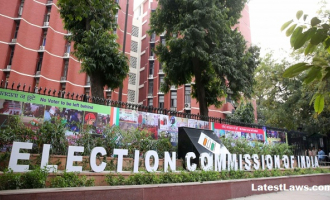
Once again in 1983 the idea of reverting back to simultaneous polls was supported in the annual report of the Election Commission. In 1999 the Law Commission’s Report also referred to the same. There have been numerous debates and discussions on this topic in the past decade. In fact, simultaneous elections as a system was suggested in the 2014 Lok Sabha polls in the Bhartiya Janata Party manifesto. Once again in 2016 PM Narendra Modi proposed the idea of bringing back this concept and reintroduce it to Indian Polity. In lieu of the same the Niti Aayog prepared a working paper on the subject in the following January 2017. In April 2018, another working paper by the Law Commission of India stated that at least “five Constitutional recommendations” is necessary in order to reintroduce this system. However, till date a final decision on holding simultaneous elections is yet to be taken.
Which country conducts simultaneous elections?
There are numerous other countries which are practicing the system of simultaneous elections such as Sweden, Indonesia, South Africa, Germany, Spain, Hungary, Belgium, Poland, Slovenia, Albania etc.
How will it work?
Previously 2 proposals were made regarding the conduct of simultaneous elections along with 17th Lok Sabha elections. However, both proposals haven't materialized till date.
In the first proposal made, a shift of simultaneous polls in a phased manner was suggested. According to which general elections, 12 State Assemblies and a Union Territory may be synchronised in 2019. The reason behind this proposal was that rest of the states were still in the middle of their 5- year term.
The 12 states which would have undergone this shift according to the first proposal were Andhra Pradesh, Arunachal Pradesh, Odisha, Sikkim, Telangana, Haryana, Jharkhand, Maharashtra, Chhattisgarh, Madhya Pradesh, Mizoram and Rajasthan. NCT of Delhi who also faced polls in 2019. For the success of this system a lot of factors had to be taken into consideration such as political consensus, extension of term up to 6 months in some states and appropriate amendments to the Constitution in order to make support the reintroduction of such a system. The Elections to the State Legislative Assemblies and Union Territories of the remaining would have been synchronised by the end of 2021. This gradual shift would have facilitated the simultaneous election in 2024.
In the second proposal made, it involved synchronization of elections in 2 batches. In the first batch, elections to the 12 State Legislative Assemblies and 1 Union Territory would be synchronised with the elections to the Lok Sabha in 2019. In the 2nd batch the remaining elections of the State Legislative Assemblies will be synchronised with that of 1 Union Territory (Puducherry) by the end of 2021.
Merits
To put it simply even after understanding the working of this system, what are the exact advantages of adopting such a system?
- Advantageous to the Government’s treasury: one of the biggest arguments in the favour of the simultaneous elections is the fact that it would lighten the burden on the Government’s exchequer. If India chooses this system, it will help saving a huge amount of money. The maximum expenditure limit for bigger assemblies is ₹28 lacs. This means that if all the states & UTs go for 1-time election then the total cost would be around ₹11 billion. However presently around 5 states go for polls every year.
The prudency of the policy of ‘one nation, one election’ comes from the above point. Due to frequent elections, a lot of money and man power is used and simultaneous elections would help saving the same. Also, it is expected that the number of voters actually coming out of their houses to vote would increase.
- Speedy Development Work: as an implication of the Model Code of Conduct, when there is an election going on, inauguration of new projects does not take place. The Model Code of Conduct (MCC)[ii] is a set of norms that lays down several do’s and don’ts that political parties, contesting candidates, parties in power have to strictly abide by during the process of elections. Due to the fact that a lot of welfare programs are largely suspended, the regular governance is largely impacted. So at least one-time election will ensure the continuity in policies and Welfare programmes of the central and state governments.
- Check on Black Money: In many parliamentary and CBI reports along with EC reports have suggested that A huge amount of black money is turned into white money during elections in the country. So, if the elections are conducted frequently throughout the year then there is always a possibility that a parallel economy will stem in this country. A one-time election may effectively reduce such a possibility.[iii]
- Smooth functioning of the Government Machinery: Concerned government deploys huge manpower and machinery to conduct free and fair elections. Yet there are frequent cases of rigging in poll results as well as vandalism during the time period of elections. Thus, causing disruption is general Public life. One-time election will not cause disruptions throughout the year. Schools and colleges can open on time teachers and other officials can work in their respective departments with ease in general public life.
- Efficiency of Governance: If elections are not conducted annually then the government need not to woo general public through lucrative schemes and make caste and religion based programmes. Even State and Central Government will not prepare lucrative budget every year and they can take tough decisions for the actual betterment of the economy.
- Time Saving: Conducting elections throughout the year is a mammoth, complex and time-consuming activity. Thus, the Election Commission of India requires assistance of a significant number of polling officials as well as armed forces to ensure smooth, peaceful and impartial polls. One-time election will also save a lot of time along with money. Also, the security forces will be used for better internal purposes.
Demerits
- Local issues will fade out: It is observed that elections for state assemblies and Lok Sabha are fought on different issues. Regional parties target local/regional issues while national parties target more wholesome national issues. So, there is a strong possibility that regional parties will not be able to raise as much concern on the local issues as they will get overshadowed by the national parties. A big picture is good but the smaller details shouldn’t be ignored as India is a secular and democratic country. Local issues shouldn’t lose its momentum.
- Hard time to Regional Parties: In connection to the above point, Regional parties will not be able to compete with national parties in terms of election expenditure and election strategy. Especially State Assembly elections are closely associated with the local issues and local voters. Hence, one-time election will not be accepted by the regional parties. This once again bring up the question of political consensus.
- Delay in Election Results: At present when almost all the regional parties are demanding to conduct of elections through ballet papers. If elections are conducted in one-time mode then the elections results will be delayed by a significant amount of time simply due to the fact that everything is happening all together. There are so many polls throughout the country. To bring about a consolidated result a huge amount of time will be taken.
- Constitutional Problems: One-time election seems almost impossible due to democratic set up of the country. Suppose if elections are conducted simultaneously but it is not sure that all the states and central government will be formed by the full majority. It is also possible that some parties make alliance government which can fall any time before 5 years. So, there is a possibility of re-election in the whole country.
Constitutional Amendments needed for simultaneous Elections
- Requirement of Huge Machinery & Resources: As we all know that India is the largest democracy in the world so it will be daunting task to conduct simultaneous election in all the states, UTs and Lok Sabha.
Conclusion
It is abundantly clear that the present system of Elections is a whole year affair. As tedious as it sounds, it is in fact very difficult for not only the EC but also the general public to keep pace with so many elections throughout the year. In the present scenario it seems tough to adopt the system of “One Nation One Election” because the regional parties will not agree to the adoption of this system because they have experienced the worst defeat in the recent Lok Sabha elections. Thus, receiving a clear and absolute political consensus also looks a little difficult.
According to a survey, there are 77% chances that an average Indian voter will vote for the same party for both the state and Centre if elections are held simultaneously. This is because India is a union of states and the central government allots huge money to the government of the same party in the states. This is also a point to ponder upon.
[i] Bibek Debroy and Kishore Desai, Analysis of Simultaneous Elections: the “What”, “Why” and “How” (A Discussion Paper), January 2017
[iii] Annual Report 2014-15: Min of Law and Justice, Govt. of India