The Author, Anika Sehgal, is a 1st Year BALLB student at the National Law University of Delhi. She is currently interning with LatestLaws.com and Indian Dispute Resolution Centre.
Preface:
International refugee law aims to protect those who fear persecution in their own country. Accordingly, a country cannot force a refugee to return to a country where they could face persecution. This is known as the principle of non-refoulment and is one of the most instrumental principles upon which international refugee law stands. However, there is no positive obligation on countries to provide ‘asylum’ to the refugees living in their countries. Most countries have a mechanism through which refugees can get asylum in their countries. This article explores the intricate relationship between an individual's gender identity, sexuality, and their vulnerability to persecution in their home country. This article aims to analyse how one’s gender identity and sexuality not only become a reason why they suffer persecution in their home country in the first place but also act as a hurdle in them getting the rights of asylum in the contracting country. The article employs the intersectionality theory to comprehend the complexities arising from the convergence of sexuality and refugee status. The article then goes on to examine the guidelines issued by the United Nations High Commissioner for Refugees (‘UNHCR’) and evaluates their efficacy. The article advocates for a more nuanced approach to International Refugee Law, that recognizes the intersectionality of identities and incorporates some aspects of international human rights law to ensure that the rights and protection of refugees are not compromised based on these factors. In doing so, the article aims to contribute to the ongoing discourse on modifying international refugee law to better serve the diverse needs of those seeking asylum.
Keywords – International Refugee law – asylum – intersectionality – human rights
- Introduction
The UNHCR was created in the aftermath of World War II, with a growth in number of refugees across the globe due to the war. The organization was formed to protect lives and build a better future for those who are forced to flee their home country due to conflict and persecution.[1] A refugee is defined as a person who is ‘outside his or her country of nationality or habitual residence; has a well-founded fear of being persecuted because of his or her race, religion, nationality, membership of a particular social group or political opinion; and is unable or unwilling to avail him— or herself of the protection of that country, or to return there, for fear of persecution’.[2] Hence, the scope of the refugee convention is quite restrictive as it protects people persecuted only on the basis of ‘race, religion, nationality, membership of a particular social group or political opinion’. Furthermore, if a person already receives some other form of national or international protection, or is themselves involved in causing the persecution, then they are not covered within the scope of protection as per the 1951 Convention.[3] Moreover, international refugee law only puts a negative obligation on the countries to not ‘forcibly’ send back the refugees to their home countries. However, the countries don’t have a positive obligation to provide ‘asylum’ to these people.[4] This article aims to discuss the difficulties that arise in seeking asylum owing to their sexuality and gender identity. First, this article will adopt the intersectionality theory to understand the persecution faced by people from the LGBTQIA+ community and the subsequent barriers faced by them in securing asylum owing to their sexuality. The article will then try to evaluate the guidelines and steps introduced by International Organisations like the UNHCR and various countries and test their efficacy. Then, the article will delve into the interconnection between international refugee law and international human rights law, and highlight how borrowing of concepts from one to the other has helped in expanding the scope of international refugee law and in helping it realize its purpose. The article advocates for a nuanced approach to international refugee law that recognizes the intersectionality of identities and ensures that refugee protection is not compromised due to these factors.
- Examining the Challenges Faced by Members of the LGBTQIA+ Community in the Asylum Process through the Lens of Intersectionality
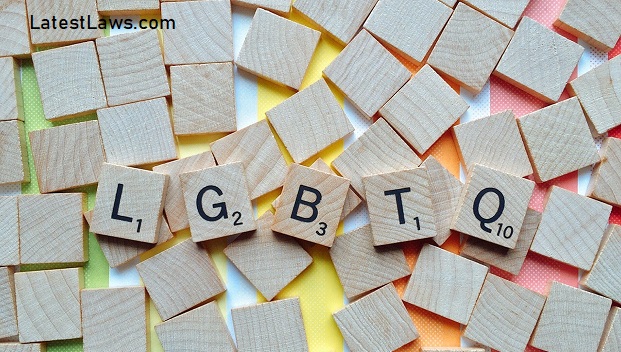
Intersectionality is a sociological analytical framework, coined by Kimberlé Williams Crenshaw in 1998,[5] to understand how an individual’s social and political identities result in unique combinations of discrimination and privilege. According to this theory, the systems of inequality based on gender, race, ethnicity, sexual orientation, gender identity, disability, class, and other forms of discrimination ‘intersect’ to create unique effects.[6] It aims to solve the problem of framing by giving recognition to a unique set of problems faced by people. It propagates that unless these unique set of challenges are understood and recognized, policies will always fall short of dealing with them effectively.[7] This analytical framework has been adopted in the article because the experiences of members of the LGBTQIA+ community cannot be understood through a binary having strict compartmentalizations and a broad and more inclusive approach is needed to understand their concerns. The experiences faced by members of the LGBTQIA+ community are not uniform all across the globe due to varying social and legal frameworks that exist in different countries. These experiences change depending on the legality of homosexuality in the said country, and social acceptance of the same, and at times, this combines with other identities of these people such as religion and/or ethnicity, etc, to create unique and individualized experiences of discrimination, both within and outside their community, that cannot be explained through a standardized framework, and hence the intersectionality lens has been adopted. Applying this lens to the experiences of the LGBTQIA+ community reveals a harrowing narrative of persecution and discrimination that often extends to the challenging process of seeking asylum. This article delves into the multifaceted nature of LGBTQIA+ persecution and the barriers encountered by individuals attempting to secure asylum based on their sexual orientation. It will further delve into the discrimination that these people continue to face even after getting asylum due to the intersection of their sexuality and refugee status, which sometimes even gets combined with other factors like ethnicity, religion, etc, that compound their vulnerability.
A. Persecution faced by members of the LGBTQIA+ Community
Persecution against LGBTQ individuals remains a deeply entrenched and distressing reality in various parts of the world. This encompasses both state-sanctioned as well as societal discrimination. Sixty-seven countries across the world still criminalize same-sex relationships.[8] Some countries enforce strict penalties on same-sex relationships, extending to include even the death penalty. The death penalty for gay sex is technically in place in 11 countries around the world.[9] Iran has executed thousands of gay men since 1979, and has a law that authorizes ‘gender reassignment.’[10] Violence against queer people is not only condoned by the state, it is rather even supported and is seen as an attempt to preserve the ‘morals’ of the society.[11] Even in economically well-off countries like Saudi Arabia, same-sex and trans activities are still criminalized, with the maximum penalty extending up to the death penalty.[12]
Societal discrimination further exacerbates the challenges faced by LGBTQ individuals. Prejudice, fueled by cultural norms, religious beliefs, and deeply ingrained biases, subjects them to verbal and physical abuse, exclusion, and ostracization. In extreme cases, LGBTQ individuals may become targets of hate crimes, facing violence that is both severe and life-threatening.[13] For people who belong to several marginalized groups, the intensity of persecution is increased due to their intersecting identities. Members of racial, religious or ethnic minorities who identify as LGBTQ may endure more serious forms of discrimination, which exacerbates their experiences.[14] Due to these issues, people from the community are often forced to leave their home country and move to another country with the aim of a safer life there.
B. The problems faced by members of the LGBTQIA+ community in the asylum process.
In international refugee law, there is a principle of non-refoulment. This implies that a contracting country cannot force the refugee to go back to their home country if they face a threat of persecution there.[15] However, there is no positive obligation on the contracting country to grant such people asylum.[16] An asylum seeker is a person who has left their country and is seeking protection from persecution and serious human rights violations in another country, but who hasn’t yet been legally recognized as a refugee and is waiting to receive a decision on their asylum claim.[17] As stated above, the contracting country is not under an obligation to grant asylum. Getting asylum is important for the refugees to exercise their rights completely, as many rights like the right to work, freely move within the country, etc are available to an individual only after they get granted asylum.[18] In some instances, legal frameworks may not explicitly recognize persecution based on sexual orientation or gender identity, making it challenging for LGBTQIA+ individuals to establish the legitimacy of their asylum claims.[19]
Additionally, LGBTQIA+ applicants may experience emotional strain during the asylum process itself. Prejudice and stereotyping can cause others to doubt or be skeptical of the veracity of a person's gender identity or sexual orientation. While detention centers are meant to serve as short-term holding facilities for asylum seekers, they frequently lack adequate protections against violence and discrimination, leaving them vulnerable to harassment from staff members or other inmates. LGBTQ people may occasionally be housed in facilities that don't correspond with their gender identity, which increases their vulnerability to abuse.[20]
The difficulties LGBTQIA+ asylum seekers confront are exacerbated by the intersectionality of identity. Because of the intersection of many layers of vulnerability, members of racial or ethnic minorities may face higher degrees of discrimination, making it more difficult for them to efficiently navigate the asylum procedure.
Another major obstacle is the inadequate training provided to legal experts and asylum authorities on LGBTQIA+ issues.[21] Inadequate cultural competency can result in incorrect interpretations of LGBTQIA+ experiences, perpetuating negative stereotypes and hindering the impartial processing of asylum requests.[22]
C. Problems faced by LGBTQIA+ refugees even after getting asylum
Unfortunately, the struggles do not end with the granting of asylum. They often encounter difficulties in securing their rights and achieving true integration in their host countries. Moreover, the social discrimination still persists. At times, their refugee status also becomes a further hindrance to integration into society.
- Evaluating the Effectiveness of UNHCR Guidelines in Refugee Management
The UNHCR was entrusted with the responsibility of safeguarding, assisting, and facilitating the voluntary return, local assimilation, or relocation of refugees when it was founded in 1950. The organization publishes guidelines to help governments create policies that comply with global norms. The guidelines' main points are to guarantee non-refoulement, make asylum proceedings accessible, and support long-term solutions for refugees. The UNHCR integration handbook gives a list of guidelines that the countries need to follow while dealing with LGBTQ asylum seekers and refugees.[23]
Nonetheless, the effectiveness of these guidelines depends significantly on their implementation at the national level. Countries are expected to adopt and adapt these guidelines within their legal and administrative frameworks, ensuring that refugees receive adequate protection and assistance. However, after all, the UNHCR can only suggest countries follow these guidelines and there is no mechanism to bind them to the same. Countries like Germany have amended their national asylum rules in favor of queer refugees so that they get protection and do not face discrimination during the asylum process.[24] However, some countries, as stated above still criminalize queerness and even penalize them for the same. These guidelines will be effective in their true sense only when countries change their approach and become more accepting towards people from the LGBTQIA+ community.
- Strengthening of International Refugee Law through Integration with International Human Rights Law
It was earlier believed that international human rights law and international refugee law are two distinct branches of international law, because of the restricted coverage of the latter.[25] Earlier, the link between the two was seen as a casual one in which the violation of human rights led to refugee movements, and not more than this. Refugee rights had a narrower scope, where it protected those persecuted because of his or her race, religion, nationality, membership of a particular social group or political opinion; and are unable or unwilling to avail himself or herself of the protection of that country, or to return there, for fear of persecution.[26] Hence, the scope of protection was quite restrictive. However, over the years the interaction and interconnection between these two branches is now widely accepted, leading to expansion in the scope of protection given under international refugee law. The term ‘social group’ has been interpreted broadly to include gender and even sexuality-based claims.[27] This integration of international refugee law with international human rights law represents a crucial step in enhancing the protection and well-being of displaced persons worldwide, and the author believes that this should be enhanced further.
First, this integration will further expand the scope and coverage of international refugee law and will ensure that all people who have been persecuted in their home country and have a legitimate claim, are protected under international refugee law and are not denied protection simply because they do not fit in the specific categories as given in the Refugee Convention 1951, hence realizing the true purpose of international refugee law. Moreover, the right to seek asylum is recognized under international human rights law.[28] Through a growing integration between the two, this principle may also get incorporated and accepted into international refugee law, thus assuaging the concerns of the refugees and helping them realize their rights in the contracting country to the full extent.
Furthermore, through an amalgamation of international refugee law with human rights principles, the inherent dignity and fundamental rights of refugees will be reinforced, ensuring that their protection extends beyond mere asylum considerations. This integration recognizes that refugees are entitled to the full spectrum of human rights, irrespective of their refugee status. It emphasizes the need for a holistic approach, encompassing not only the protection of refugees from persecution but also safeguarding their broader human rights, including access to education, healthcare, and equal livelihood opportunities.[29] In addition, by removing legal ambiguities and inconsistencies, this integration works to create a unified legal system that encourages responsibility and conformity to global norms. This will help establish a more cohesive and efficient framework for the protection of displaced people, promoting their assimilation into the contracting country while respecting their rights and dignity. Hence, the convergence of international refugee law with international human rights law underscores a commitment to a more comprehensive and rights-based approach towards the protection of refugees. This integration serves as a pivotal advancement in shaping a legal landscape that not only recognizes the specific vulnerabilities of refugees but also acknowledges their inherent humanity, ensuring a more dignified and secure future for those forced to flee their homes.
- Conclusion
To conclude, this comprehensive exploration of the challenges faced by members of the LGBTQIA+ community in seeking asylum sheds light on the intricate intersections of identity and persecution. By examining the multifaceted nature of LGBTQIA+ persecution, which extends from state-sanctioned discrimination to societal biases, creating a compelling narrative that propels individuals to seek refuge in other countries. However, the asylum process poses a crucial challenge for people from the LGBTQ community, due to the inadequacies in legal frameworks and socio-cultural conditions, exacerbating the difficulties faced by LGBTQIA+ asylum seekers.
Various guidelines by organizations like UNHCR have been notified to help asylum seekers who belong to a sexual minority. However, these guidelines are not binding; hence, the countries’ beliefs guide their policies. Hence, the integration of international refugee law with human rights principles emerges as a crucial advancement, acknowledging the broader spectrum of rights owed to refugees beyond protection from persecution. In advocating for a more inclusive and rights-based approach, the article calls for a nuanced perspective that recognizes the intersectionality of identities. By doing so, it strives to ensure that the international refugee law fulfills its purpose of protecting all individuals who have faced persecution, irrespective of their specific categorization within the 1951 Convention. This holistic view promotes the assimilation of refugees and upholds their fundamental rights and dignity, paving the way for a more compassionate and effective global refugee protection framework.
References:
[1] United Nations High Commission for Refugees <https://www.unhcr.org/in/about-unhcr>.
[2] Article 1, UN Refugee Convention 1951; Protocol Relating to the Status of Refugees 1967.
[3] ibid; Pushpanathan v Canada (Minister of Citizenship and Immigration) [1998] 1 SCR 982 [63].
[4] Catherine Phuong, ‘Identifying States’ Responsibilities towards Refugees and Asylum Seekers’ Eurpoean Society of International Law.
[5] ‘What’s Intersectionality? Let These Scholars Explain the Theory and its History’ (Time Magazine, 28 March 2019) <https://time.com/5560575/intersectionality-theory/>.
[6] ‘What is intersectionality?’ (Centre for Intersectional Justice) <https://www.intersectionaljustice.org/what-is-intersectionality>.
[7] Kimberle Crenshaw, ‘Demarginalizing the Intersection of Race and Sex: A Black Feminist Critique of Antidiscrimination Doctrine, Feminist Theory and Antiracist Politics’ (1989) 1 University of Chicago Legal Forum 139.
[8] ‘LGBTQI+ Persecution: The Global Genocide of Gay People’ (Genocide Watch, 24 March 2023) <https://www.genocidewatch.com/single-post/lgbtqi-persecution-the-global-genocide-of-gay-people>.
[10] ‘Thousands of gay people are being forced to undergo gender reassignment surgery in Iran for a vile reason’ (Pink News, 22 February 2020) <https://www.thepinknews.com/2020/02/22/iran-gay-forced-gender-reassignment-surgery-the-sun/>.
[11] Alistar Walsh, ‘Iran defends execution of gay people’ (DW, 6 December 2019) <https://www.dw.com/en/iran-defends-execution-of-gay-people/a-49144899>.
[12] Human Dignity Trust <https://www.humandignitytrust.org/country-profile/saudi-arabia/>.
[13] Flores AR, Stotzer RL, Meyer IH & Langton LL, ‘Hate crimes against LGBT people: National Crime Victimization Survey, 2017-2019’ (2022) <https://doi.org/10.1371/journal.pone.0279363>.
[14] Hagai EB, Annechino R, Young N & Antin T, ‘Intersecting Sexual Identities, Oppressions, and Social Justice Work: Comparing LGBTQ Baby Boomers to Millennials Who Came of Age After the 1980s AIDS Epidemic’ (2020) National Library of Medicine (USA) <https://www.ncbi.nlm.nih.gov/pmc/articles/PMC8459889/>.
[15] UNHCR, ‘Refugee protection in international law: the scope and content of the principle of non-refoulement’ <https://www.unhcr.org/in/media/refugee-protection-international-law-scope-and-content-principle-non-refoulement-opinion-2-1>.
[17] ‘REFUGEES, ASYLUM SEEKERS AND MIGRANTS’ (Amnesty International) <https://www.amnesty.org/en/what-we-do/refugees-asylum-seekers-and-migrants/>.
[18] Vincent Chetail, ‘Human Rights and Immigration’ (OUP 2014) 19.
[20] ‘IDC POSITION PAPER: LGBTI Persons in Immigration Detention’ (International Detention Coalition 2016).
[21] ‘Envisioning LGBT Refugee Rights in Canada: Exploring Asylum Issues’ <https://ocasi.org/sites/default/files/lgbt-refugee-rights-canada-exploring-asylum-issues_0.pdf >.
[23] UNHCR Integration Handbook <https://www.unhcr.org/handbooks/ih/age-gender-diversity/lgbtiq-refugees>.
[24] Roshni Majumdar, ‘Germany amends asylum rules in favor of queer refugees’ (DW, 10 January 2022) <https://www.dw.com/en/germany-amends-asylum-rules-in-favor-of-queer-refugees/a-63303955>.
[25] Vincent Chetail (n 18).
[26] Article 1, UN Refugee Convention 1951; Protocol Relating to the Status of Refugees 1967.
[27] R. v Immigration Appeal Tribunal and Secretary of State for the Home Department [1999] 2 WLR 1015 (UK); Hernandez-Montiel v Immigration and Naturalization Service [2000] 225 F.3d 1084 (US Court of Appeal for the 9th Circuit).
[28] Universal Declaration of Human Rights 1948, Article 14.
[29] Colin Harvey, ‘Time for Reform? Refugees, Asylum-seekers, and Protection Under International Human Rights Law’ (2015) 34(1) Refugee Survey Quarterly 43.