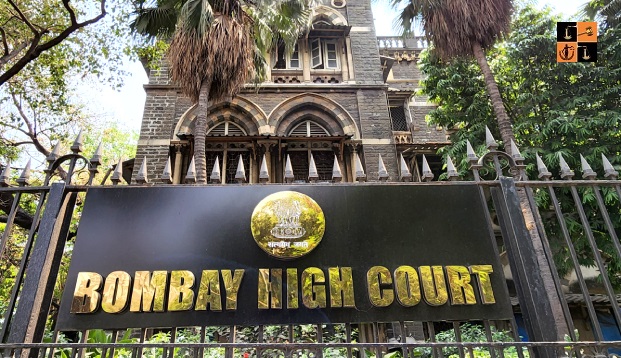
In a closely watched real estate arbitration dispute involving 114 acres of reclaimed land in Mumbai, the Bombay High Court scrutinised the obligations arising from a development agreement and the implications of selective disclosure during arbitral proceedings. At the heart of the case was the question of whether the Tribunal could fairly decide on Atul Projects’ rights under an MoU without access to the full terms of a parallel deal struck with a third party. Read on to see how the Court examined issues of title clarity, contractual termination, NDZ restrictions, and the expanding role of third-party intervention in arbitration.
Brief facts:
The case stemmed from a dispute over a 999-year reclamation lease granted in 1956 by the Governor of Bombay Presidency to India Farmers Pvt. Ltd. for 114 acres of marshy land in Mumbai. India Farmers later sub-leased a portion to Nima Developers Pvt. Ltd., which entered into a Memorandum of Understanding (MoU) with Atul Projects India Pvt. Ltd. in November 2014 for the development of 12.5 acres, granting Atul a right of first refusal (ROFR) over the remaining land. A tripartite Confirmation Deed followed, under which Atul was to pay ₹43 crores in stages, subject to a clear title.
In 1993, the Collector sought to terminate the lease, but this was set aside in 2004. However, a 2002 Show Cause Notice (SCN) restricting land transactions without government consent was revived by a Division Bench in 2019. In 2020, Nima demanded ₹12 crores from Atul, claiming the title was clear. Atul disputed this due to the pending SCN. In October 2023, India Farmers executed an MoU with Oberoi Realty and simultaneously attempted to terminate Nima’s sub-lease, allegedly to defeat Atul’s rights. Nima then terminated its MoU with Atul in December 2023 and refunded ₹5.51 crores. Atul initiated arbitration in February 2024 and sought interim relief under Section 17 of the Arbitration and Conciliation Act, 1996. When the Tribunal rejected the request in October 2024, Atul filed the present appeal under Section 37 of the Arbitration and Conciliation Act, 1996, before the Bombay High Court.
Contentions of the Petitioner:
The petitioner argued that its payment obligation of ₹12 crores was contingent on Nima securing a clear and marketable title, which remained unresolved due to the revival of the 2002 SCN restricting land transfers and subsequent government actions. It maintained that the July 2020 termination was not final, as Nima’s September 2020 letter indicated continued contractual intent, with termination occurring only in December 2023 after the Oberoi MoU. The petitioner sought full disclosure of the Oberoi MoU, executed during a subsisting agreement and court-ordered status quo, asserting the redacted version was inadequate. It also claimed the 12.5-acre parcel was clearly identified through annexed plans and architectural input, and challenged the Tribunal’s finding that the bargain was uncrystallized. Lastly, it argued that No Development Zone (NDZ) classification did not bar residential development, and the Tribunal’s contrary view was erroneous.
Contentions of the Respondent:
The Respondents argued that a clear title had been established through the 2019 Division Bench judgment, which set aside prior adverse findings, and that the 2002 SCN did not constitute a legal impediment unless adjudicated. They maintained that Atul was liable to pay ₹12 crores in July 2020, and the MoU stood validly terminated, due to non-payment. Atul’s arbitration, invoked only in February 2024, was barred by limitation. The Respondents also contended that third-party rights were created through the Oberoi MoU, and the Arbitral Tribunal lacked jurisdiction over non-signatories like Oberoi. Further, citing WhatsApp exchanges, they alleged Atul showed unwillingness and inability to perform, attempting to renegotiate terms. Lastly, they asserted that the No Development Zone (NDZ) classification made the Atul Transaction Documents legally unenforceable due to the impracticability of residential development.
Observation of the Court:
The Court found the Tribunal’s findings to be “summary in nature and defiant of reason” on multiple counts. Firstly, on the issue of title, the Court held that “it would not be possible to hold with any certitude that the DB Judgement cleared all cloud over title to the Subject Land,” as the revived 2002 SCN included a prohibition on land transactions, acting as an interim order. The Tribunal’s interpretation that the Division Bench Judgment conferred clear title was deemed implausible, particularly given the ambiguous language in the Confirmation Deed about “almost…clear” title, which did not override the Atul MoU’s requirement of “absolute clear title.”
Regarding the termination of the Atul Transaction Documents, the Court held that the actual and unequivocal termination occurred only when Nima refunded ₹5.51 crores to Atul, not at the earlier stage relied upon by the Tribunal. It noted that Nima’s subsequent communication calling upon Atul to perform its obligations demonstrated the absence of any clear intent to terminate at that point. The Tribunal’s conclusion overlooked this and failed to account for the Supreme Court's order suspending limitation periods during the intervening pandemic phase.
The Court heavily criticized the Tribunal’s handling of the Oberoi MoU, noting that “the Learned Arbitral Tribunal was deprived of a full picture by the manner of redacting of the Oberoi MoU.” The Respondent's submission of a heavily redacted, six-page version of a 33-page document was deemed “as good as not producing anything at all.” The Court emphasized transparency, referencing Madhyamam Broadcasting Ltd. v. Union of India, stating, “No party is entitled to rely on such ‘sealed cover material’ to the prejudice of the other side, and no court should permit it.” The Tribunal’s acceptance of the Respondent's claim of third-party rights without scrutinizing the Oberoi MoU was held to be unreasonable.
On the identification of the Subject Land, the Court found the Tribunal’s conclusion that no plan existed to be untenable, stating, “It would not be possible to conclude that the Atul Transaction Documents were an inchoate set of instruments with no clarity whatsoever on where the Subject Land was meant to be located within the Larger Land, with serious monies changing hands.” The Confirmation Deed’s reference to a plan and the involvement of an architect supported Atul’s claim.
The Court also questioned the Tribunal’s finding that the NDZ classification necessarily precluded residential development, noting that “it cannot be ruled out that the Atul Transaction Documents being a commercially-agreed transaction to develop residential accommodation could have potentially been accommodated and reconciled” with the NDZ status, warranting further scrutiny.
Finally, the Court addressed Oberoi’s intervention application, noting that Oberoi’s voluntary participation in the proceedings necessitated consideration by the Tribunal. While referring to the case of ASF Buildtech Pvt. Ltd. Vs. Shapoorji Pallonji and Co. Pvt. Ltd, the Court emphasized the need for arbitration frameworks to adapt to “complex contractual structures” involving multiple parties, ensuring fairness without compromising consent.
The decision of the Court:
In light of the foregoing discussion, the Court set aside the Arbitral Tribunal’s order and remanded the matter for reconsideration on the merits. The Court directed the Respondents to furnish an appropriately redacted copy of the Oberoi MoU to both Atul and the Tribunal within four weeks, with specific guidelines on redaction to ensure transparency. The protective arrangement in favour of Atul was extended by two weeks to enable it to seek appropriate relief after reviewing the document. The Tribunal was further directed to consider Oberoi’s application for impleadment.
Case Title: Atul Projects India Pvt. Ltd. Vs. Nima Developers Private Limited
Case No.: Commercial Arbitration Petition (L) No. 35274 of 2024
Coram: Justice Somasekhar Sundaresan
Advocate for Petitioner: Sr. Advs. Mr. P. Chidambaram, Dinyar Madon, Cyrus Ardeshir, and Advs. Kausar Banatwala, Ziyad Madon, Manini Roy, Neuty N. Thakkar, Vaishali Dedhia, Nisha Waghmare, Dipsy Sequiera, Tushar Goradia.
Advocate for Respondent: Sr. Advs. Darius Khambata, Advs. Karl Tamboly, Karan Rukhana, Deeksha Jani, Niket Jani, Jani, and Parikh