In a recent judgment, the Delhi High Court upheld an arbitral award in the case of National Highways Authority of India (NHAI) vs. D S Toll Roads Pvt. Ltd. It reiterated the principle that arbitration awards are generally final, and courts should not interfere with them unless there are compelling reasons to do so.
Brief Facts of the Case:
The case involves a dispute arising from a Concession Agreement entered into between the National Highways Authority of India (NHAI) and D S Toll Roads Pvt. Ltd. The agreement, dated 30.01.2006, awarded certain construction and maintenance work related to a national highway in the State of Tamil Nadu to the respondent, D S Toll Roads Pvt. Ltd. This project was to be executed on a build, operate, and transfer (BOT) basis.
The Agreement stipulated a Commercial Date of Operation (COD) of 29.01.2009, but due to delays in handing over the Right of Way (ROW) by NHAI, the project's completion was postponed, and the actual COD occurred on 28.09.2009. This delay in the ROW handover became a contentious issue leading to arbitration.
Contentions of the Parties:
NHAI challenged the arbitral award primarily on the grounds that the delay in ROW handover was a minor default, and the Agreement provided for predetermined compensation under Clause 13.5 in cases of such delays. NHAI argued that this clause covered the delay adequately, and there was no need to treat it as a material breach of the contract under a different clause. NHAI contended that the arbitral tribunal erred in its interpretation of the Agreement, specifically in applying Sections 55 and 73 of the Indian Contract Act to award damages for the delay.
D S Toll Roads Pvt. Ltd. invoked arbitration and claimed damages on various grounds, including additional expenses incurred due to an extended stay at the project site, increased costs of input materials due to prolonged construction, loss of opportunity and profits due to the extended construction period, and revenue loss due to the delay in COD.
Observations by the Court:
The arbitral tribunal, comprising Shri Surjeet Singh, Shri S.S. Agarwal, and Shri Arun Kumar Sinha, partially allowed the claims made by the contractor and held that NHAI had committed a material breach of the contract due to the delay in handing over the ROW.
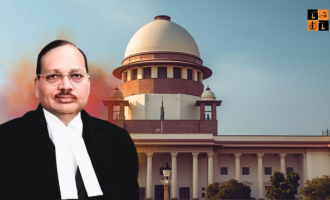
Justice Manoj Kumar Ohri of the Delhi High Court, in his judgment, upheld the arbitral award, stating that delay in handing over the ROW could be considered a material breach of the contract if it affected the issuance of provisional or final completion certificates or delayed COD. The Court found that the tribunal's interpretation of Clause 13.5 of the agreement, which provided for compensation in case of delay in ROW handover, was correct and did not warrant interference.
The Court emphasized that the scope of interference under Section 34 of the Act is limited, and a court should not act as a court of first appeal but should only interfere if the arbitral award is patently illegal or perverse.
The decision of the Court:
In this case, the Court found the arbitral tribunal's decision to be a plausible one based on the facts presented.
Case Name: NHAI v. D.S. Toll Roads Pvt Ltd
Coram: Justice Manoj Kumar Ohri
Case No.: OMP(COMM) 546 of 2016
Advocates of the Petitioners: Mr. S. Nanda Kumar, Ms. Deepika Nanda Kumar and Mr. Anand Murthi Rao
Advocates of the Respondent: Mr. Jayant Mehta, Sr. Adv. with Mr. Ankur Kashyap, Mr. Hasan Murtaza, Ms. Bushra Waseem and Mr. Aman Bajaj.
Read Judgment @LatestLaws.com